Far from the madding crowd
Josh Barrie on how shopping for produce at Borough Market is still an enriching experience for Londoners, as long as you follow a few simple rules
“IF YOU’RE OPERATING CANNILY, THE MARKET CAN STILL BE A ROMANTIC, NOSTALGIC, ENCHANTING PLACE TO SHOP”
Words: Josh Barrie / Images: Sim Canetty-Clarke, Kris Piotrowski
My first experience of Borough Market came as a toddler in the early 1990s, visiting my uncle who lived next door to what would later become Bridget Jones’s flat. Accounts among family members differ, but many recall there still being sawdust on the floor of the Globe Tavern and me promptly falling face-first into it. Romantic, much?
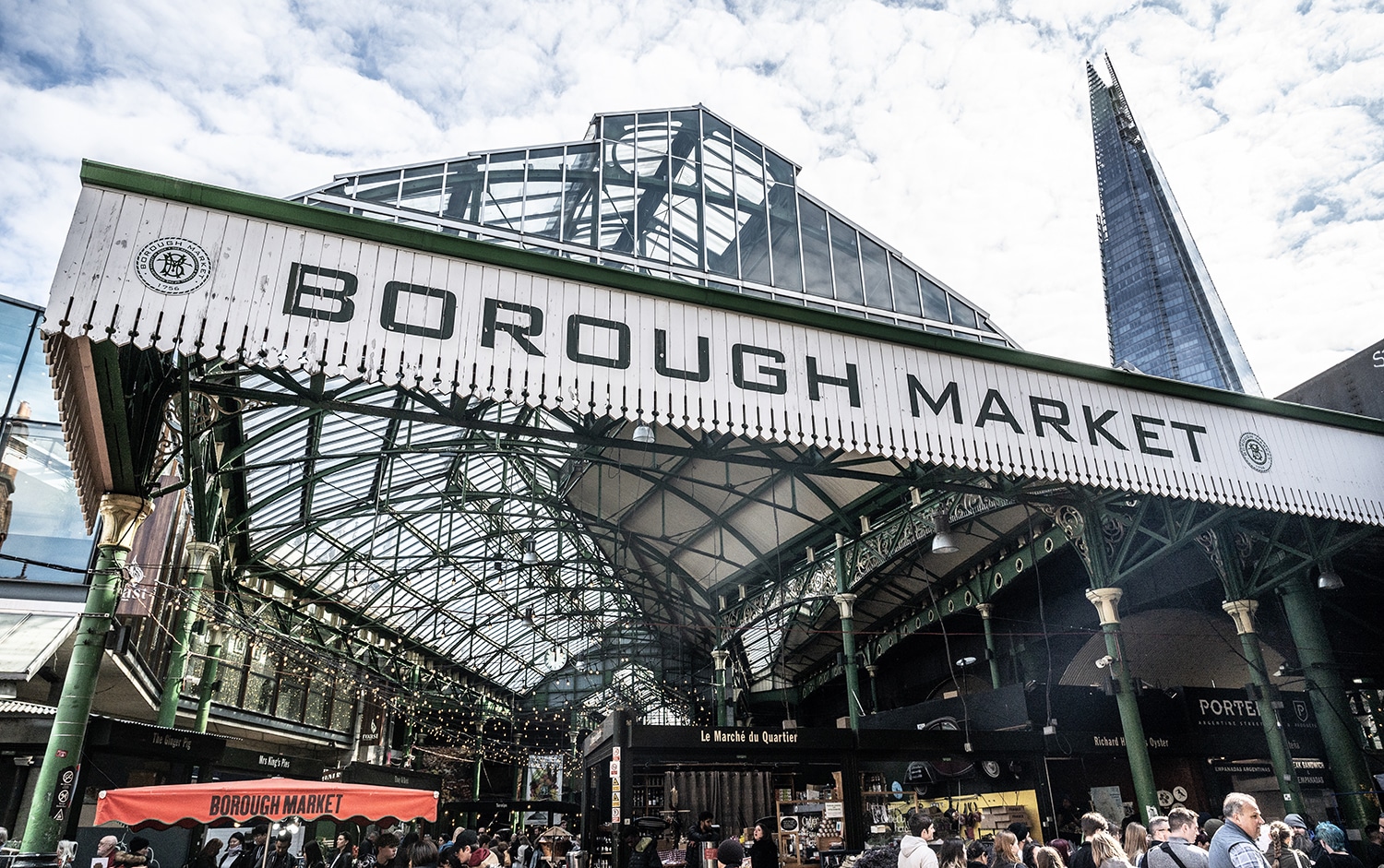
Long gone is the sawdust at this locals’ pub, so too its trader-friendly, early-morning opening time. Happily, the 6am weekday licence at the Market Porter, round the corner on Stoney Street, remains but Borough Market is less gritty and raw today – a more polished place that now welcomes over 15 million visitors each year.
Its transformation over recent decades has been staggering. Less than 30 years ago, it was a fairly standard fruit and veg wholesale market – albeit a historic one – and its journey to becoming a tour de force of British food and drink has been mesmerising to watch. Borough is now simultaneously an old pocket of London and one of the most posted-about in the city. It’s a multi-million economic powerhouse built on heritage carrots and sausage rolls.
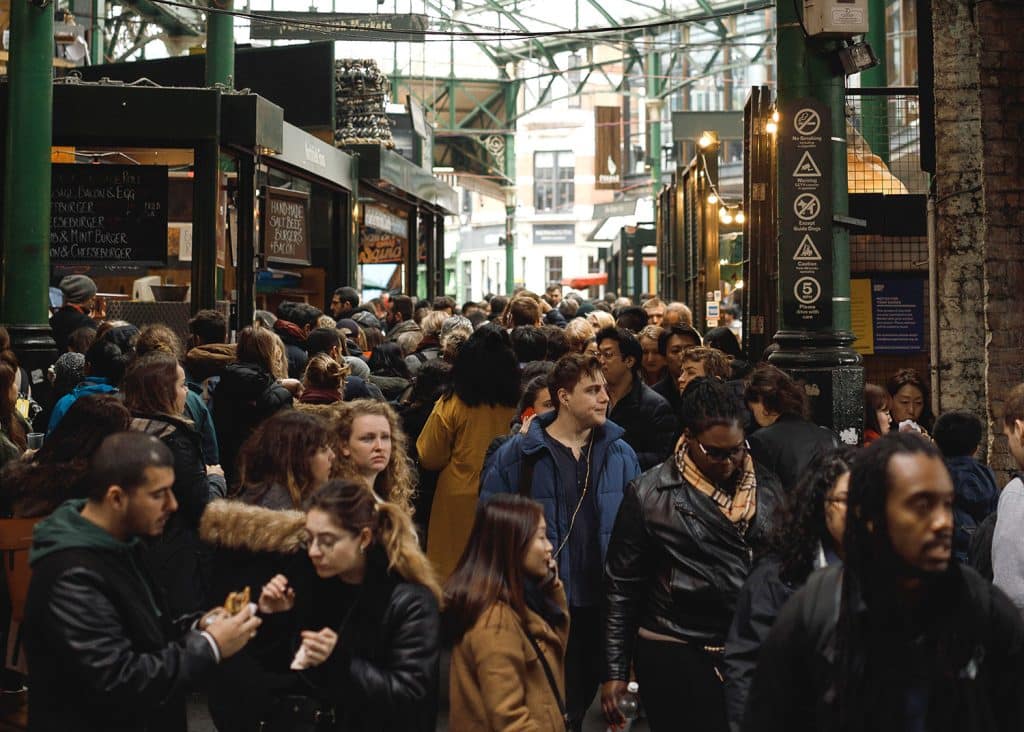
Nevertheless, the market can still be romantic, nostalgic and enchanting, its myriad food stalls and stands – topping 100 today – painting a picture of an ever-changing culinary scene. It’s just that, to appreciate those aspects, London’s food shoppers need to avoid the floods of tourists and influencers. And that means operating more efficiently and cannily.
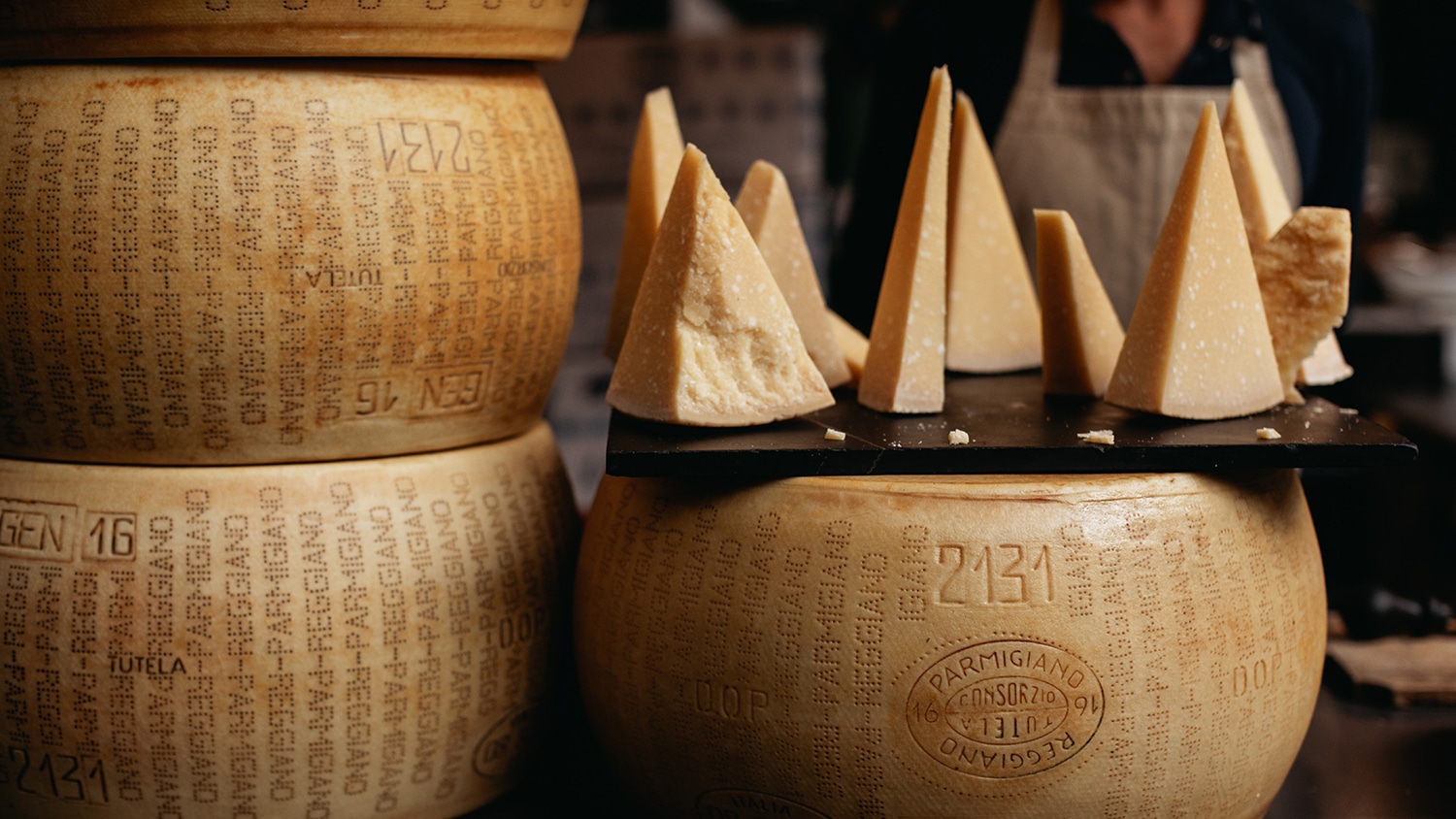
First off, it’s best to tackle the market early, before midday, and on a weekday rather than a weekend. This might sound obvious, but amid the freneticism and chaos of day-to-day life it’s easy to forget. The ungainly barrage of a weekend lunchtime is not the time for a tranquil hour of produce shopping. How often must my new Air Max be trodden on? How long do I need to wait to buy a block of 18-month-old winter comte?
Tacos Padre founder Nick Fitzgerald, who set up his street food stand here in 2019, agrees that timing is key: “It’s busy, but it’s real, full of characters and interesting people. This is a real community. I guess the best times are outside 12-3pm during the week, when you can move around quite easily. And the whole point is to come and talk to traders and learn about their food. It’s important that side of things isn’t lost.”
Despite the challenges of trading at such a busy market – “It’s a rollercoaster,” he says – Nick remains committed: “I just signed another five-year lease. With other food markets gone in London, or turned into big corporate machines, it still feels pretty special to be in one of the best markets in the world.”
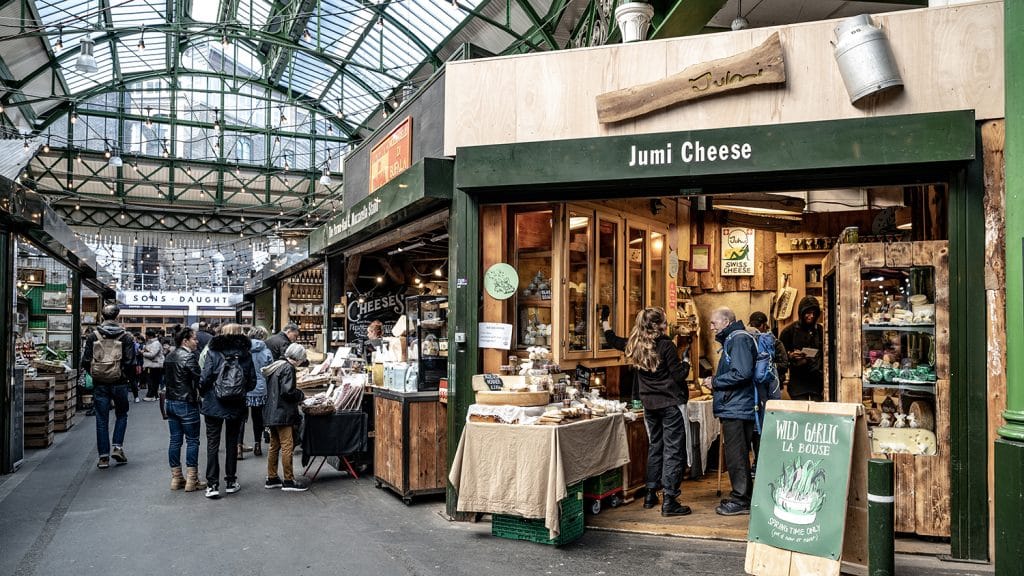
No wonder, then, that people will pitch up from as far away as New Orleans to immerse themselves in a vibrant food culture too rarely seen in Britain and the US today. Coles Loomis, the manager at Jumi Cheese, moved to the UK on a student visa but found a place in the simple pleasures of unpasteurised dairy. “I’m a New Orleans girl from the Deep South who loves food,” she says. “And I just love cheese, especially French and Italian varieties. I came here temporarily but ended up staying. I love the history, the community, the diversity.”
London, she says, can be a lonely place. “But here, people look out for each other. So even though the market is super-famous now, and more commercialised, the purpose is still there. There are people here from all walks of life. If you need to find your sea legs in a new city, get into food.”
Like Nick, Coles acknowledges that heightened tourism can be a poisoned chalice. For all the benefits of popularity, for the spotlight it shines on quality produce and local businesses, these can be lost in the melee. She advises visitors to come with a plan: something as simple as a shopping list, say, if you’re visiting with a meal in mind. Spontaneity in food is beautiful, but it would be remiss to turn up and forget the cabbage. It’s all about pacing, understanding and forethought.
But maybe more vital than anything is remembering that Borough Market isn’t a supermarket and buying food there shouldn’t really be transactional. Visiting the market during softer periods isn’t just about self-preservation, it’s about getting to know traders and striking a rapport. Watching old footage of Italian nonnas walking slowly among a food market in some rural Tuscan town isn’t contrived – they are actually talking to the sellers about tomatoes. Genuinely. Passionately, even. You can do that at Borough too, you know?
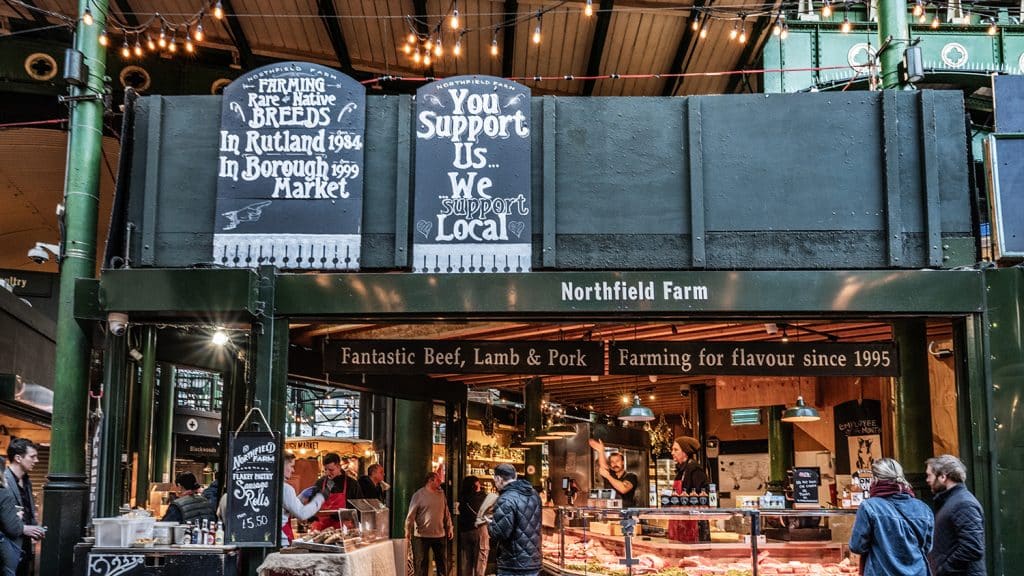
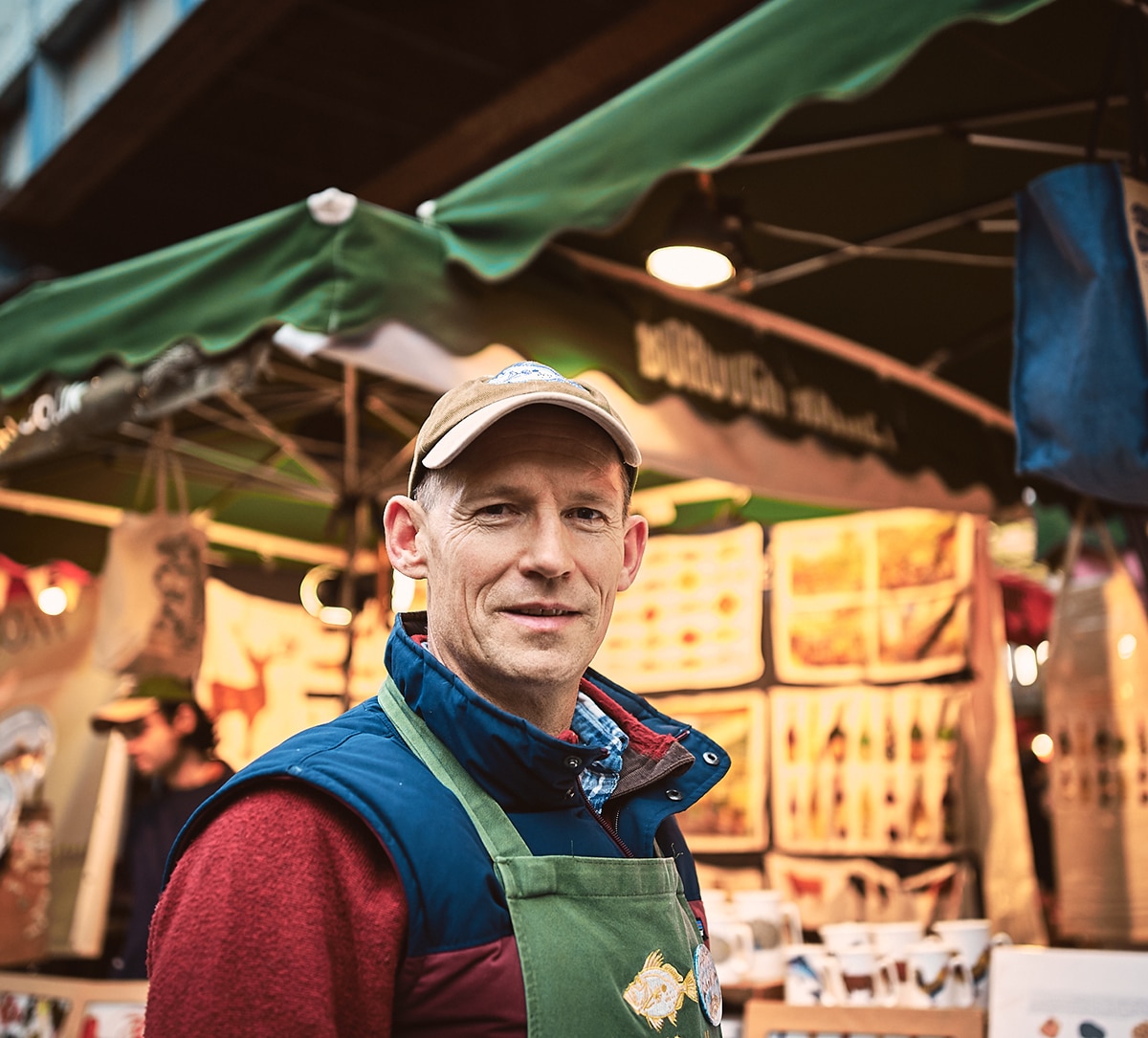
With Northfield Farm’s Dominic McCourt, for example, who’s been a presence at the market since he was a baby. “I was down here in a rucksack on my mum’s front,” he says. “She and my dad started trading in the mid-90s, back when it was still wholesale.”
Northfield Farm specialises in indigenous lamb, beef and pork. As well as selling them meat, Dom wants people to come to his stand to learn about where our food comes from, discover lesser-known cuts and improve their skillsets. “Our food system has been under threat since post-World War II, when there was a drive towards quantity over quality,” he says. “I strive to get people buying White Park and Dexter beef and Gloucester Old Sport pork. I don’t want the sale of my ingredients to be just a transaction. I want to talk to people about food and cooking. That was lost in Britain for a long time.”
Perceptions around food might slowly be changing in Britain. But there’s a long way to go, he continues. Barbecue culture – something close to Dom’s heart – provides a striking example. Where countries such as Thailand, Spain and Greece build connections by way of barbecues, fostering an understanding of provenance, in Britain we tend to throw cheap burgers on tinfoil trays, scorching the ground.
“This is not something that can be fixed overnight,” Dom adds. “So, yes, my biggest tip is to talk to traders. It takes time, just like good food.”