Food for thought: the impact of AI
Writer and podcast host Giulia Crouch answers our question: How is AI reshaping our relationship with food?
“A REAL EXPERT WILL OFFER BETTER ANSWERS THAN A GUESS-THE-NEXT-WORD MACHINE – AND MAKE YOU HAPPIER TOO”
Words: Giulia Crouch
Borough Market, which is run by a charitable trust, exists “for community, the love of food and a better tomorrow”. This statement informs everything from our Food Policy to our work with local schools; it also sparks lots of questions about what we do and why we do it. This spring, we’re throwing some of those same questions out to experts beyond the Borough Market community.
This week’s answer comes from Giulia Crouch, the food writer and host of Borough Market’s Borough Talks podcast.
Question: How is AI reshaping our relationship with food?
Like it or not, AI is here to stay. From how we research topics to how we write difficult emails, algorithmic companions such as ChatGPT and Claude have (astoundingly) quickly worked their way into our everyday lives. Inevitably, as more and more AI recipes (literal slop) hit social media and home cooks turn to large language models (LLMs) for ideas and information, these sophisticated programs are also influencing how and what we eat.

As a food writer, I’ve so far felt relatively sheltered from the much-touted AI takeover. LLMs, I figure, can’t eat, and food writers need to be able to. Cookbook author Sabrina Ghayour is similarly upbeat. “I’m not threatened,” she says, asserting that while AI can spit out rudimentary recipes – American pancakes, avocado toast, fried eggs – it can’t offer anything truly original. Sabrina experiments, tests, tastes, adjusts and uses her imagination. “My food isn’t traditional – it dips into the Middle East and marries it with the West. For that ilk of recipes, AI is just not a threat.”
Recipes like hers are a product of real-world experiences that a predictive word system can never hope to replicate. A real (human!) cook can produce food that reflects their lives and influences – what their grandma taught them, that amazing meal they had on the Amalfi Coast that time, or tried-and-tested family recipes tweaked over generations. An LLM pasta recipe will scrape multiple pasta dishes from the internet and amalgamate them into something that sounds reasonable. As a result, there’s as much personality in its creation as a sum put through a calculator.
AI recipes often have gaping holes in them. I typed in “quick and tasty recipe” and Chat GPT came back with a “10 Minute Garlic Halloumi & Lemon Bowl” where the lemon was “optional”. Huh? Spinach, bread, nuts and seeds were also optional leaving only halloumi and garlic. This is not a meal, Chat. In addition, the timings are nearly always off. It’ll say you can cook onions in five minutes or make a pasta sauce with canned tomatoes in an unbelievably short time. Because these programs are designed to please the user, no matter what, if you ask for “quick” it’s going to meet those parameters whether the finished dish works or not.
With a bit of care, an AI model can be prompted to deliver recipes that work. But, given that it can’t taste or test things, it relies on the work of real authors to teach it how to construct them. Sue Quinn is one of the hundreds of food writers who’ve had their books used without permission to train generative AI models, and when she found out she was furious. “This ‘data set’ – otherwise known as the blood, sweat and tears of authors – has been scooped up by tech wizards and chopped into word salad to feed the AI algorithm in order that it can generate written material that sounds like a human produced it,” she says.
While angered that a few powerful companies are nicking people’s work for commercial enrichment, Sue, like Sabrina, does believe that proper cookbooks still have a future. “I think the people who buy them are interested in more than the recipes: original stories, creativity and beautiful imagery – not just recipes – and I don’t think AI offers that. Yet.”
In the restaurant sphere, most chefs I’ve spoken to feel similarly secure about their jobs. Elliot Hastroudi, head chef at Camille in Borough Market, is sure that AI won’t ever truly replace the skills his industry relies on. “Sure, there are benefits that I can see in different fields – using AI in farming for yield optimisation and using it for demand forecasting to reduce waste is incredible. However, in the kitchen, there is a limit. AI-powered robotic chefs? It’s a no from me. How can you match that intuition of service, seasoning and creativity? Moreover, using AI for recipes is pure laziness and will breed so many menus of a similar format. We already have enough of that – it’s time to think outside the box.”
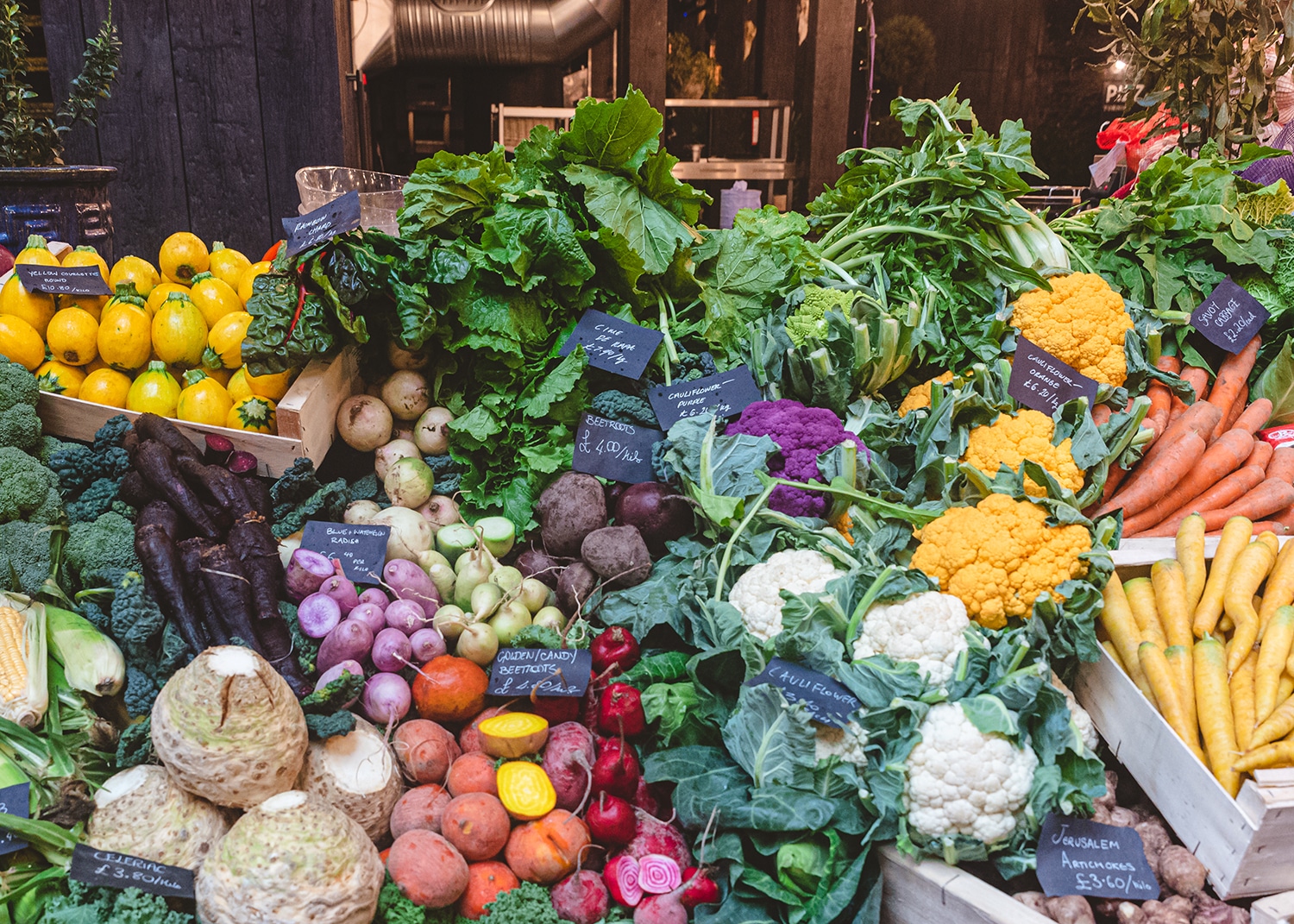
For the home cook it seems there is one very helpful use, and it’s: “What can I do with these random ingredients in my fridge?” Many of my friends use it in this way, which is undoubtedly positive for tackling food waste. It can also be good for answering uber-specific culinary questions. I’ve used AI to ask if my homemade kefir was okay when it started to look a little funky, and whether you can eat a certain type of Sardinian artichoke raw. That said, it’s not always 100 percent accurate. Upon sending it a picture of a jerusalem artichoke and asking, “What vegetable is this”, it swore blind it was a poisonous bulb that under no circumstances should be eaten.
With its inherent flaws, my suspicion is that the AI revolution will soon trigger a backlash. It will draw people to seek out obviously human-made things, with all their quirks and idiosyncrasies. I predict a move towards experiences – in-person food shopping, cooking classes, wine tastings, talks by chefs and food writers. Human interaction will become ever more important.
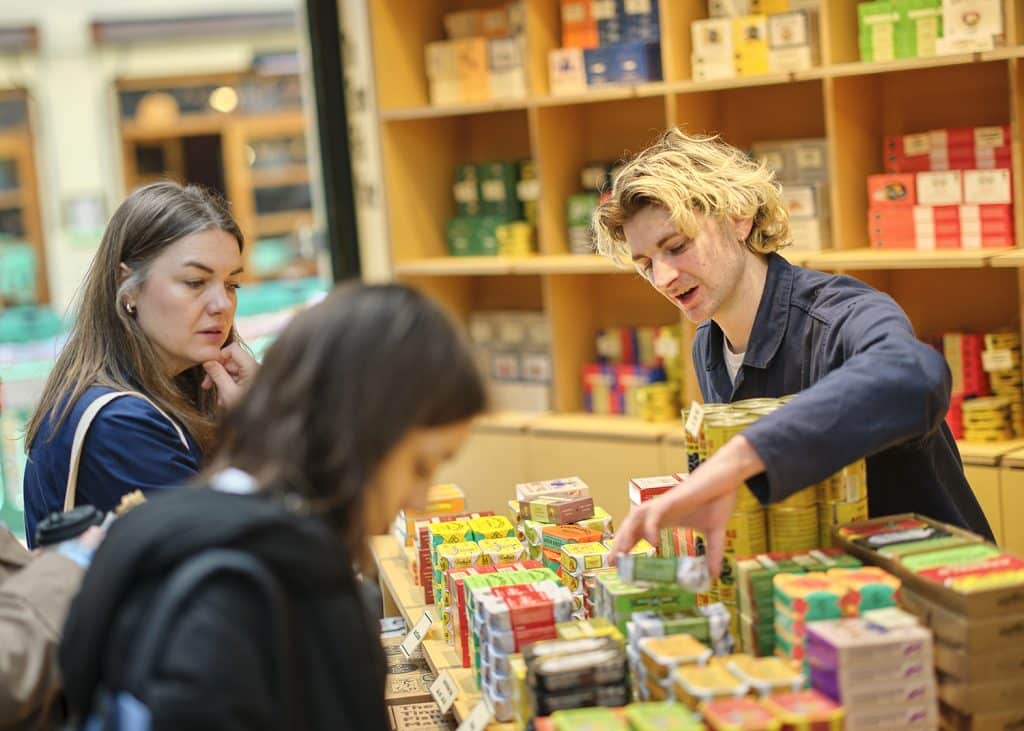
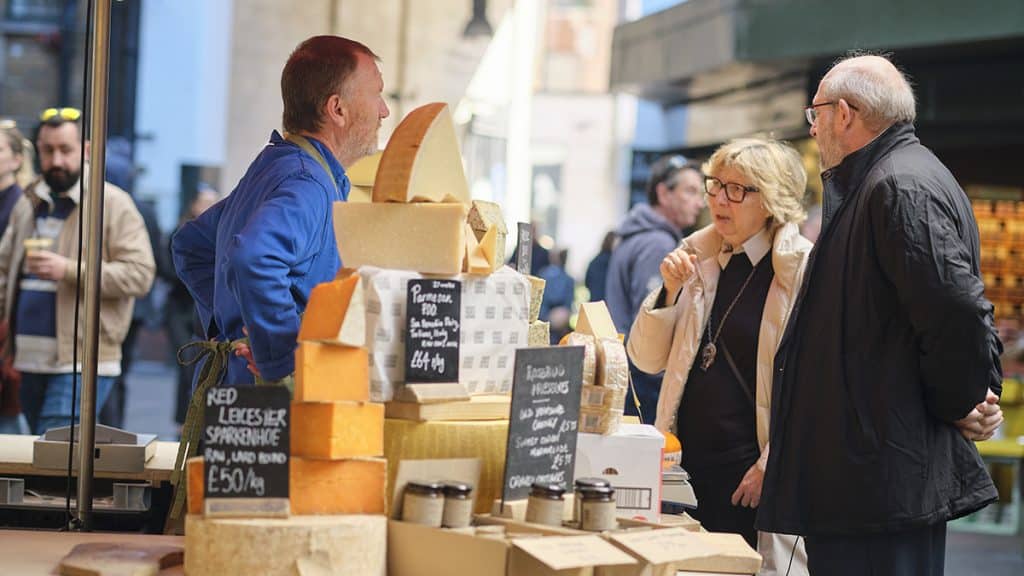
A food market like Borough is going to be so precious in this new age. It’s a place of deep and diverse human expertise, with a breadth of traders who are exemplary in their particular craft. Instead of prompting ChatGPT and never being sure if you can trust what it says in reply, ask one of the butchers what the best way to roast a chicken is, or the best cut of beef for a slowly simmered stew. Instead of Gemini, ask one of the coffee experts which beans are perfect for espresso. Instead of Claude, ask the olive oil expert which one pairs best with fish. Interacting with a real person who knows and cares about what they produce or sell will always elicit better results than a guess-the-next-word machine. And it will make you feel happier too.
While it seems like AI is everywhere right now, the best food will always be deeply human experience, imbued with multiple layers of meaning that “Chat” et al will never truly emulate.