Trees of life
Stuart Ovenden, author of The Orchard Cook, on the autumnal joys of apples, pears and quinces
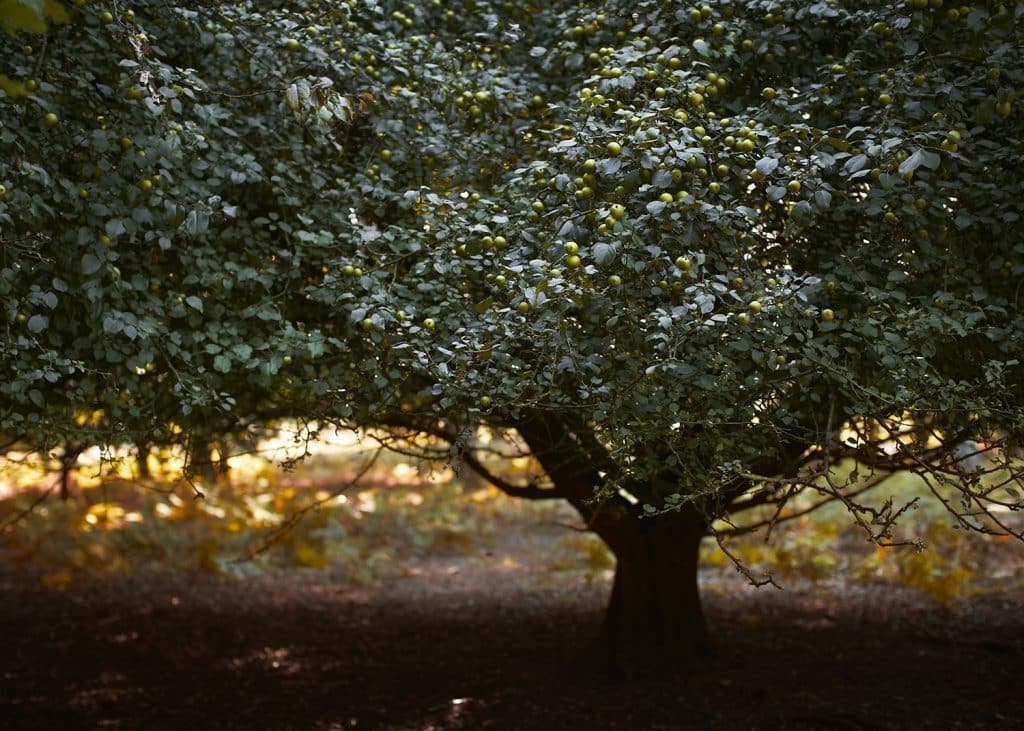
“EACH VARIETY HAS ITS OWN MOMENT IN THE SEASON, AND PART OF THE PLEASURE IS KNOWING THEY WON’T LAST FOREVER”
Words & images: Stuart Ovenden
Every year as the summer heat begins to fade, I find myself looking forward to autumn, with its misty mornings, fungi, berries and above all, orchard fruits. A British orchard seems to embody the changing seasons, from the youthful exuberance of spring – a riot of blossom and insect life – to the muggy ferment of late autumn, when fallen fruit is scattered beneath trees and the air is thick with dust and vinegar.
Traditional orchards have been in decline since the early 1900s – it is estimated that over half have disappeared from our landscape during the last 100 years. British growers face overwhelming competition from the small handful of high-yielding imported apple and pear varieties that monopolise the supermarket shelves. These can be stored for months on end without compromising their quality, making them available all year round. By contrast, many of the UK’s most flavoursome and interesting orchard fruits have a far shorter shelf life. They’re harder to come by, but no less of a joy to eat or cook with. Each variety has its own moment in the season, and part of the pleasure is knowing they won’t last forever.
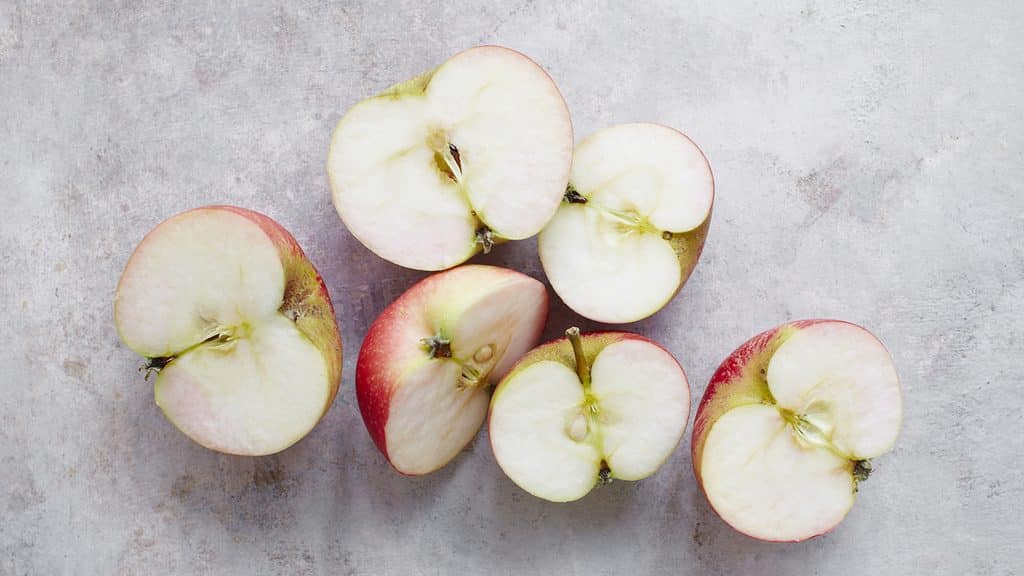
British apples, pears and quinces are at their peak at this time of year. Whether eaten straight from the fruit bowl, baked in a tart or gently poached in wine and spice, all three have so much to offer. Seek out an unfamiliar variety or two and spend some time in the kitchen with them. There is every chance you will discover a new seasonal favourite.
Apples
There are few treats I await more eagerly than the first Discovery apples of the year. Ripe and ready to be picked from mid-to-late August, this vibrant early variety casts a nod back to summer, with crisp notes of strawberry and a cheerful magenta blush where the flesh meets the skin. Discoveries don’t store well (about a week in the fridge if you’re lucky), making them a true blink-and-you’ll-miss-it seasonal treat. The Egremont Russet is my go-to for a classic tarte tatin. It is a tart, pectin-rich dessert apple that holds its shape when cooked in sticky caramel. For apple sauce to serve with roast pork, Bramley’s Seedling is a good bet – it has just the right amount of acidity and cooks down to a light, fluffy sauce.
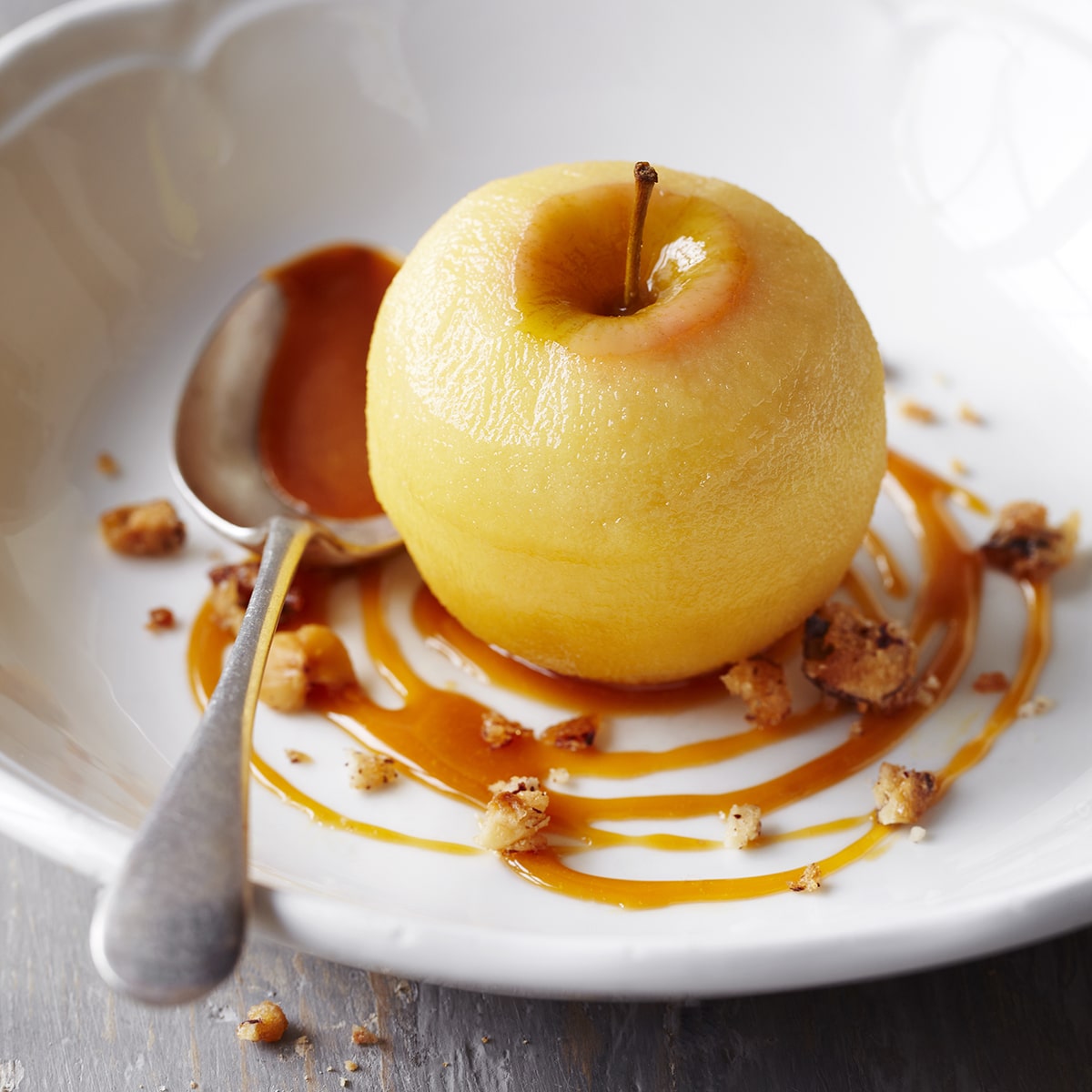
Stuart’s recipe for cider-poached apples
Pears
Pears are equally valued in the kitchen during the autumn and winter months. It’s worth noting that unlike apples, most European pears only ripen after being picked; in this respect you’d be hard pushed to enjoy a juicy pear plucked straight from the tree. The Conference, with its beautiful greenish-brown russet skin and sweet, juicy white flesh, is probably our best-known variety, grown widely across the UK. It takes its name from the National British Pear Conference of 1885, where it won first prize. Primarily a dessert pear, it is less robust than some of the late season baking varieties but is popular for good reason and keeps well in the fridge. If I’m poaching pears in red wine, sweetened with honey and spiced with cinnamon and saffron, I will make a beeline for the Black Worcester. Often known as the Warden pear, it is mentioned by Shakespeare in A Winter’s Tale and holds up to a slow simmer in the deep red liquor.
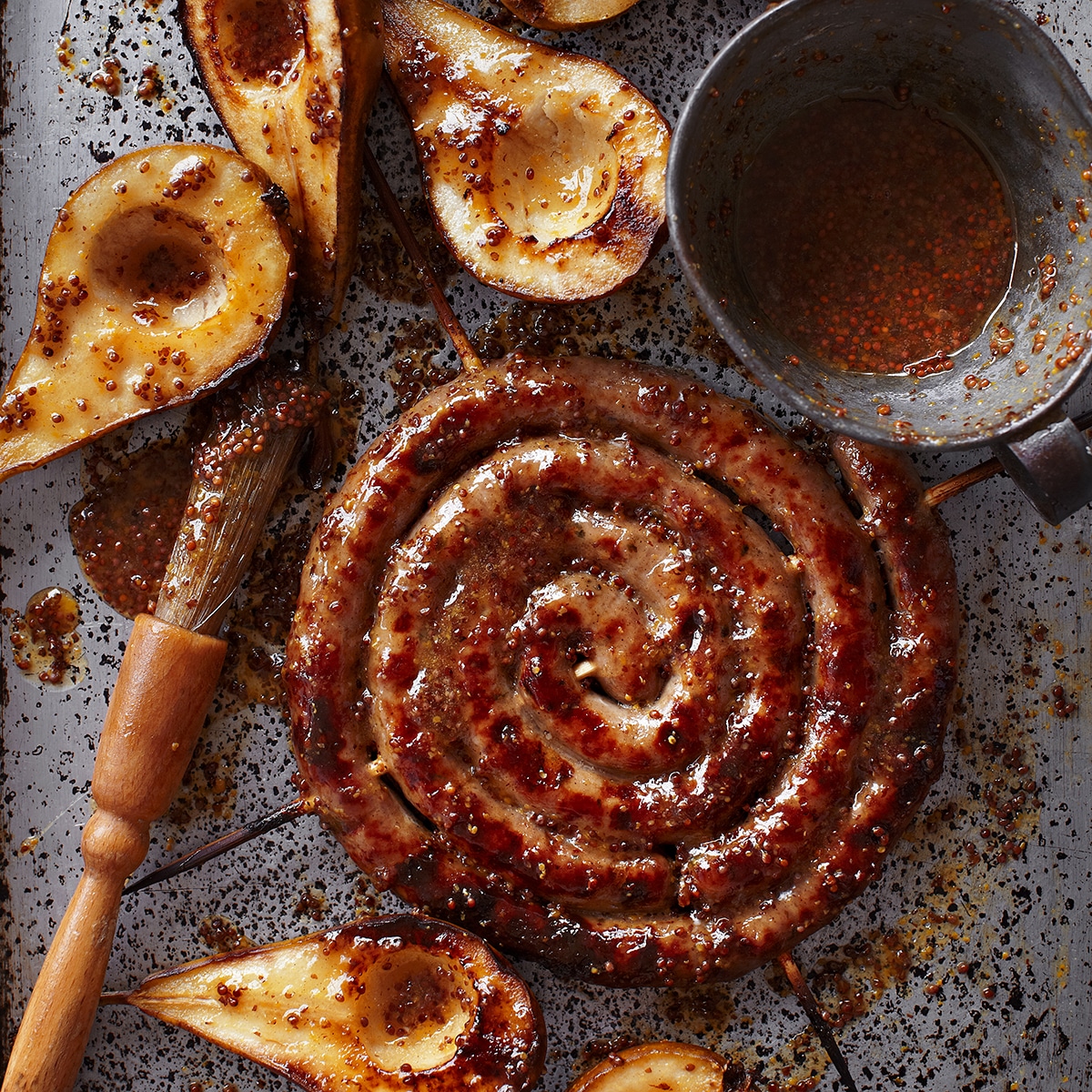
Stuart’s recipe for Catherine wheel sausage with pears
Quinces
Quinces are altogether more unusual. They’re rock hard when picked – you’ll likely lose a tooth if you try to take a bite out of one. The scent of an uncooked quince precedes its culinary use; a bowlful sitting on a kitchen table will fill the room with a gorgeous floral, almost honey-like fragrance. My favourite way of preparing quince is to peel, core, halve and gently simmer it in sugar syrup for an hour or so until a sharp knife slips through the flesh with ease. The fruit slowly transforms from nondescript pale yellow to vibrant peachy pink. Refrigerated in the poaching liquor, the quince halves will keep for a couple of weeks. The softened fruit is great served with a bowl of yoghurt and crunchy granola for breakfast. Quinces can also be used to make membrillo, a sweetened, firm paste associated with Spain. It’s most commonly used as a cheeseboard accompaniment, but it’s also great to add a subtle sweet note to gravy, softened with honey to glaze a Christmas ham, or muddled with clementine juice in a champagne flute and topped up with fizz.
Stuart’s recipe for crispy squid with quince aoli
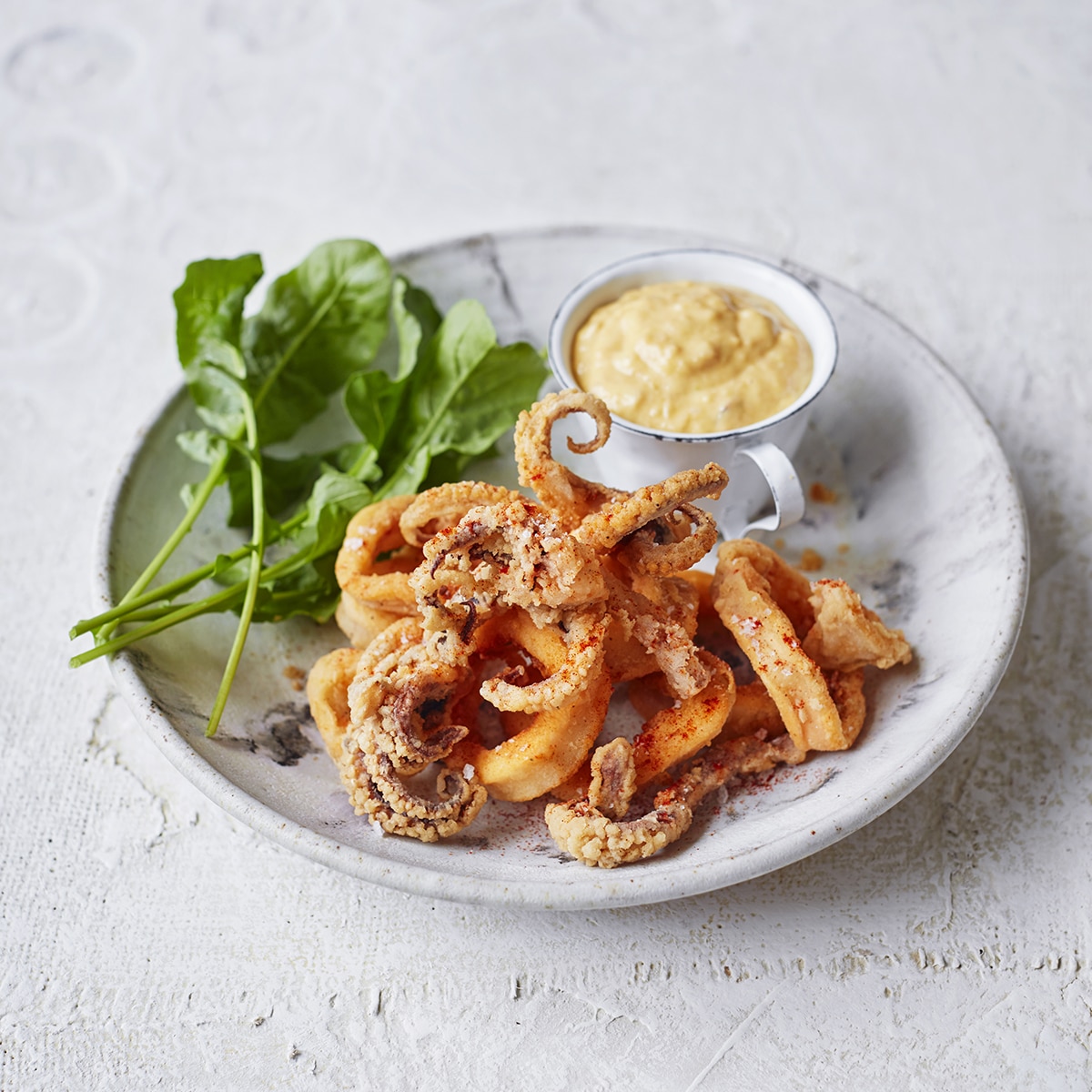
Recipes from The Orchard Cook: Recipes from Tree to Table by Stuart Ovenden (Clearview)


