Three ways: mackerel
Chef and content creator Ben Slater shares three variations on mackerel on toast
“CURE IT, SMOKE IT OR PLACE IT IN A HOT PAN, AND WHILE THE CHARACTER SHIFTS, THE IDENTITY OF THE FISH REMAINS CLEAR”
Words & images: Ben Slater
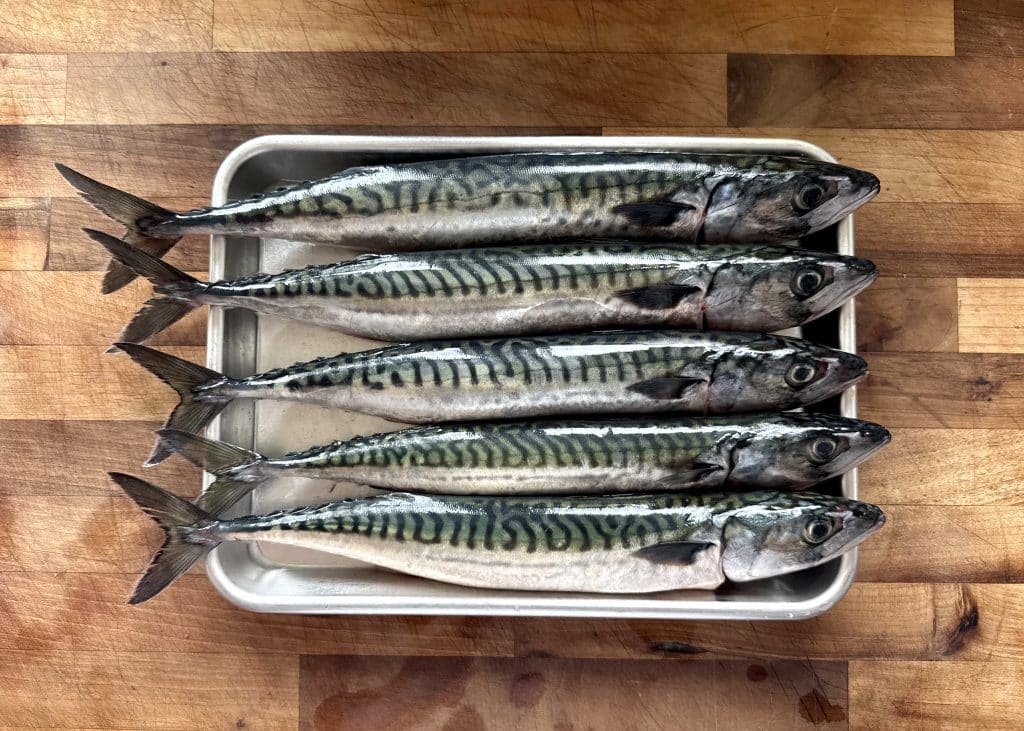
Along the British coast, mackerel arrives as the weather begins to warm. From late spring and through the summer, large shoals move quickly, often close enough to shore to be caught with little more than a rod and a steady cast.
For those without access to angling paraphernalia, or indeed a stretch of Cornish beach, there are still reliable ways to secure good fish. If the mackerel has been line-caught, that is the clearest indicator of quality. Each fish is handled individually, which preserves the calibre of the flesh, and the method avoids the collateral damage of large-scale netting.
At the fishmonger, look for rigid bodies, clear eyes, bright red gills and a vivid, almost metallic gloss. At their peak, mackerel should glow from their bed of crushed ice. It’s a fish tied closely to time, so when I see any on display that fits the bill, I tend not to hesitate.
What makes mackerel particularly compelling to me is its willingness to be shaped. Thanks to its oily flesh, it tolerates a fair amount of process – and, in the right hands, improves because of it. Cure it, smoke it or place it in a hot pan, and while the character shifts, the identity of the fish remains clear.
Cornish mackerel on toast is a combination defined by a kind of mutual correction. The fish brings richness, all oil and depth, while the toast provides order. Starch absorbs excess oil and offers resistance where the flesh yields. It’s a pairing I return to often – together, they serve as a reminder of just how generous our geography can be.
With that in mind, I have drawn together a few variations on the theme. Three toasts, each built around the same fish and governed by the same principle: fat, salt, starch and acid held in careful balance. British cooking at its most persuasive seldom needs more.
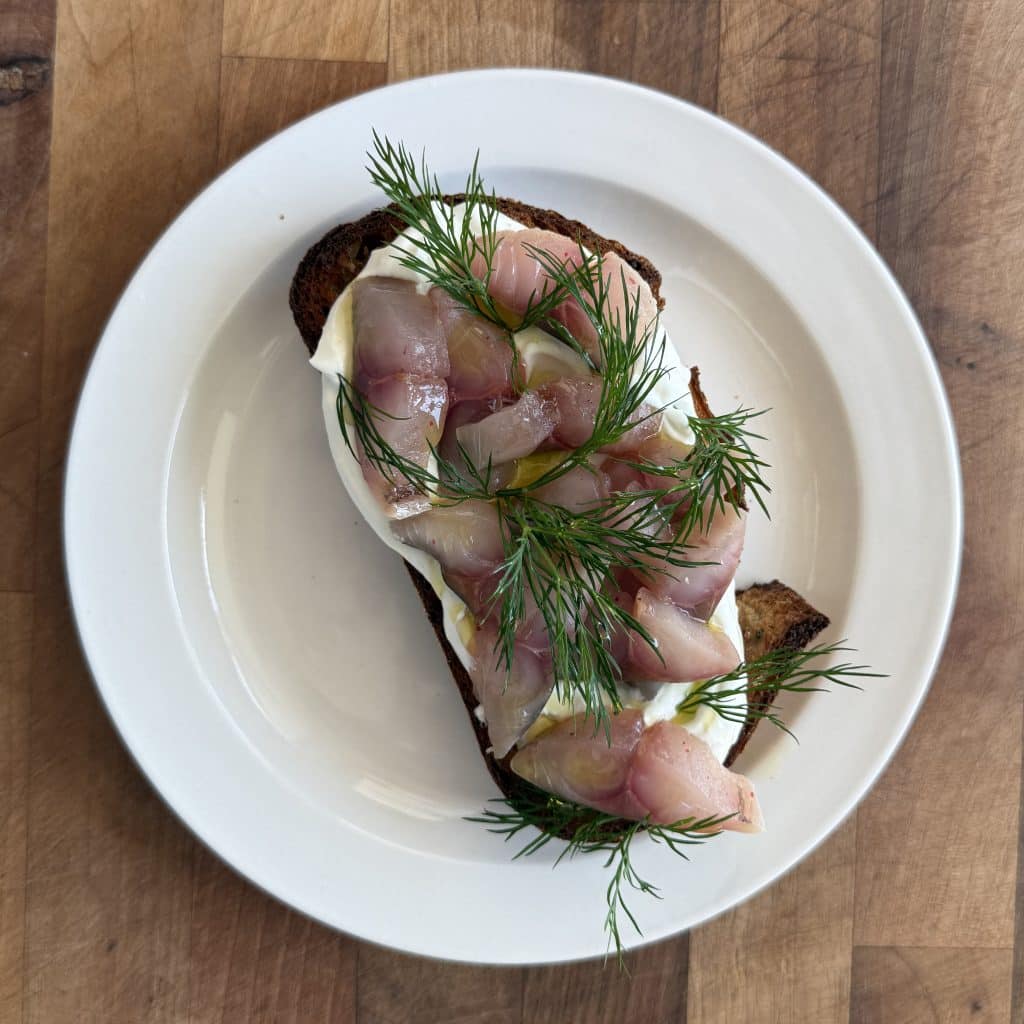
1. Pink pepper-cured mackerel with lemon labneh
Curing offers the most immediate transformation. A simple mixture of salt, sugar and pink peppercorns, ground briefly and applied with care, alters the texture within minutes. The flesh firms and settles into something sliceable, almost fudge-like in its density. It sits naturally with cultured dairy, which tempers it, and with citrus, which lifts it.
I like to pair the cured mackerel with lemon-spiked labneh, hung overnight to amp up the creaminess. Finished with a heavy scattering of dill. The result feels incredibly clean and utterly impressive, despite its simplicity.
2. Hot-smoked mackerel with horseradish
Smoking at home carries a certain theatre, although the process itself is straightforward. Line a roasting tray with foil, scatter in a handful of wood chips and set a rack above them. Place over a high heat until the chips begin to smoke, before laying in the fish and covering tightly. Cook briefly until the flesh turns opaque and gently flakes.
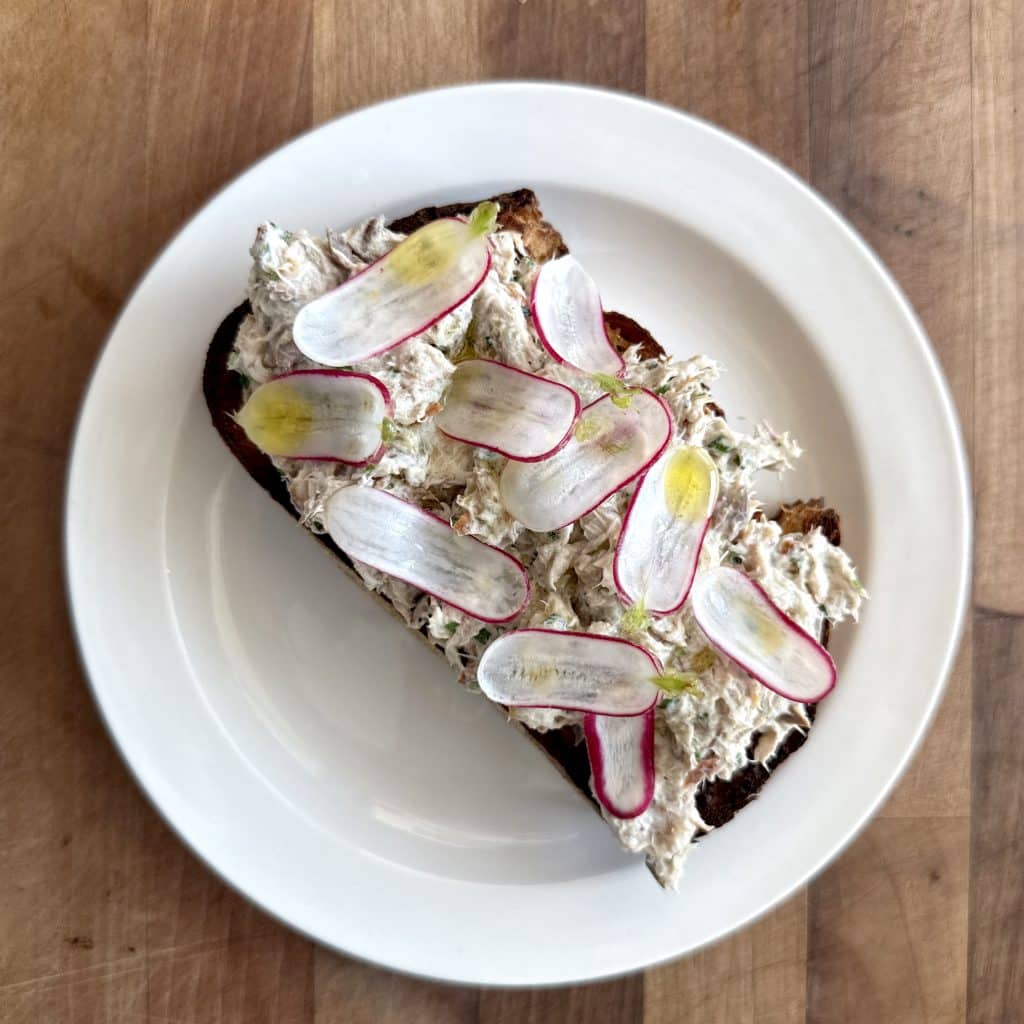
Once smoked, the mackerel breaks into soft flakes that lend themselves to cream cheese, herbs and fresh horseradish. Worked together, this becomes a pâté with character: smoky, sharp and faintly aggressive. I spread it with gusto over heavily buttered toast before laying on thin planes of peppery radish, left in ice water to become crisp.
3. Pan-fried mackerel with leeks
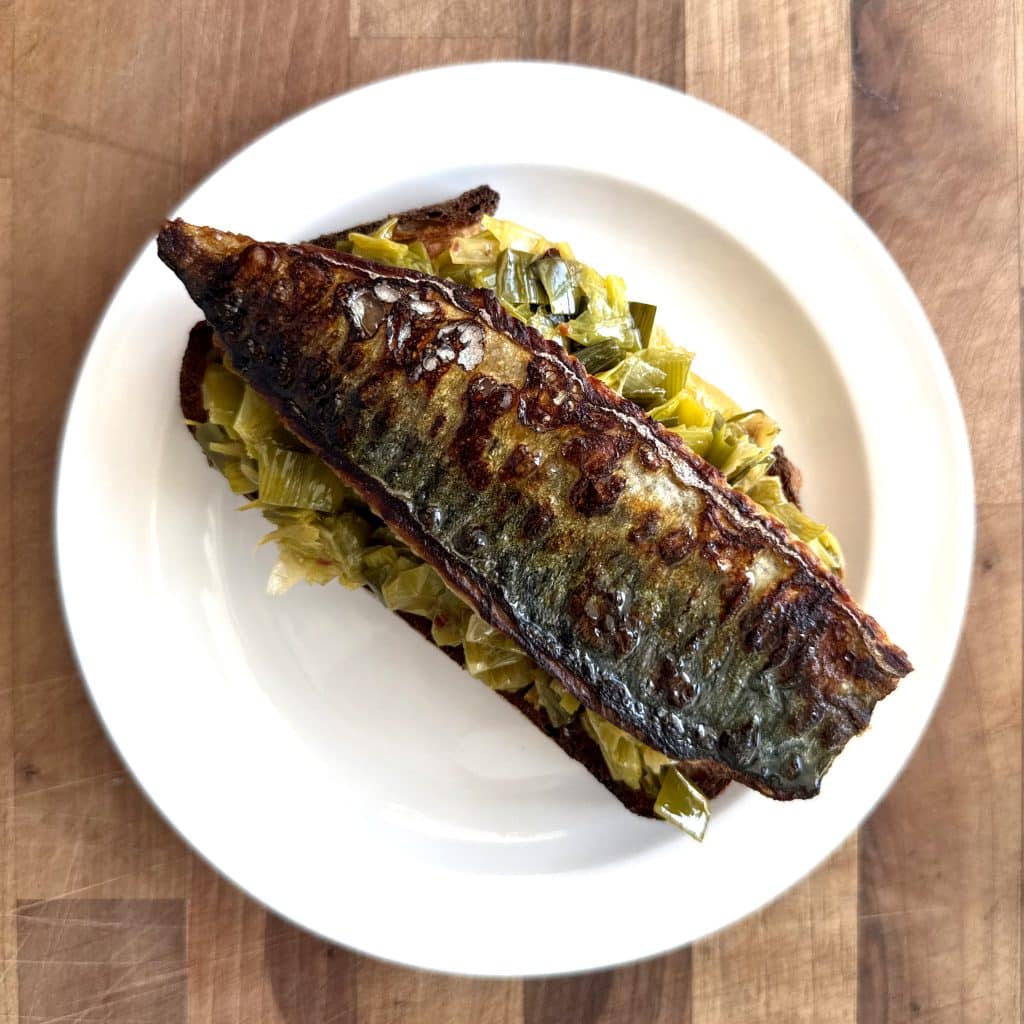
Heat, by contrast, is about directness. A hot pan allows mackerel to do its thing without any adulteration. The skin tightens and crisps, while the flesh below remains rich and intact. Timing is imperative here, but not complicated: cook almost entirely on the skin side, then give the flesh no more than 10 seconds before allowing a short rest to finish the cooking.
I serve mine with nothing between the fish and toast except a layer of leeks, softened slowly in butter until they collapse into sweetness. Providing contrast without distraction, they bring a gentle, rounded note that steadies the fish.