Food for thought: the illusion of choice
Food writer Felicity Cloake answers our question: Is it always a good thing to have lots of choice?
“IF A SUPERMARKET OFFERS 25 DIFFERENT LOAVES OF BREAD BUT ALL ARE ULTRA PROCESSED, HOW FREE IS YOUR CHOICE?”
Words: Felicity Cloake / Portrait: Jill Mead
Borough Market, which is run by a charitable trust, exists “for community, the love of food and a better tomorrow”. This statement informs everything from our Food Policy to our work with local schools; it also sparks lots of questions about what we do and why we do it. This spring, we’re throwing some of those same questions out to experts beyond the Borough Market community.
This week’s answer comes from Felicity Cloake, the Guardian columnist and author whose books include The A-Z of Eating: A Flavour Map for the Adventurous Cook and Red Sauce, Brown Sauce: A British Breakfast Odyssey.
Question: Is it always a good thing to have lots of choice?
In 1948, the Illustrated London News reported a retail revolution from across the pond, in the form of a new sort of shop where you could “help yourself to superabundance”. The Scotsman was also keen to bring this “New American wonder of the world” to its readers, explaining that the novel phenomenon was “not even, very often, called simply a grocery store” instead “distinguish[ing] itself with the magniloquent title of ‘super-market’”.

Breathless coverage in the British media dwelt hungrily on the astonishing range of goods on offer, and with rationing still in full swing at home, the mere idea of such dizzying choice was enough to sell papers. Eight decades later, the UK has more than 33,000 supermarkets of its own, stocking an average of 25-30,000 lines each. Living in London, I often find myself both excited and briefly paralysed by the sheer variety of goods vying for my attention in huge out-of-town sites.
Though it may seem counterintuitive to claim that more choice makes it harder to choose, decision fatigue is a recognised psychological phenomenon, and one that may have a very real effect on our diets. A recent paper published in the journal Nutrients pondered whether the “depleted mental energy, exhaustion, poorer decision-making abilities, reduced willpower, increased risk aversion, and impaired prioritisation” associated with it might lead to “impulsive and less health-conscious food selections”. While the study’s conclusion suggested that more research is required, I certainly find it all too easy to be distracted by a colourful display of cheesy corn snacks when searching for dried beans or wild rice – after all, Wotsits are an undeniably simpler way to sate one’s hunger.
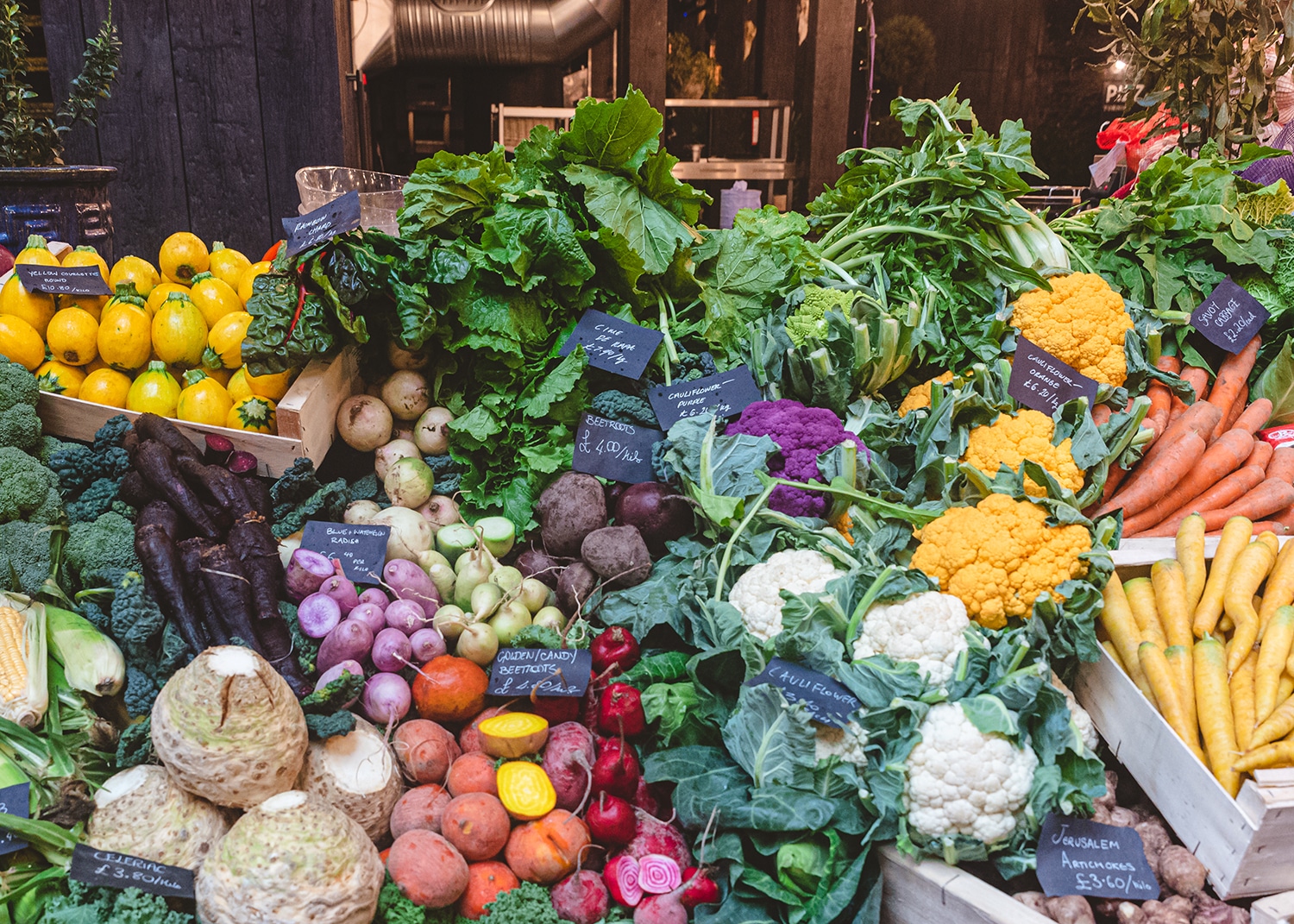
Of course, a good market is similarly abundant – stalls overflowing with frothy green carrot tops and soft fruit, rounds of Italian cheese as big as tractor wheels and butcher’s displays like ruddy Dutch still lifes – but it’s curated with an eye on quality, rather than uniformity of shape or supply. Because the individual businesses are usually run either by producers or those with a personal relationship with them, and because they’re far more constrained by space than even an urban convenience store, they tend to specialise in one thing, done really well. The diversity comes from having lots of different stalls.
Prioritising quality also tends to mean only stocking what’s in season: asparagus, which is four percent sugar when it’s harvested, loses over half of that sweetness within seven days of picking, with the decline fastest in the first 24 hours, making the fact it’s now available all year round from Peru feel like dubious progress. In early summer, however, our markets are full of juicy green English spears, making it practically a patriotic duty to eat yourself silly before they make way for pert little peas and magnificently craggy tomatoes.
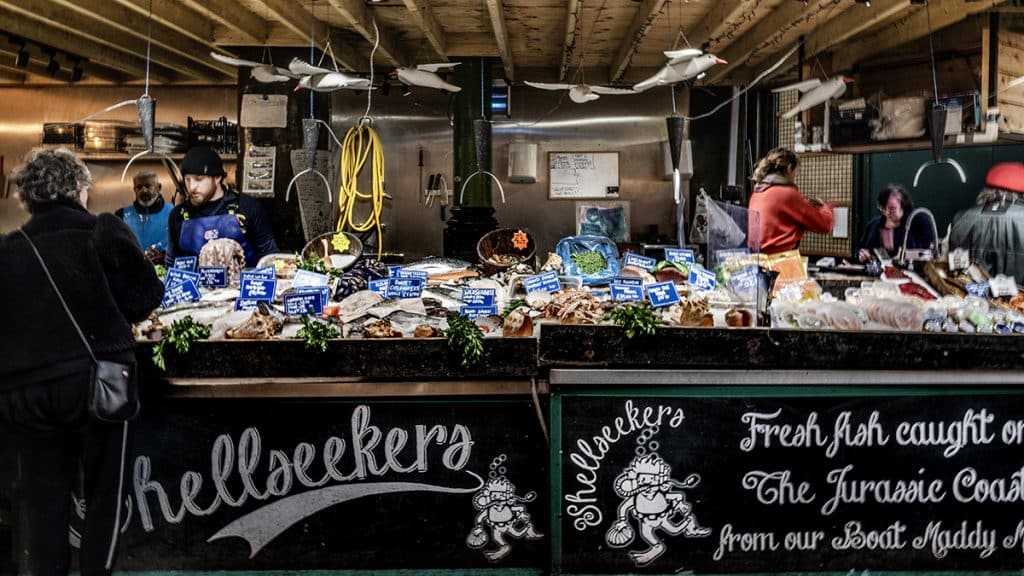
This is not to say supermarkets are without value for the time-pressed cook – they’re designed to be perfectly efficient, to give you everything you need (and a few things you might not) with the minimum of friction, and sometimes that’s useful. Markets don’t work like that. Even if I come to Borough with a list – and I usually come hunting for ingredients I can’t find in my local area – it often changes when I walk round and see what looks good on that particular day. Perhaps I’m after wild sea bass at Shellseekers but have my head turned by the Dorset red mullet on the slab instead, or come for spring greens but also snap up Jumi Cheese’s wild garlic-stuffed La Bouse while they still have it. Taking the time to browse and talk to stallholders may not be the fastest way to shop, but it is pleasurable, and often educational too. Thanks to just such a chat with one of Borough’s butchers a few years ago, I learned how much of meat’s flavour is stored in the fat that’s so often removed from pre-packaged cuts – and changed my preferences accordingly.
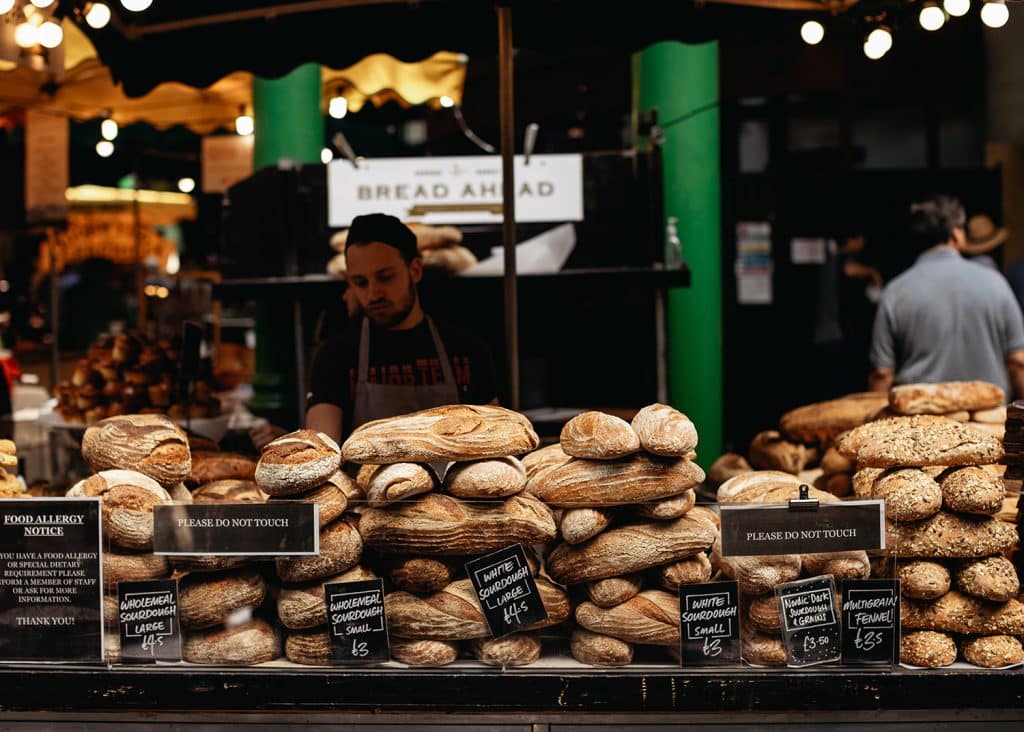
In an increasingly self-service world, we’re slowly learning to value such expertise again, to allow ourselves to be gently steered towards the correct type of sausage for cassoulet at Le Marché du Quartier or advised on the flavour of Cambodian versus Indian peppercorns at Spice Mountain. And though no one likes to waste their hard-earned cash, the wise shopper has always known that cheap isn’t the same as value for money; indeed, a 2024 survey by the Food Foundation found that 41 percent of supermarket price promotions are on food and drinks products “high in fat, salt and/or sugar”, while only 3.3 percent were on fresh fruit and vegetables. In other words, what initially appears to be a cornucopia of options is, in the words of the European Consumer Organisation’s Put Change on the Menu report, actually “the illusion of choice” – if a supermarket offers 25 different loaves of bread but all are ultra-processed, how much freedom of choice do you actually have?
To be clear, much as I love the occasional turnip, I’m not advocating for a return to the somewhat monotonous diet of the recent past – immigration and more efficient global supply chains have done wonders to widen our culinary horizons, for which I’m grateful at least three times a day. But when it comes to choice, ‘less but better’ really is more.