Happy valley
How Jumi Cheese has transformed Borough Market into a corner of Switzerland’s Emmental Valley, where dairy rules supreme
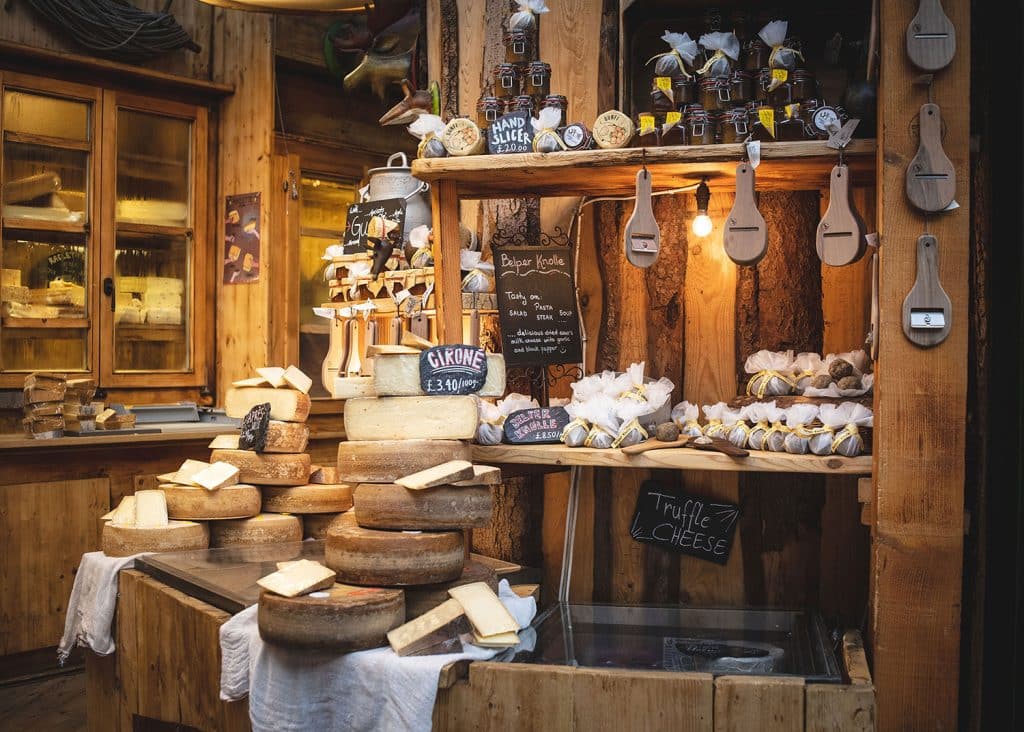
“JUMI’S CHEESEMAKERS ARE AS SMALL AS IT GETS, ALL USING RAW MILK AND FOREGOING INDUSTRIAL STARTER CULTURES”
Words: Tomé Morrissy-Swan
Among the butchers, bakers and street food vendors of Borough Market, eagle-eyed visitors will have noticed something curious – just how cheese-oriented the market is. And with more than 20 cheese purveyors there’s something for everyone. Fans of British and Irish might flock to Trethowan Brothers or Neal’s Yard Dairy. Those of a French persuasion will often make a b-line for Mons Cheesemongers.
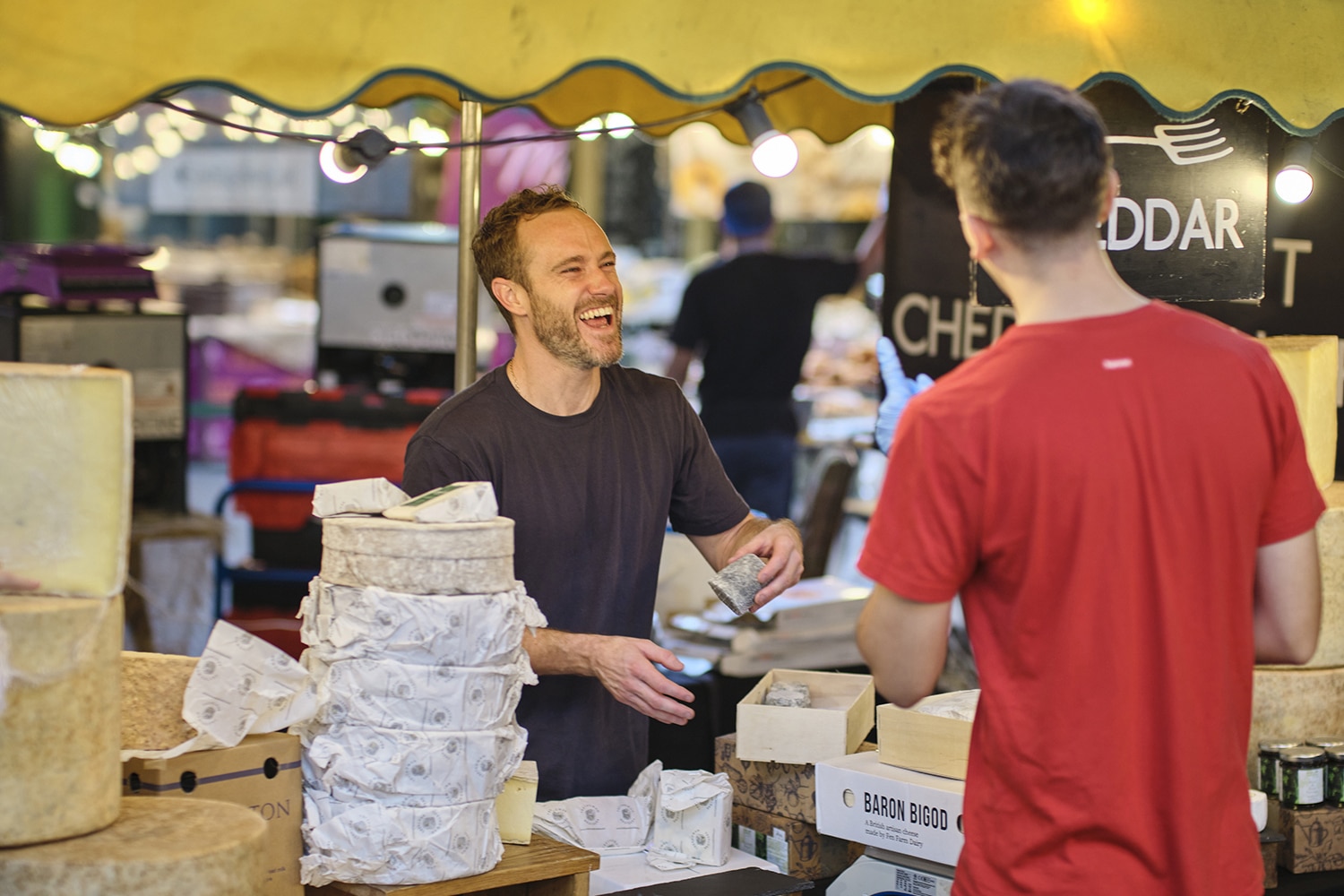
For Swiss, one stall stands out. From fondue kits and gigantic wheels of Emmental to all sorts of innovative, flavoured soft cheeses, Jumi Cheese has become the go-to place for lovers of all things alpine.
Jumi (pronounced ‘You-Me’) was founded by two Swiss cheesemaker friends, Jürg Wyss and Mike Glauser, in the Emmental Valley in 2006, although their cheesemaking DNA has been passed down at least five generations. Until the 21st century, their wares were only sold at local markets, but Jürg and Mike decided they wanted to do more to showcase the fruits of their fertile, picturesque valley, where dairy rules supreme.
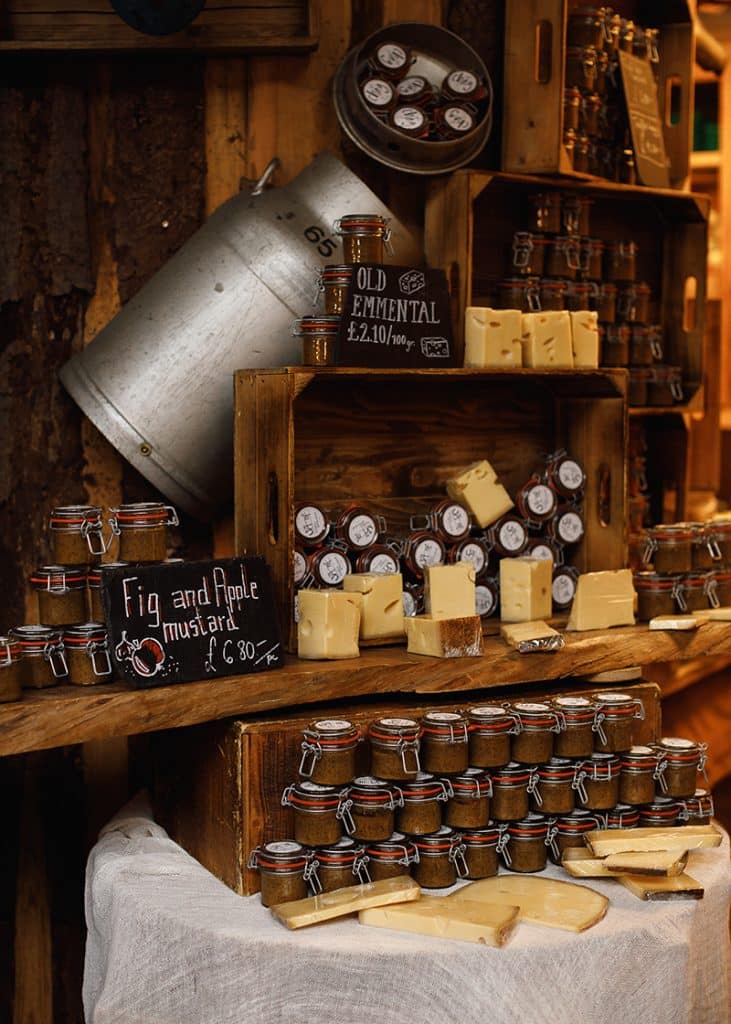
Marcello Basini, who heads up Jumi’s London operation, explains how despite scaling up, the business remains very much a family affair: “If you go to the main dairy, it’s the father of Mike who’s still there in command. Mike’s brother is in the dairy as well. Everyone is involved: relatives, wives, cousins.”
There is a somewhat paradoxical nature to Swiss cheese. It is thought of as among the best – if not the best – on earth. Gruyere is regularly named the best cheese in the world, and the jangle of cow bells in an alpine meadow is as evocative a sound as they come. Yet ‘Swiss’ is also an implausibly wide category. Emmental is apparently the world’s most imitated cheese, and a whole section of American mass-produced knockoffs comes labelled as ‘Swiss’ (essentially, anything with holes). According to Marcello, however, the Emmental Valley is losing cheesemakers every year. Jumi is part of the fight to keep them going.
Yet Jumi is by no means a comprehensive shop. “A lot of people think of us as Swiss but actually, in a way, we’re not,” admits Marcello. “We’re not Swiss as a whole. Switzerland is a small country, but when you talk about cheese, there are just so many. We like to stick with what we do best in our region.” The only exception is one gruyere, kept for those who insist on buying the country’s most famous cheese. Of course, Marcello adds, it is made by a second cousin, so “it’s still kind of within the family”.
From humble beginnings on Saturday mornings at a Bern farmers’ market, which they still attend, Jumi moved to Borough Market in 2011, first with a stall then, when Three Crown Square reopened in 2013, a permanent stand. A bestseller, and Jumi’s signature cheese, is Schlossberger, an alpine hard cheese. How does it differ from the more famous gruyere? “The style is similar, but the taste is different,” says Marcello: a touch sweeter, smoother and earthier.
But Jumi does far more than the mighty alpine wheels for which Switzerland is famed (a single wheel of Emmental can weigh 100kg). On a less traditional note, there’s truffle brie, chilli brie and one with black garlic. Surprisingly, probably the bestseller overall is Belper Knolle, a small ball that looks remarkably similar to a truffle. It’s a hard cow’s cheese with added garlic flakes, black pepper and Himalayan salt, designed to be shaved (like a truffle) over pasta, salad, scrambled eggs, risotto, soup and more. It’s a real flavour bomb.
Blue Brain, which looks exactly as you’d expect, like a cartoon cerebrum, is mild and creamy – or at least the young version is. The six-month aged option, which grows faintly terrifying yet perfectly edible moulds, is wincingly tangy and sharp, but popular among thrill-seeking blue cheese lovers. How much can he manage in one sitting, I ask Marcello. A grape-sized morsel, he warns, is about enough.
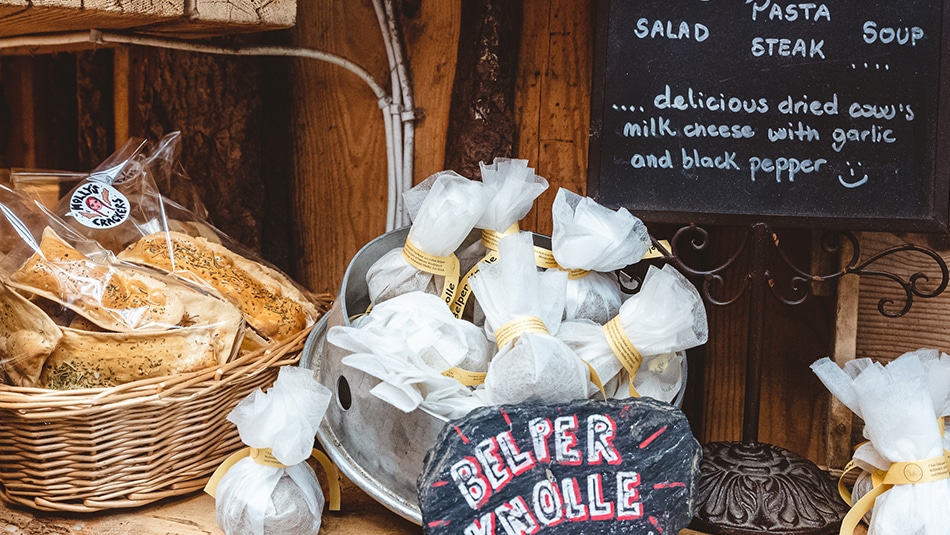
Jumi Cheese has found its niche and is sticking to it. Recently, the British government placed a temporary ban on the import of certain unpasteurised soft French and Italian cheeses in a somewhat drastic response to an infection outbreak among continental cattle. Several Borough cheesemongers have been affected by the ban, but Jumi has no desire to take advantage. Several customers have asked Marcello if he will source the likes of vacherin, a cheese which can be made in regions of both France and Switzerland. “There’s no interest,” says Marcello. “We like to be genuine with what we do. This would be making money from reselling someone else’s cheese from a different place. That’s not our ethos, that’s not what we do.”
“The amazing thing with Switzerland is you still have so many small farms, with 20 to 30 cows in a farm,” he adds. “There aren’t many other places where you see this. There’s also help from the Swiss government.” And Jumi’s cheesemakers are as small as it gets, all using raw milk and foregoing the industrial starter cultures that can lead to standardised flavours, instead passing their unique signature down through the generations.
“Having a niche has helped us. We’re the place for raclette in winter. There are other people selling raclette but people recognise that the quality is with us,” explains Marcello, who points out that the likes of raclette and gruyere are made by thousands of producers, meaning that the quality can vary wildly. He likens Jumi’s output to single vineyard grand crus: “We’re single meadow, single field.”