Food for thought: the impact of AI
Writer and podcast host Giulia Crouch answers our question: How is AI reshaping our relationship with food?
“A REAL EXPERT WILL OFFER BETTER ANSWERS THAN A GUESS-THE-NEXT-WORD MACHINE – AND MAKE YOU HAPPIER TOO”
Words: Giulia Crouch
Borough Market, which is run by a charitable trust, exists “for community, the love of food and a better tomorrow”. This statement informs everything from our Food Policy to our work with local schools; it also sparks lots of questions about what we do and why we do it. This spring, we’re throwing some of those same questions out to experts beyond the Borough Market community.
This week’s answer comes from Giulia Crouch, the food writer and host of Borough Market’s Borough Talks podcast.
Question: How is AI reshaping our relationship with food?
Like it or not, AI is here to stay. From how we research topics to how we write difficult emails, algorithmic companions such as ChatGPT and Claude have (astoundingly) quickly worked their way into our everyday lives. Inevitably, as more and more AI recipes (literal slop) hit social media and home cooks turn to large language models (LLMs) for ideas and information, these sophisticated programs are also influencing how and what we eat.

As a food writer, I’ve so far felt relatively sheltered from the much-touted AI takeover. LLMs, I figure, can’t eat, and food writers need to be able to. Cookbook author Sabrina Ghayour is similarly upbeat. “I’m not threatened,” she says, asserting that while AI can spit out rudimentary recipes – American pancakes, avocado toast, fried eggs – it can’t offer anything truly original. Sabrina experiments, tests, tastes, adjusts and uses her imagination. “My food isn’t traditional – it dips into the Middle East and marries it with the West. For that ilk of recipes, AI is just not a threat.”
Recipes like hers are a product of real-world experiences that a predictive word system can never hope to replicate. A real (human!) cook can produce food that reflects their lives and influences – what their grandma taught them, that amazing meal they had on the Amalfi Coast that time, or tried-and-tested family recipes tweaked over generations. An LLM pasta recipe will scrape multiple pasta dishes from the internet and amalgamate them into something that sounds reasonable. As a result, there’s as much personality in its creation as a sum put through a calculator.
AI recipes often have gaping holes in them. I typed in “quick and tasty recipe” and Chat GPT came back with a “10 Minute Garlic Halloumi & Lemon Bowl” where the lemon was “optional”. Huh? Spinach, bread, nuts and seeds were also optional leaving only halloumi and garlic. This is not a meal, Chat. In addition, the timings are nearly always off. It’ll say you can cook onions in five minutes or make a pasta sauce with canned tomatoes in an unbelievably short time. Because these programs are designed to please the user, no matter what, if you ask for “quick” it’s going to meet those parameters whether the finished dish works or not.
With a bit of care, an AI model can be prompted to deliver recipes that work. But, given that it can’t taste or test things, it relies on the work of real authors to teach it how to construct them. Sue Quinn is one of the hundreds of food writers who’ve had their books used without permission to train generative AI models, and when she found out she was furious. “This ‘data set’ – otherwise known as the blood, sweat and tears of authors – has been scooped up by tech wizards and chopped into word salad to feed the AI algorithm in order that it can generate written material that sounds like a human produced it,” she says.
While angered that a few powerful companies are nicking people’s work for commercial enrichment, Sue, like Sabrina, does believe that proper cookbooks still have a future. “I think the people who buy them are interested in more than the recipes: original stories, creativity and beautiful imagery – not just recipes – and I don’t think AI offers that. Yet.”
In the restaurant sphere, most chefs I’ve spoken to feel similarly secure about their jobs. Elliot Hastroudi, head chef at Camille in Borough Market, is sure that AI won’t ever truly replace the skills his industry relies on. “Sure, there are benefits that I can see in different fields – using AI in farming for yield optimisation and using it for demand forecasting to reduce waste is incredible. However, in the kitchen, there is a limit. AI-powered robotic chefs? It’s a no from me. How can you match that intuition of service, seasoning and creativity? Moreover, using AI for recipes is pure laziness and will breed so many menus of a similar format. We already have enough of that – it’s time to think outside the box.”
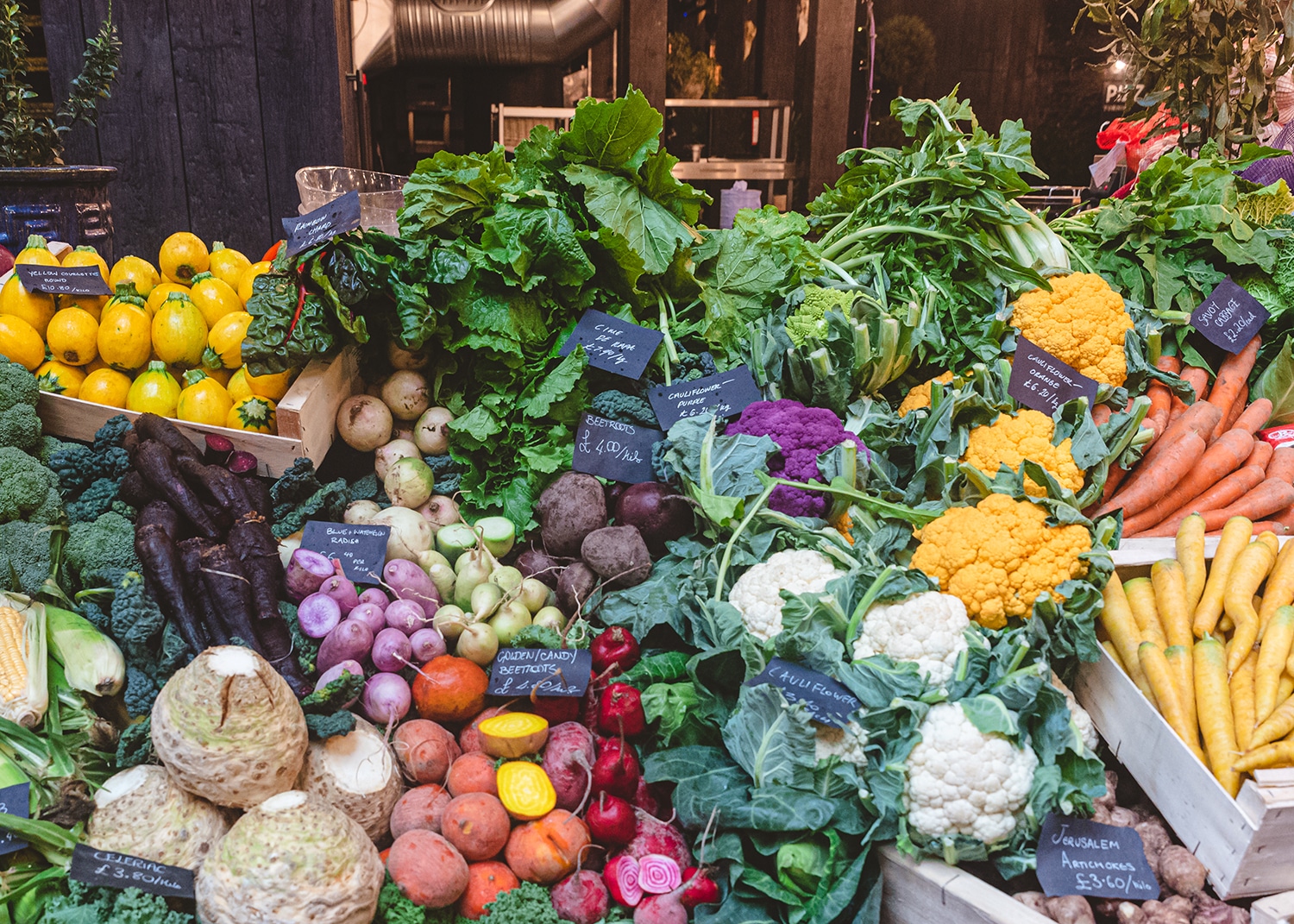
For the home cook it seems there is one very helpful use, and it’s: “What can I do with these random ingredients in my fridge?” Many of my friends use it in this way, which is undoubtedly positive for tackling food waste. It can also be good for answering uber-specific culinary questions. I’ve used AI to ask if my homemade kefir was okay when it started to look a little funky, and whether you can eat a certain type of Sardinian artichoke raw. That said, it’s not always 100 percent accurate. Upon sending it a picture of a jerusalem artichoke and asking, “What vegetable is this”, it swore blind it was a poisonous bulb that under no circumstances should be eaten.
With its inherent flaws, my suspicion is that the AI revolution will soon trigger a backlash. It will draw people to seek out obviously human-made things, with all their quirks and idiosyncrasies. I predict a move towards experiences – in-person food shopping, cooking classes, wine tastings, talks by chefs and food writers. Human interaction will become ever more important.
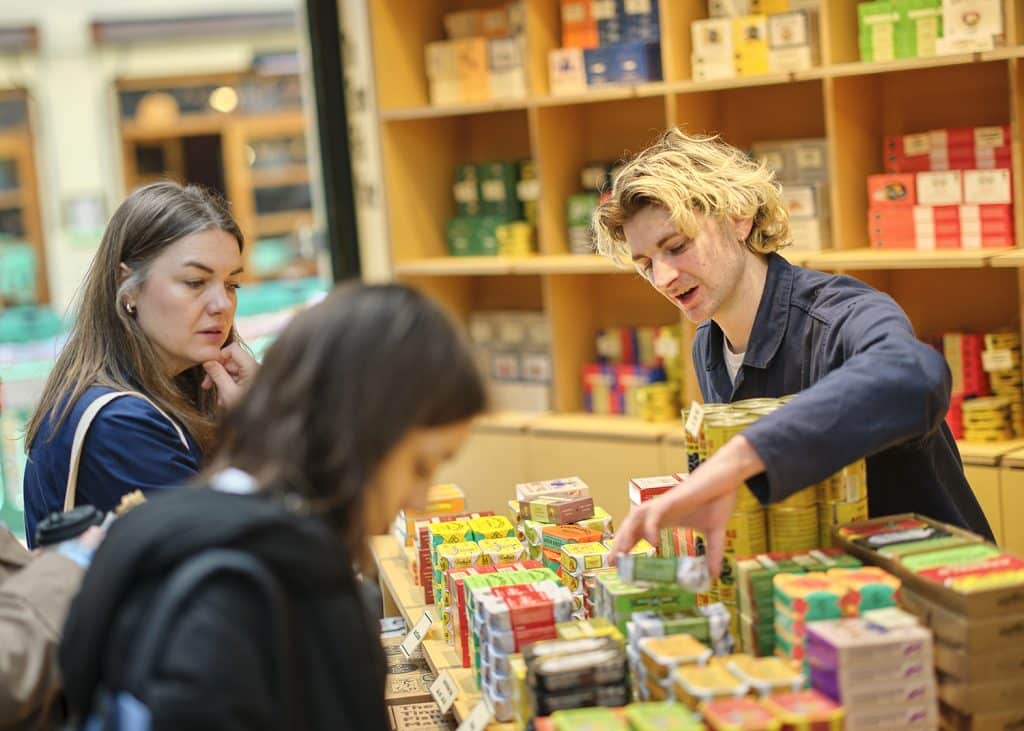
A food market like Borough is going to be so precious in this new age. It’s a place of deep and diverse human expertise, with a breadth of traders who are exemplary in their particular craft. Instead of prompting ChatGPT and never being sure if you can trust what it says in reply, ask one of the butchers what the best way to roast a chicken is, or the best cut of beef for a slowly simmered stew. Instead of Gemini, ask one of the coffee experts which beans are perfect for espresso. Instead of Claude, ask the olive oil expert which one pairs best with fish. Interacting with a real person who knows and cares about what they produce or sell will always elicit better results than a guess-the-next-word machine. And it will make you feel happier too.
While it seems like AI is everywhere right now, the best food will always be deeply human experience, imbued with multiple layers of meaning that “Chat” et al will never truly emulate.

Three ways: mackerel
Chef and content creator Ben Slater shares three variations on mackerel on toast
“CURE IT, SMOKE IT OR PLACE IT IN A HOT PAN, AND WHILE THE CHARACTER SHIFTS, THE IDENTITY OF THE FISH REMAINS CLEAR”
Words & images: Ben Slater
Along the British coast, mackerel arrives as the weather begins to warm. From late spring and through the summer, large shoals move quickly, often close enough to shore to be caught with little more than a rod and a steady cast.
For those without access to angling paraphernalia, or indeed a stretch of Cornish beach, there are still reliable ways to secure good fish. If the mackerel has been line-caught, that is the clearest indicator of quality. Each fish is handled individually, which preserves the calibre of the flesh, and the method avoids the collateral damage of large-scale netting.
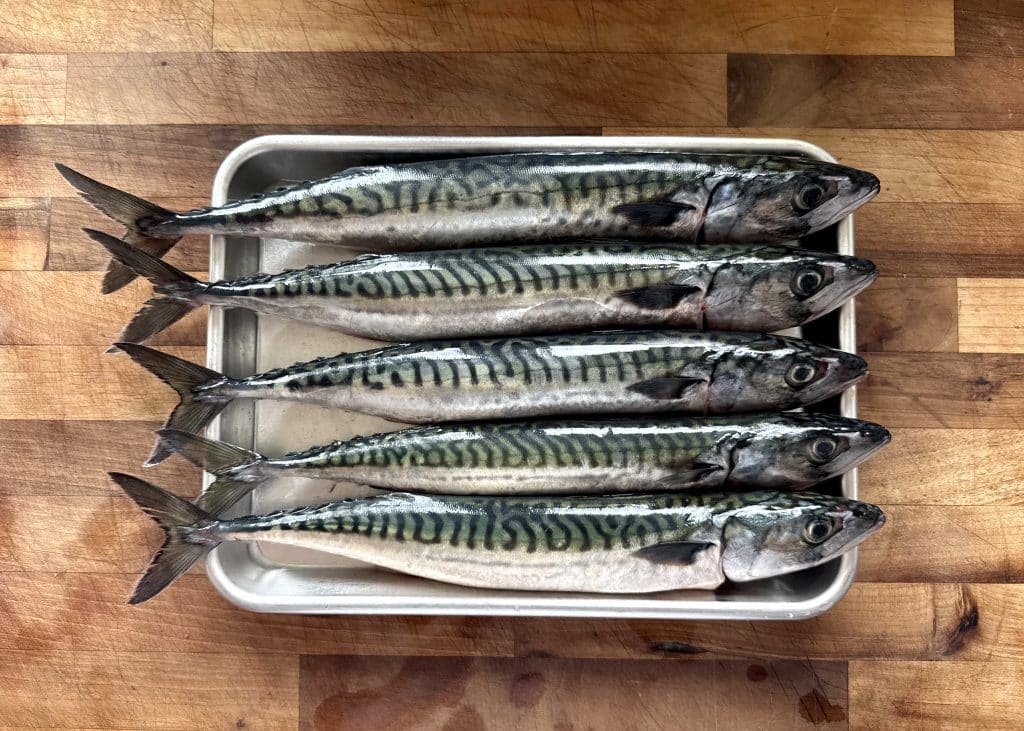
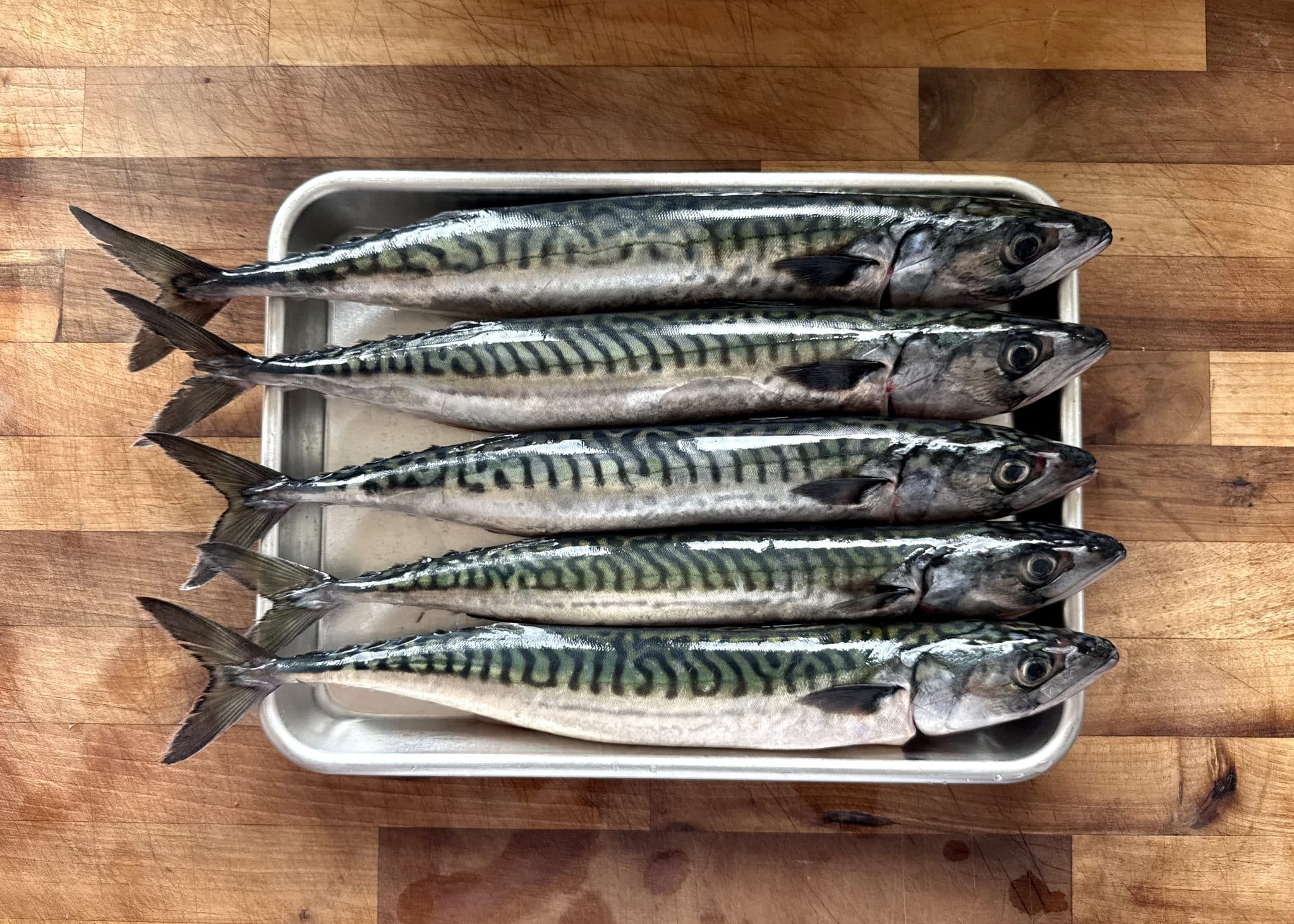
At the fishmonger, look for rigid bodies, clear eyes, bright red gills and a vivid, almost metallic gloss. At their peak, mackerel should glow from their bed of crushed ice. It’s a fish tied closely to time, so when I see any on display that fits the bill, I tend not to hesitate.
What makes mackerel particularly compelling to me is its willingness to be shaped. Thanks to its oily flesh, it tolerates a fair amount of process – and, in the right hands, improves because of it. Cure it, smoke it or place it in a hot pan, and while the character shifts, the identity of the fish remains clear.
Cornish mackerel on toast is a combination defined by a kind of mutual correction. The fish brings richness, all oil and depth, while the toast provides order. Starch absorbs excess oil and offers resistance where the flesh yields. It’s a pairing I return to often – together, they serve as a reminder of just how generous our geography can be.
With that in mind, I have drawn together a few variations on the theme. Three toasts, each built around the same fish and governed by the same principle: fat, salt, starch and acid held in careful balance. British cooking at its most persuasive seldom needs more.
1. Pink pepper-cured mackerel with lemon labneh
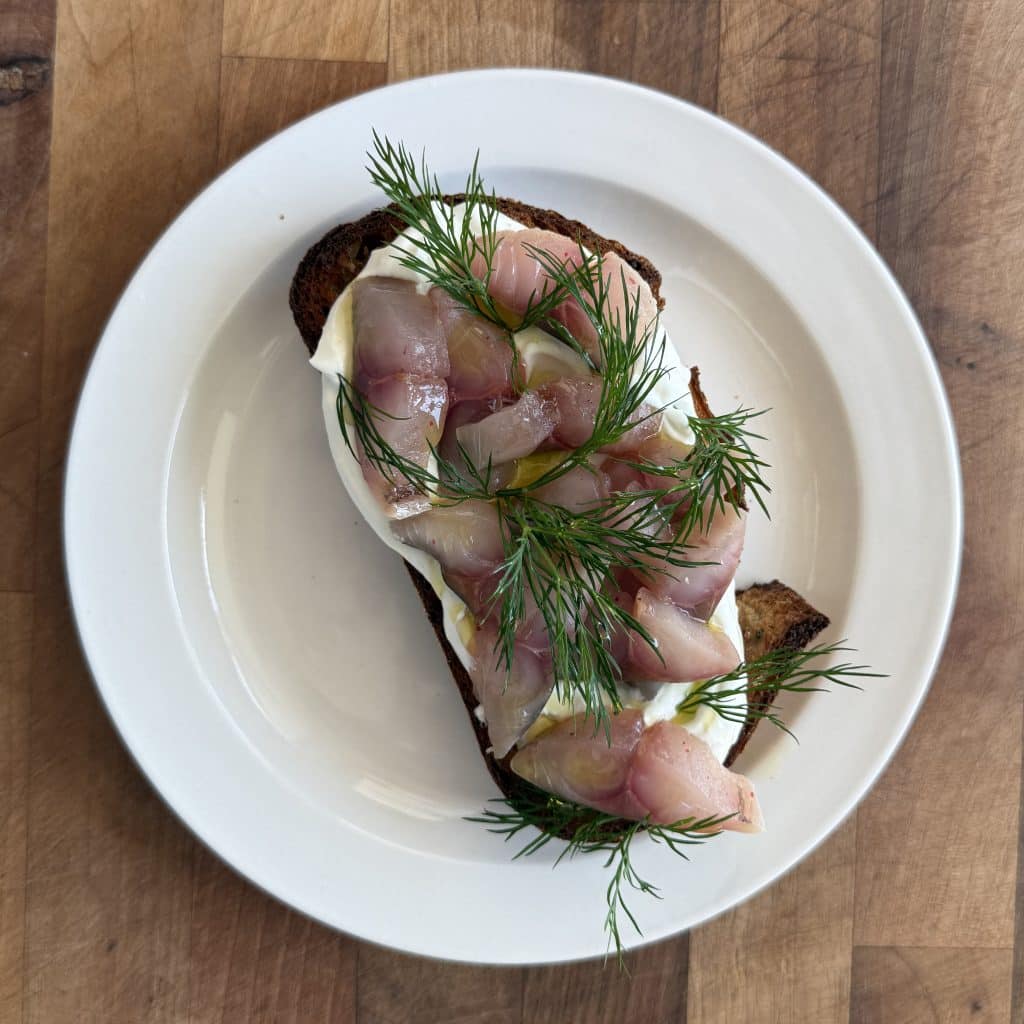
Curing offers the most immediate transformation. A simple mixture of salt, sugar and pink peppercorns, ground briefly and applied with care, alters the texture within minutes. The flesh firms and settles into something sliceable, almost fudge-like in its density. It sits naturally with cultured dairy, which tempers it, and with citrus, which lifts it.
I like to pair the cured mackerel with lemon-spiked labneh, hung overnight to amp up the creaminess. Finished with a heavy scattering of dill. The result feels incredibly clean and utterly impressive, despite its simplicity.
2. Hot-smoked mackerel with horseradish
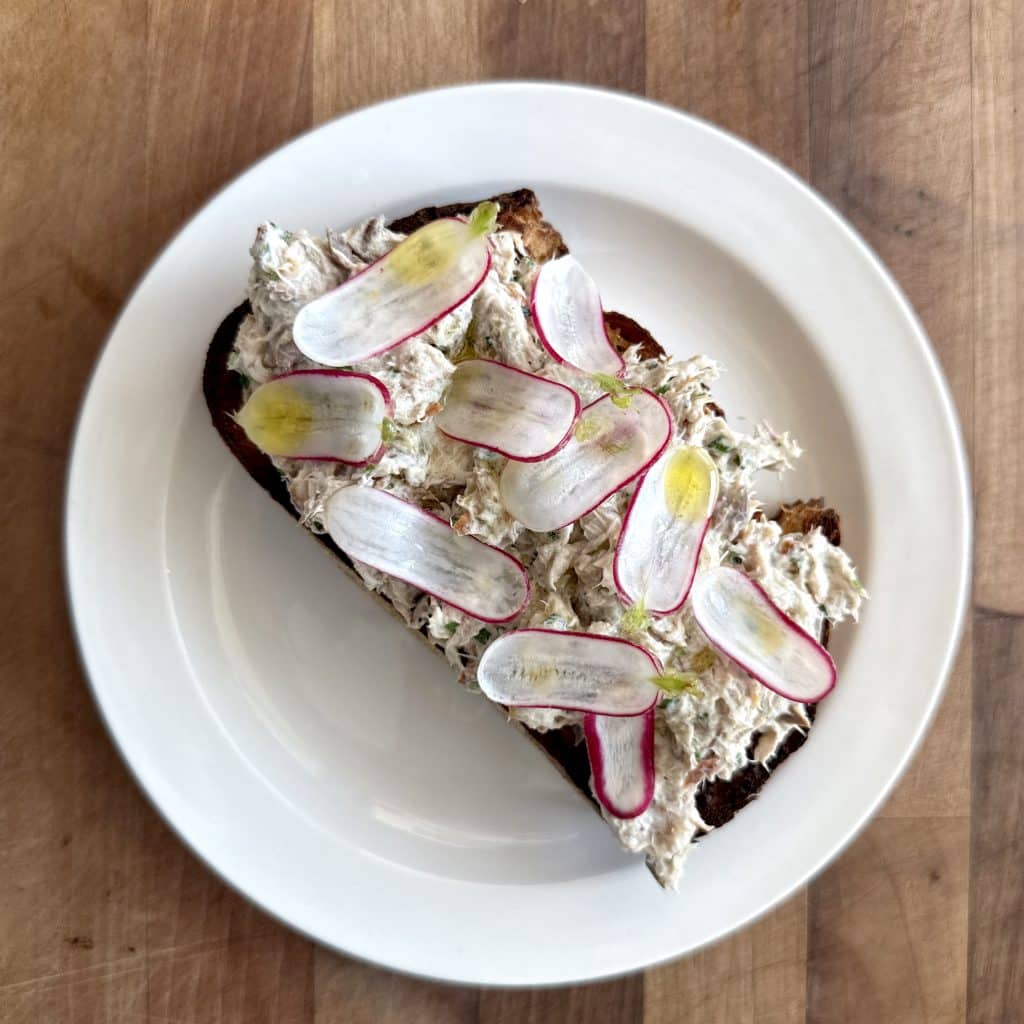
Smoking at home carries a certain theatre, although the process itself is straightforward. Line a roasting tray with foil, scatter in a handful of wood chips and set a rack above them. Place over a high heat until the chips begin to smoke, before laying in the fish and covering tightly. Cook briefly until the flesh turns opaque and gently flakes.
Once smoked, the mackerel breaks into soft flakes that lend themselves to cream cheese, herbs and fresh horseradish. Worked together, this becomes a pâté with character: smoky, sharp and faintly aggressive. I spread it with gusto over heavily buttered toast before laying on thin planes of peppery radish, left in ice water to become crisp.
3. Pan-fried mackerel with leeks
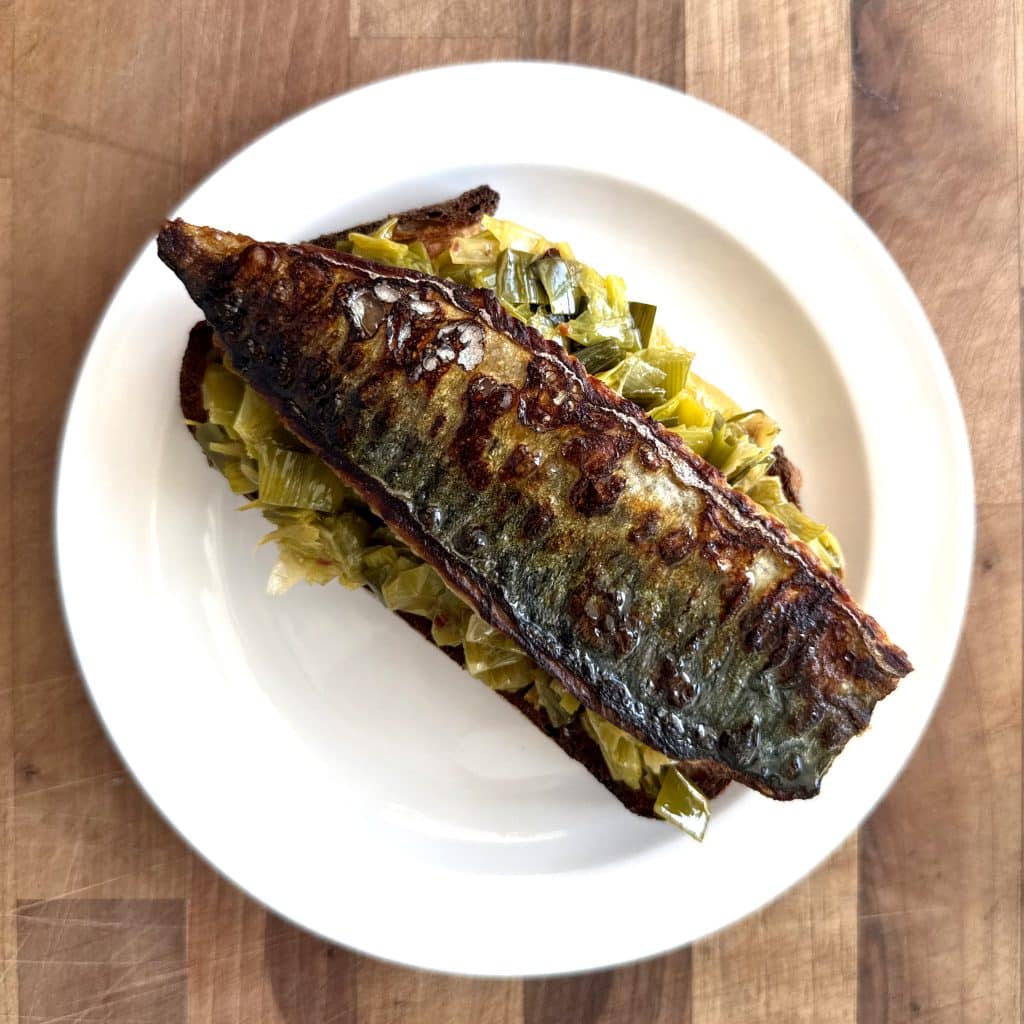
Heat, by contrast, is about directness. A hot pan allows mackerel to do its thing without any adulteration. The skin tightens and crisps, while the flesh below remains rich and intact. Timing is imperative here, but not complicated: cook almost entirely on the skin side, then give the flesh no more than 10 seconds before allowing a short rest to finish the cooking.
I serve mine with nothing between the fish and toast except a layer of leeks, softened slowly in butter until they collapse into sweetness. Providing contrast without distraction, they bring a gentle, rounded note that steadies the fish.
Food for thought: the illusion of choice
Food writer Felicity Cloake answers our question: Is it always a good thing to have lots of choice?
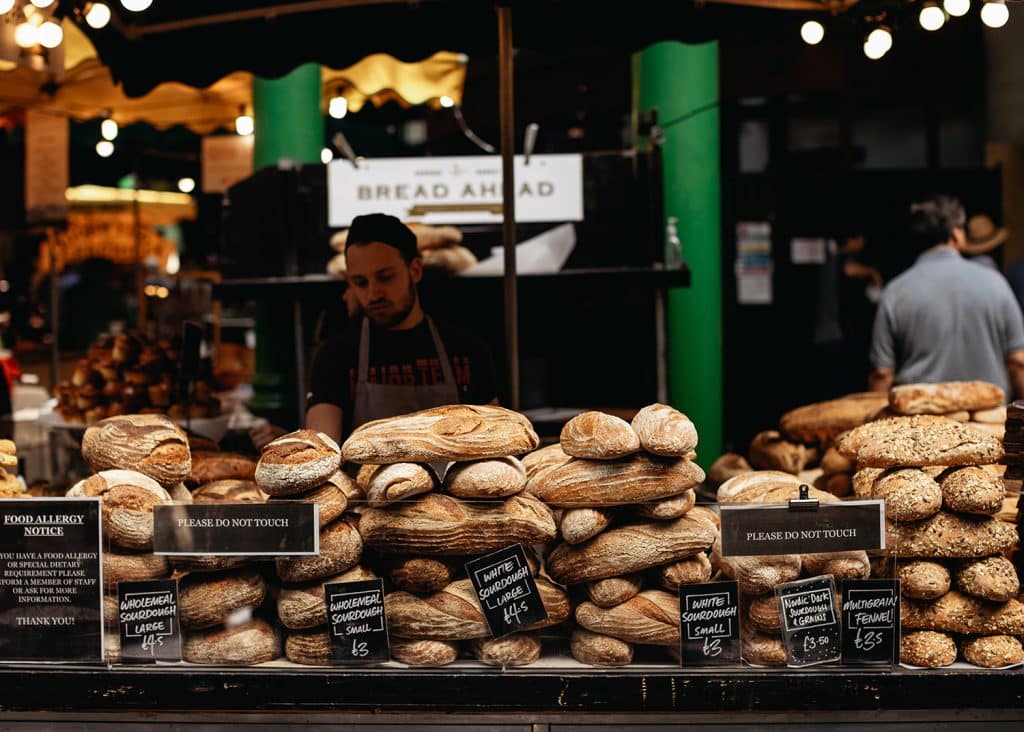
“IF A SUPERMARKET OFFERS 25 DIFFERENT LOAVES OF BREAD BUT ALL ARE ULTRA PROCESSED, HOW FREE IS YOUR CHOICE?”
Words: Felicity Cloake / Portrait: Jill Mead
Borough Market, which is run by a charitable trust, exists “for community, the love of food and a better tomorrow”. This statement informs everything from our Food Policy to our work with local schools; it also sparks lots of questions about what we do and why we do it. This spring, we’re throwing some of those same questions out to experts beyond the Borough Market community.
This week’s answer comes from Felicity Cloake, the Guardian columnist and author whose books include The A-Z of Eating: A Flavour Map for the Adventurous Cook and Red Sauce, Brown Sauce: A British Breakfast Odyssey.
Question: Is it always a good thing to have lots of choice?
In 1948, the Illustrated London News reported a retail revolution from across the pond, in the form of a new sort of shop where you could “help yourself to superabundance”. The Scotsman was also keen to bring this “New American wonder of the world” to its readers, explaining that the novel phenomenon was “not even, very often, called simply a grocery store” instead “distinguish[ing] itself with the magniloquent title of ‘super-market’”.

Breathless coverage in the British media dwelt hungrily on the astonishing range of goods on offer, and with rationing still in full swing at home, the mere idea of such dizzying choice was enough to sell papers. Eight decades later, the UK has more than 33,000 supermarkets of its own, stocking an average of 25-30,000 lines each. Living in London, I often find myself both excited and briefly paralysed by the sheer variety of goods vying for my attention in huge out-of-town sites.
Though it may seem counterintuitive to claim that more choice makes it harder to choose, decision fatigue is a recognised psychological phenomenon, and one that may have a very real effect on our diets. A recent paper published in the journal Nutrients pondered whether the “depleted mental energy, exhaustion, poorer decision-making abilities, reduced willpower, increased risk aversion, and impaired prioritisation” associated with it might lead to “impulsive and less health-conscious food selections”. While the study’s conclusion suggested that more research is required, I certainly find it all too easy to be distracted by a colourful display of cheesy corn snacks when searching for dried beans or wild rice – after all, Wotsits are an undeniably simpler way to sate one’s hunger.
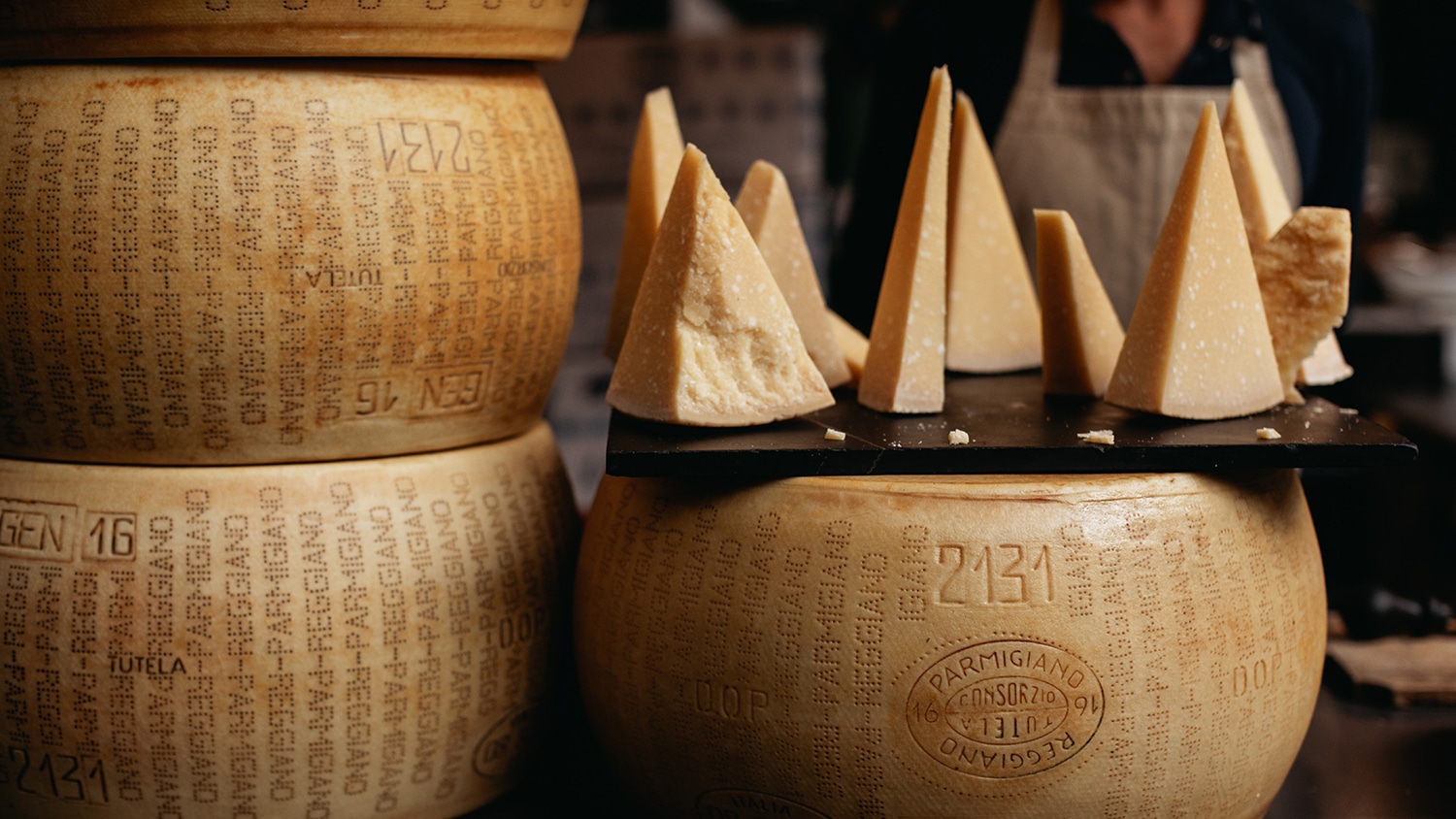
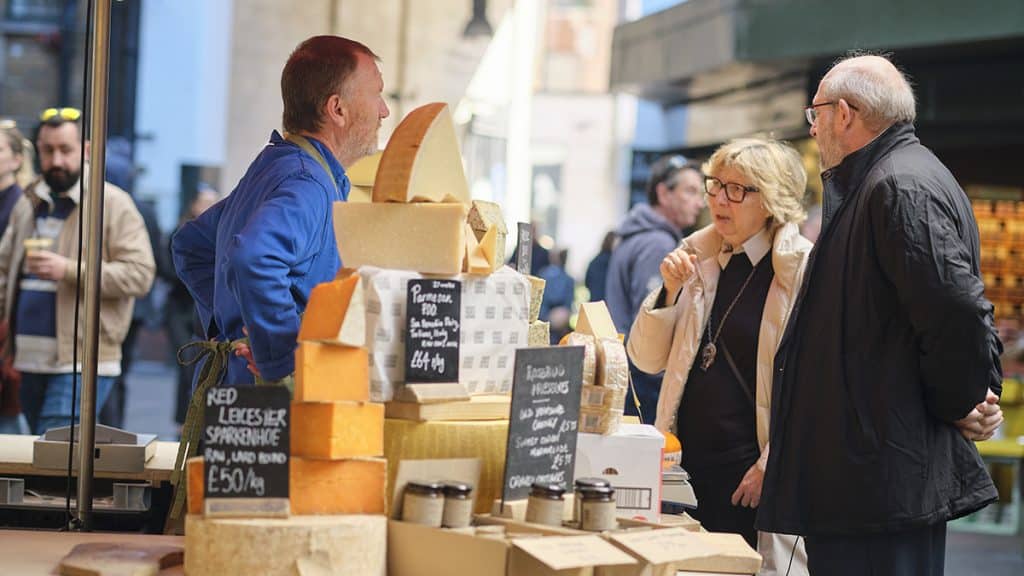
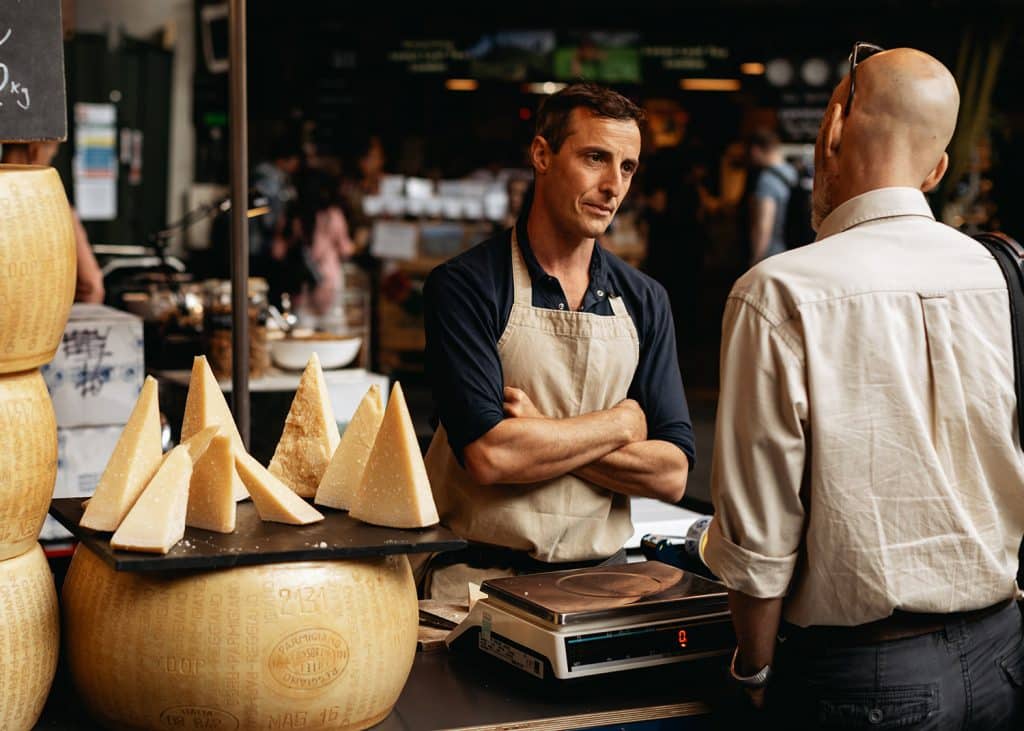
Of course, a good market is similarly abundant – stalls overflowing with frothy green carrot tops and soft fruit, rounds of Italian cheese as big as tractor wheels and butcher’s displays like ruddy Dutch still lifes – but it’s curated with an eye on quality, rather than uniformity of shape or supply. Because the individual businesses are usually run either by producers or those with a personal relationship with them, and because they’re far more constrained by space than even an urban convenience store, they tend to specialise in one thing, done really well. The diversity comes from having lots of different stalls.
Prioritising quality also tends to mean only stocking what’s in season: asparagus, which is four percent sugar when it’s harvested, loses over half of that sweetness within seven days of picking, with the decline fastest in the first 24 hours, making the fact it’s now available all year round from Peru feel like dubious progress. In early summer, however, our markets are full of juicy green English spears, making it practically a patriotic duty to eat yourself silly before they make way for pert little peas and magnificently craggy tomatoes.
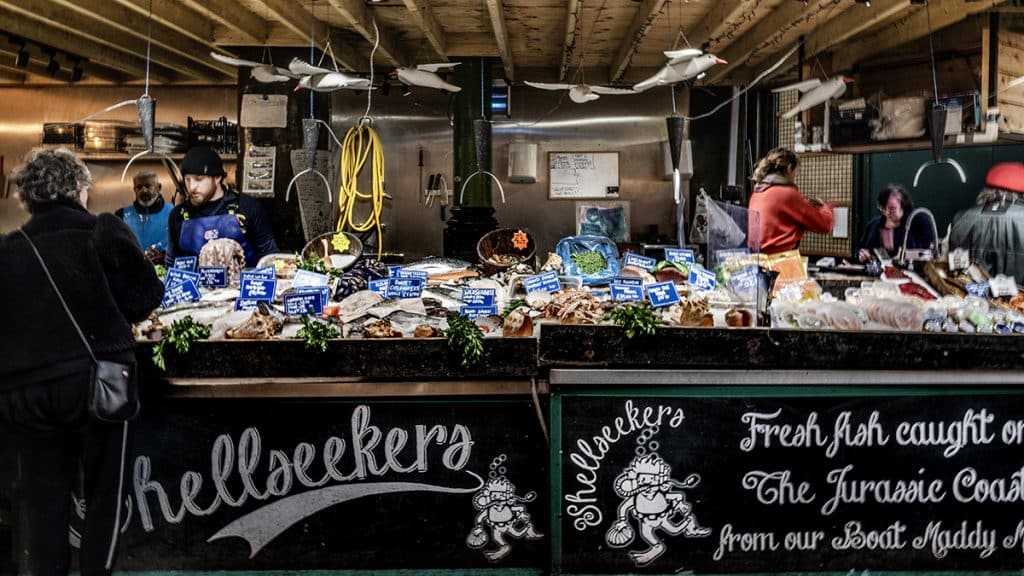
This is not to say supermarkets are without value for the time-pressed cook – they’re designed to be perfectly efficient, to give you everything you need (and a few things you might not) with the minimum of friction, and sometimes that’s useful. Markets don’t work like that. Even if I come to Borough with a list – and I usually come hunting for ingredients I can’t find in my local area – it often changes when I walk round and see what looks good on that particular day. Perhaps I’m after wild sea bass at Shellseekers but have my head turned by the Dorset red mullet on the slab instead, or come for spring greens but also snap up Jumi Cheese’s wild garlic-stuffed La Bouse while they still have it. Taking the time to browse and talk to stallholders may not be the fastest way to shop, but it is pleasurable, and often educational too. Thanks to just such a chat with one of Borough’s butchers a few years ago, I learned how much of meat’s flavour is stored in the fat that’s so often removed from pre-packaged cuts – and changed my preferences accordingly.
In an increasingly self-service world, we’re slowly learning to value such expertise again, to allow ourselves to be gently steered towards the correct type of sausage for cassoulet at Le Marché du Quartier or advised on the flavour of Cambodian versus Indian peppercorns at Spice Mountain. And though no one likes to waste their hard-earned cash, the wise shopper has always known that cheap isn’t the same as value for money; indeed, a 2024 survey by the Food Foundation found that 41 percent of supermarket price promotions are on food and drinks products “high in fat, salt and/or sugar”, while only 3.3 percent were on fresh fruit and vegetables. In other words, what initially appears to be a cornucopia of options is, in the words of the European Consumer Organisation’s Put Change on the Menu report, actually “the illusion of choice” – if a supermarket offers 25 different loaves of bread but all are ultra-processed, how much freedom of choice do you actually have?
To be clear, much as I love the occasional turnip, I’m not advocating for a return to the somewhat monotonous diet of the recent past – immigration and more efficient global supply chains have done wonders to widen our culinary horizons, for which I’m grateful at least three times a day. But when it comes to choice, ‘less but better’ really is more.
Close encounters
Mallika Basu on how getting closer to the source of our food can create positive change in a complex, globalised system
“MOST OF US ARE TOO FAR REMOVED, PHYSICALLY AND EMOTIONALLY, FROM THE PEOPLE AND PROCESSES BEHIND OUR FOOD”
Words: Mallika Basu / Images: Sim Canetty-Clarke, Kris Piotrowski
Food and drink don’t exist in a vacuum. Every ingredient carries a story of land, people, culture and care. Our everyday choices connect to something much bigger: the global food system that feeds us. This matters because the way food gets to us, and what we do with it, shapes our health, our environment and our future.
In my new book, In Good Taste, I explore how, both individually and collectively, we can make a positive difference when we shop, cook, eat and drink. That starts by building closer connections within a global system that can often feel complex and distant.
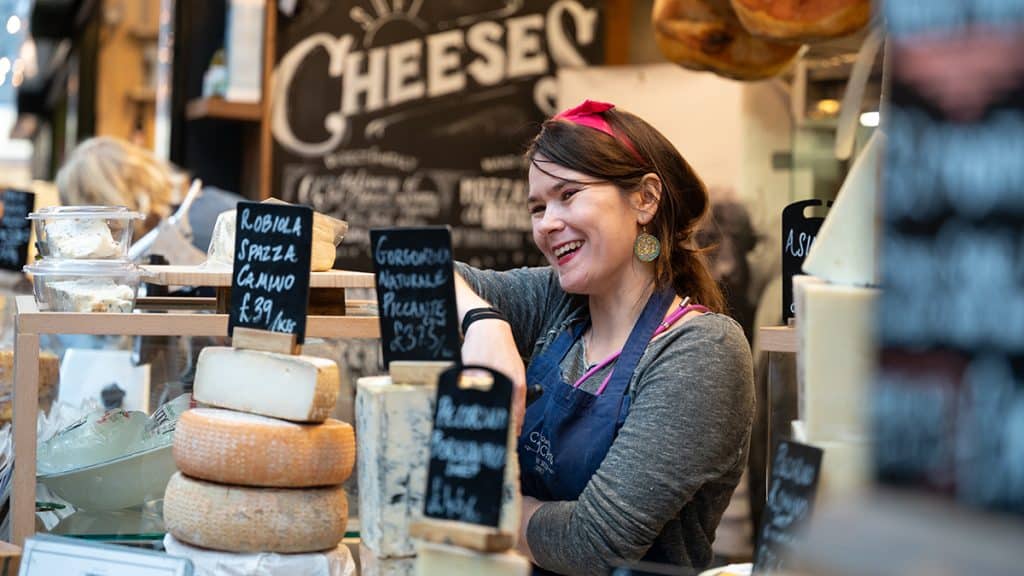
Most of us are too far removed, physically and emotionally, from the people and processes behind our food. It arrives clean, portioned and packaged, ready to go. But for food lovers, curiosity about where food comes from and how it’s produced can be part of the pleasure. It’s also where positive change begins. That’s why places like Borough Market matter so much – places where the food is sold by people who either produced it or know who did and can bring us closer to the stories behind what we eat.
Curiosity plays a dual role. Talking to a trader can open the door to an unfamiliar ingredient, a seasonal vegetable you’ve never cooked before, a lesser-known cut of meat or variety of fish, all of which can help spread demand while keeping our food culture vibrant and evolving. Those conversations also help us look beyond the labels and make more informed choices. Terms such as organic, regenerative or agroecological are useful signals, but they can be quite broad and nebulous in practice. Taking the time to ask questions helps build deeper understanding.
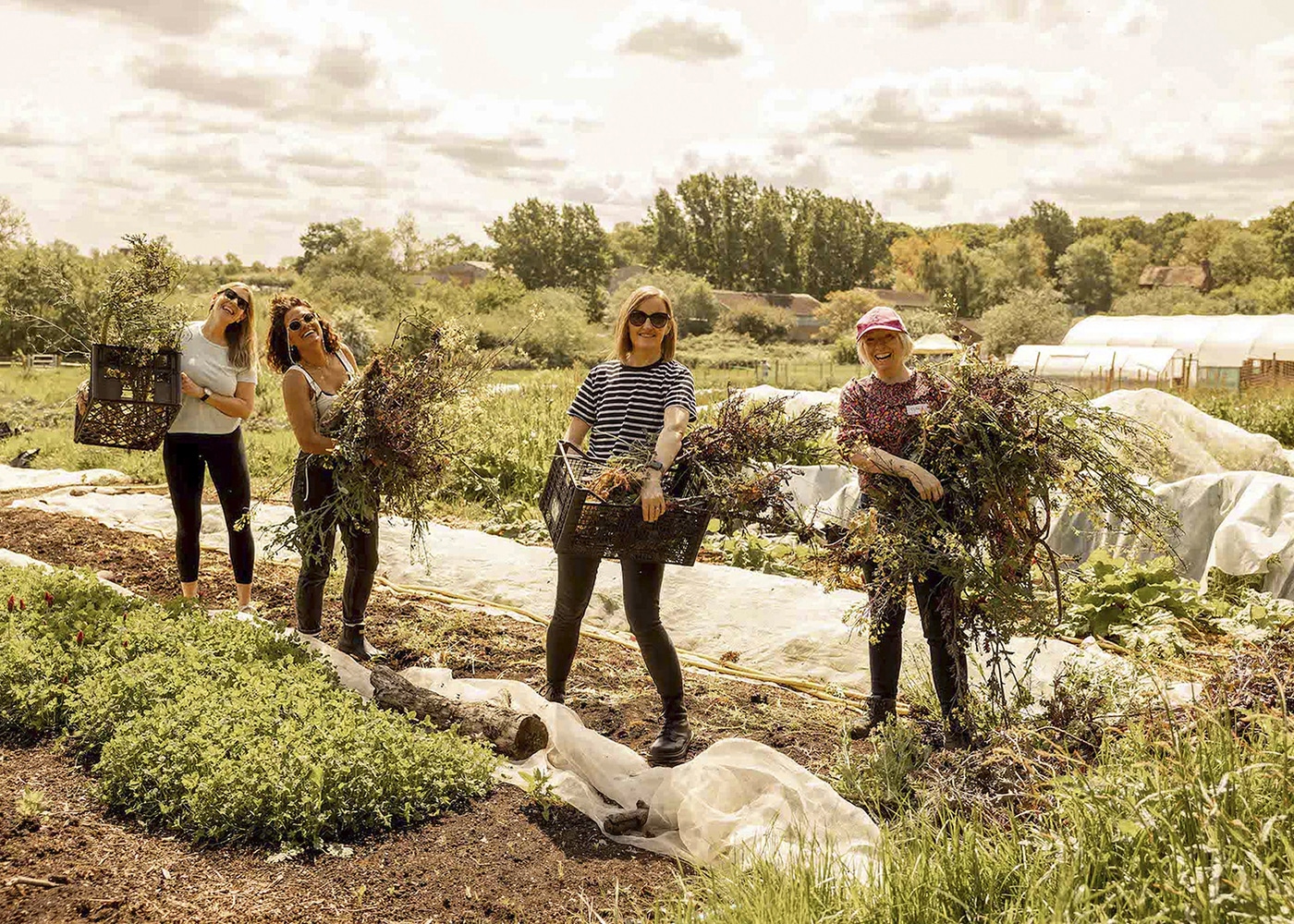
Getting closer to producers also means getting closer to seasonal and local food. Our palates are global, and access to cultural staples from around the world – like turmeric, rice or plantain – is essential for many, but when local produce is available, we should embrace it. It tends to taste better, be more abundant and offer better value when it’s in peak supply. It’s also one of the simplest ways to reduce environmental impact and build resilience in troubled geopolitical times.
For food lovers, positive, practical change doesn’t have to mean giving up the foods we enjoy. Often, it’s about buying less but better. Meat and dairy can be part of a healthy and enjoyable diet, but they are also among the most resource-intensive foods we produce. Eating them a little less often, while choosing more ethical and better-sourced options when we do, can make a meaningful difference. Another powerful step is to eat more beans, pulses and other legumes. These are affordable, versatile and naturally lower-impact foods that have fed communities around the world for centuries. They bring nourishment, flavour and extraordinary diversity to the table.
Finally, valuing every mouthful matters. Enormous effort and resources go into producing our food, yet a significant amount still goes to waste. Planning meals, storing ingredients properly and finding creative ways to use what we already have are simple habits that make a difference. For chefs and restaurants doing their bit, we can take doggy bags and inspiration home.
Together these small, conscious choices add up. When food lovers take an interest in how food is grown, produced and shared, we become more than consumers. We become tastemakers and changemakers, helping shape a fairer food system, one delicious choice at a time.
In Good Taste: What Shapes What We Eat and Drink – And Why It Matters by Mallika Basu (Nine Bean Rows) is available now
Discover more
Three ways: morels
Three Japanese-inflected recipe suggestions for these firm, flavour-packed spring mushrooms
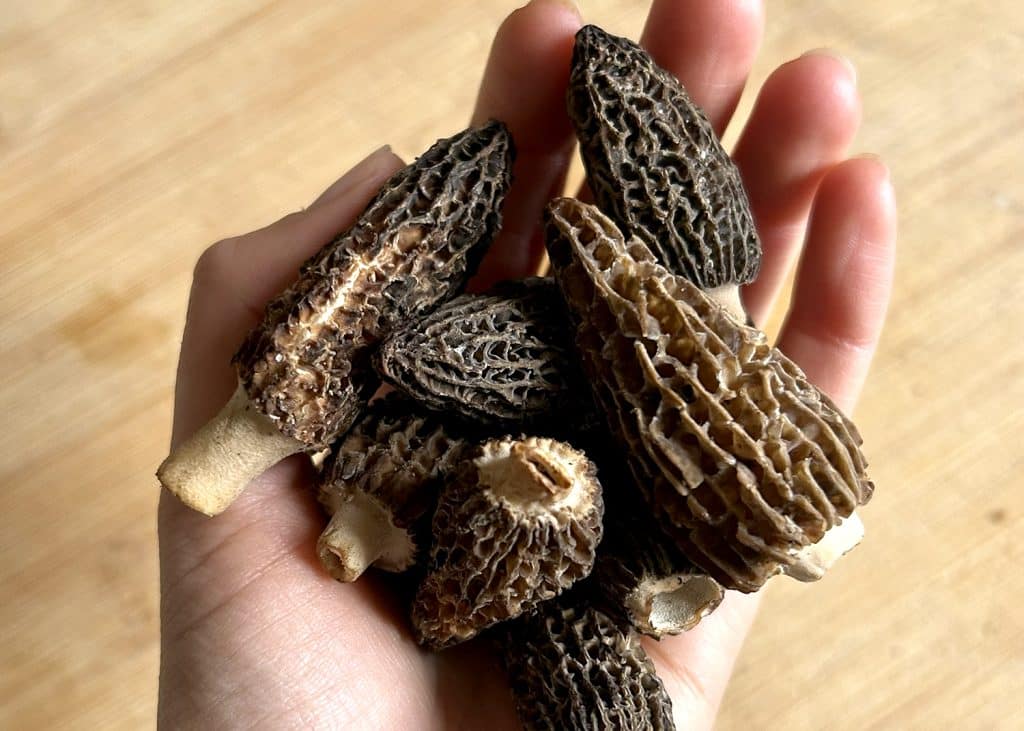
“THE SEASON IS SHORT, SO I REALLY SAVOUR THE FEW TIMES I GET TO EAT MORELS BEFORE THEY’RE GONE”
Words & images: Millie Tsukagoshi Lagares
Living in Tokyo for half the year, I’m surrounded by mushrooms. They’re among my favourite ingredients and a constant in my kitchen: enoki mushrooms in miso soups with wakame seaweed; maitake mushrooms in stir-fries with pork and oyster sauce; shiitake’s stronger flavour in heartier dishes, like being stuffed with mince in a sweet and savoury sauce. Coming back to Europe in the spring, when lots of different mushroom varieties come into season, is always a treat. In particular, I look forward to cooking with morels.
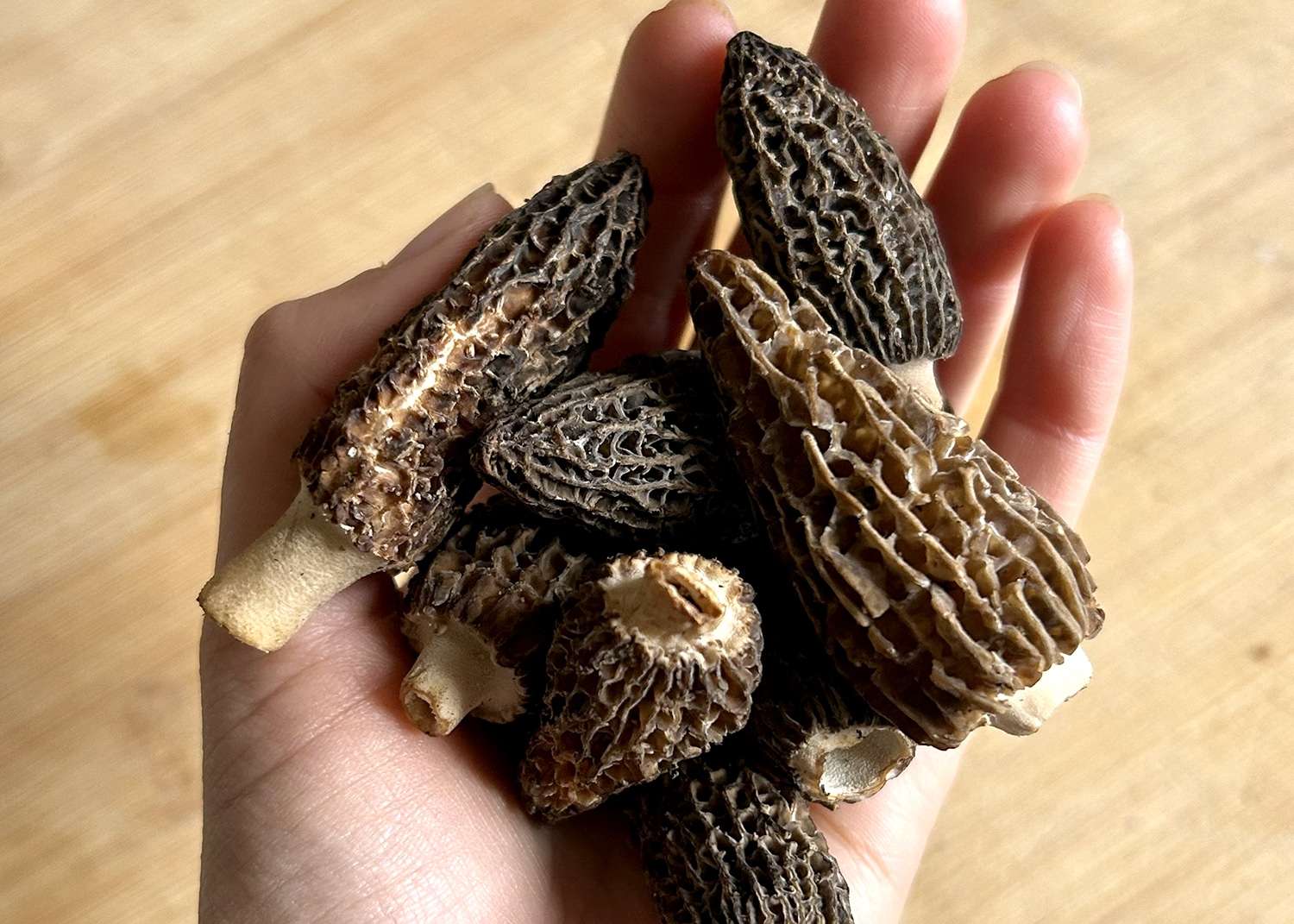
Morels are earthier and deeper in flavour than the mushrooms I use in Japan. Their firmer structure holds up well to cooking, avoiding the floppy or slimy textures that put some people off. Preparing them takes a bit more care, but it’s well worth the effort. The season is short, so I really savour the few times I get to eat them before they’re gone.
The first time I had morels, they were cooked very simply: fried in butter with some herbs, then spooned over toast. Morels are one of those ingredients that really benefit from this kind of straightforward approach. I’ve given them slight Japanese twists in the dishes below, but with no complicated techniques or hard-to-find ingredients.
I love going to Turnips in Borough Market, as they seem to have morels early in the season. Look for those that are dry and firm, avoiding anything soft or slimy. Because of their honeycomb shape, they can trap dirt, so I slice them in half lengthwise and rinse them briefly under cold water, then dry them with kitchen roll before cooking. It’s also important to note that morels must always be cooked, as they’re poisonous when raw, so use plenty of butter or oil and cook them for at least five minutes. I tend to wrap them in paper towel in the fridge and use them within a couple of days.
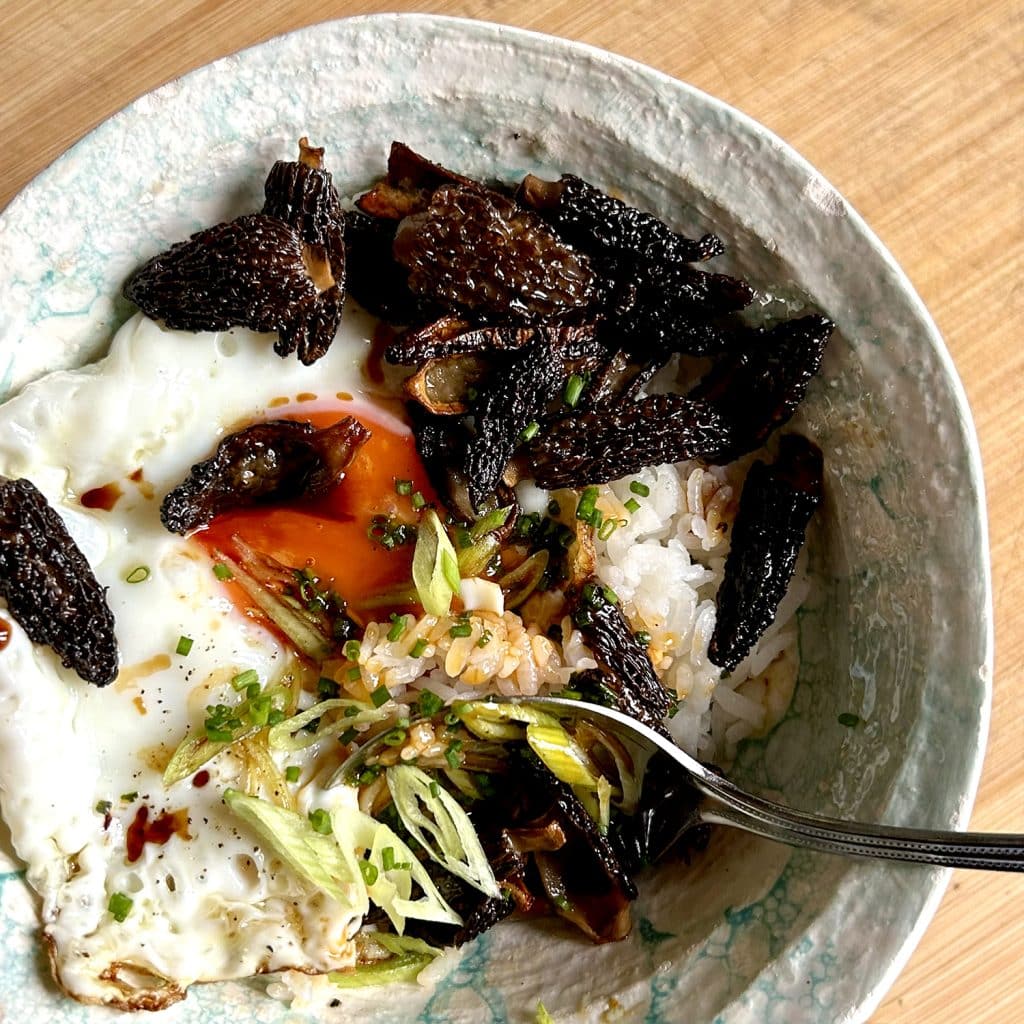
1. Rice bowl with sauteed morels and egg
This is the simplest of my three dishes, barely even a recipe, but it’s so satisfying and allows the morels to stand out. Rice bowls are one of my go-tos when I’m back in Tokyo. They’re such a natural format for a quick, balanced meal – a proper lunch in just 10 minutes.
The morels are sauteed until lightly browned and starting to crisp around the edges, then spooned onto steaming rice. I then fry an egg until the edges are crispy but the yolk is still bright and runny. A light dash each of soy sauce and sesame oil is enough to season the dish, but a sprinkling of spring onion or chives over the top is a nice touch if you’re feeling fancy. This dish is surprisingly rich, so doesn’t need much else.
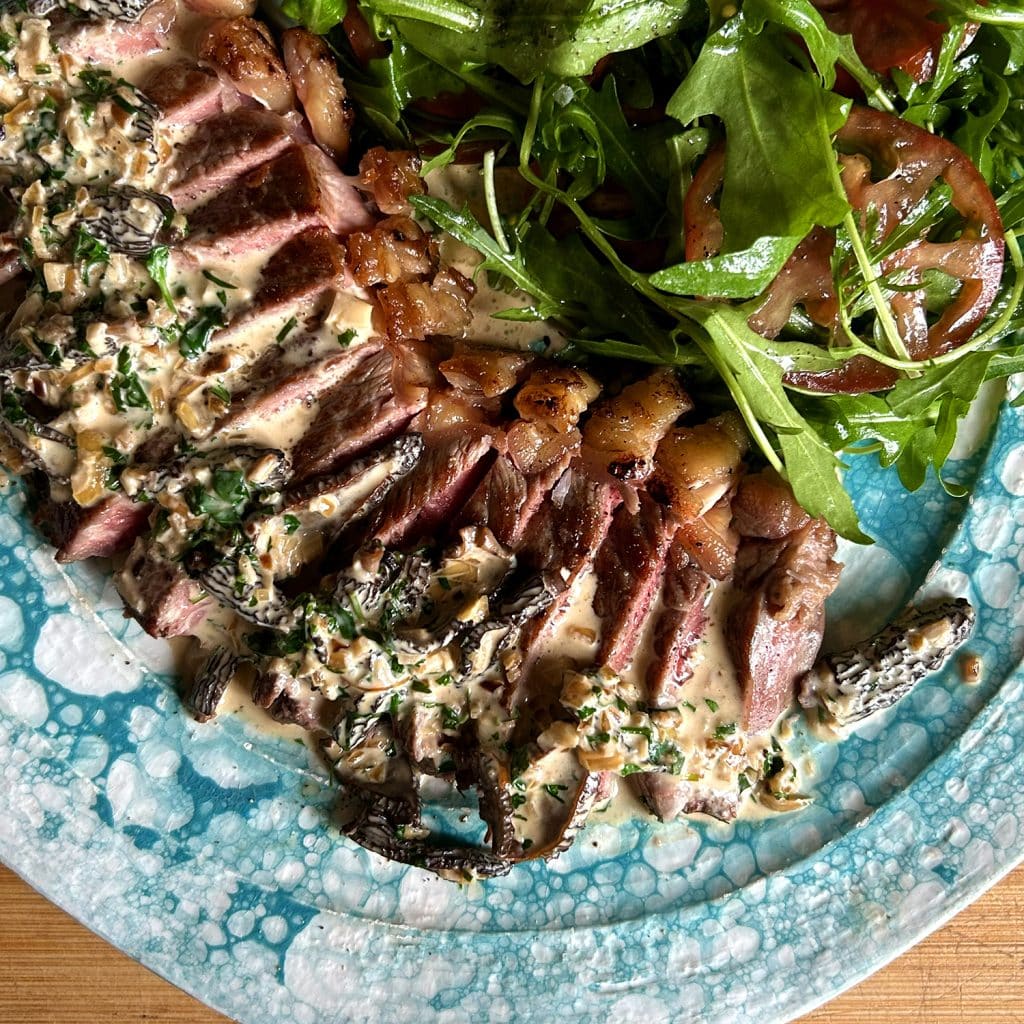
2. Steak with morel and miso cream sauce
Steak and mushrooms are a natural pairing. Outside of morel season, I’d normally use chestnut mushrooms, or even shiitake for a slight Asian twist, but morels add extra depth and texture. The cream softens their intensity and brings everything together into something cohesive but not too heavy. I use sirloin or rump steaks, cooked to a rare or medium rare finish. Let them come to room temperature, then season simply with salt and pepper. Sear in a lightly oiled pan over a medium heat to build a good crust.
While the steak rests, use the same pan to cook the morels in a little butter, then remove and set aside. Add some shallots and garlic to the pan, cook until fragrant, then pour in dash of white wine to deglaze. Stir in some cream, a bit of white miso, chopped parsley and a good crack of black pepper. Simmer gently to thicken the sauce, then add the morels back in and finish with a small squeeze of lemon. Slice the steak and serve on a large platter with the sauce spooned over the top. A simple rocket or fennel salad dressed with lemon and olive oil cuts through the richness. This is an unfussy dish but looks so impressive – rich but balanced, and perfectly doable as a midweek dinner.
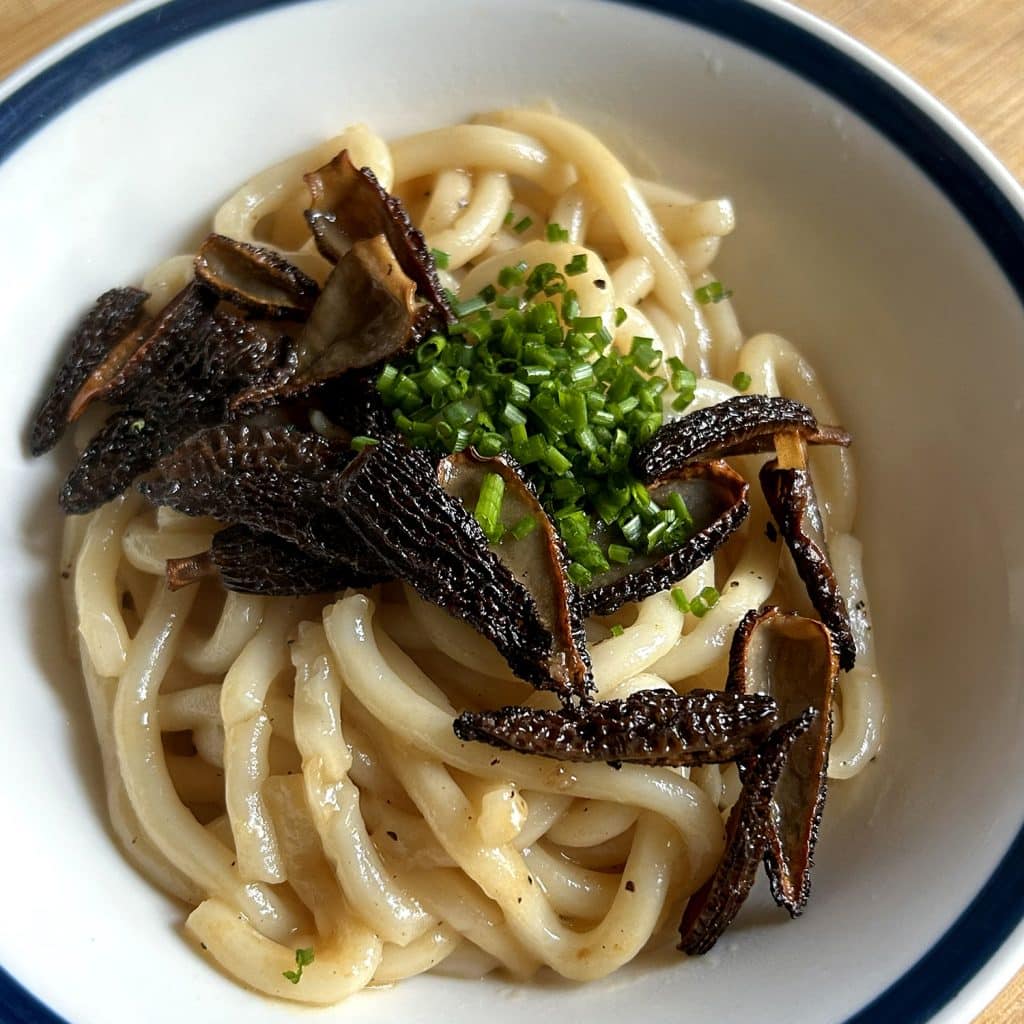
3. Morel and butter udon
This dish sits between Europe and Japan. Udon noodles are chewy and substantial – a texture that works particularly well with morels. Butter isn’t traditionally Japanese, but it appears frequently on modern izakaya menus, often paired with ingredients like mentaiko (salted cod roe), so it doesn’t feel out of place.
I cook the morels first so they’re properly tender and lightly caramelised, then set them aside. The udon is boiled separately, drained (reserving a few tablespoons of cooking water), and added to the mushroom pan with butter and a splash of soy sauce. A little cooking water helps create a light, glossy coating rather than a heavy sauce. Top with the mushrooms, then finish with some chopped chives and a squeeze of lemon juice. It’s such a balanced combination: the butter carries the mushroom flavour, the noodles provide substance, and the fresh herbs and lemon keep it from feeling too rich.
Millie Tsukagoshi Lagares is the author of Umai: Recipes From a Japanese Home Kitchen (Quadrille)
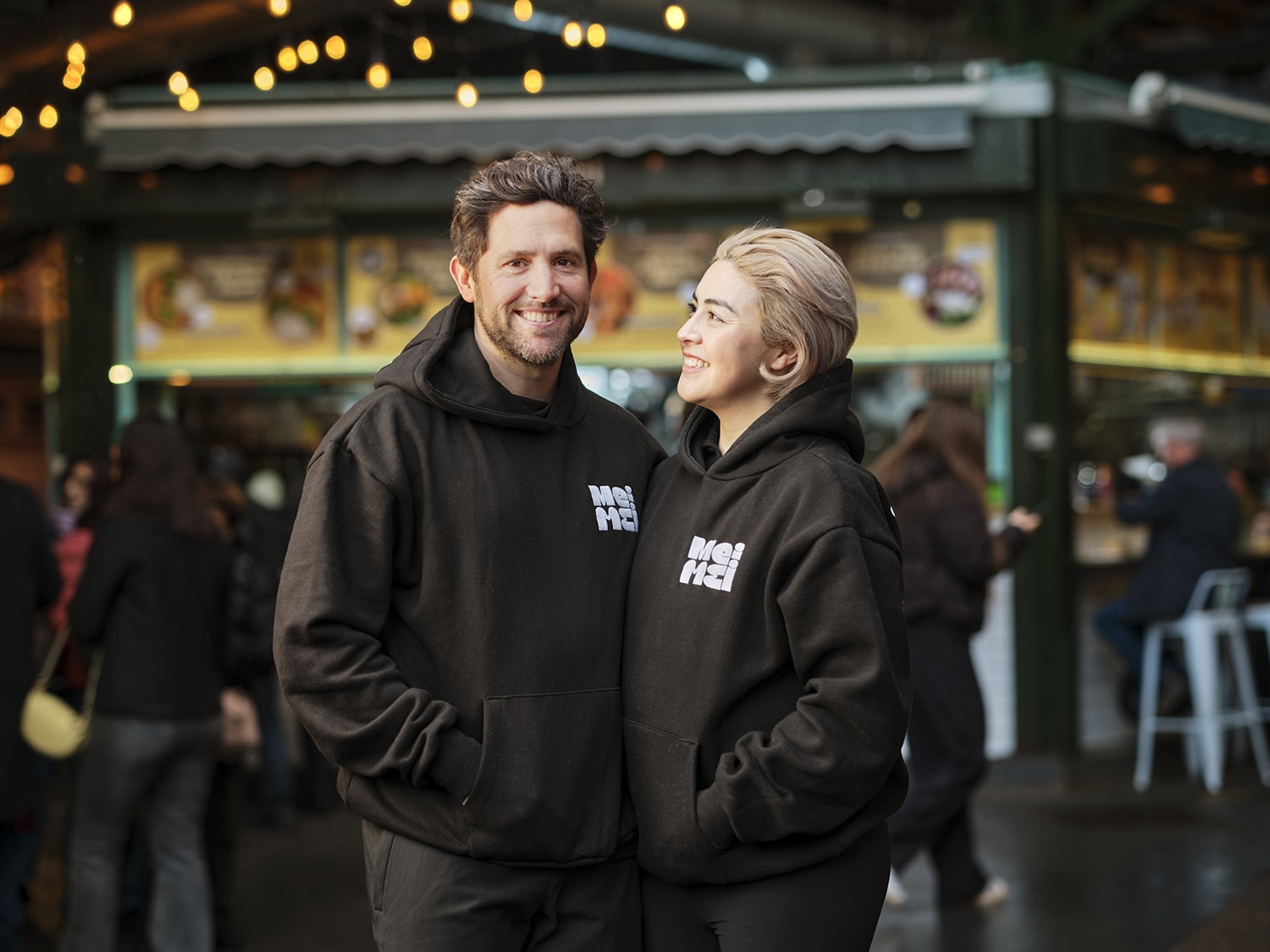
Labours of love: Elizabeth & Steele
Elizabeth and Steele of Mei Mei, partners in both work and life, on falling hard, separating business from love, and sharing small plates on an Aussie beach
“WE GENUINELY UNDERSTAND WHAT THE OTHER PERSON IS CARRYING, BECAUSE WE’RE BUILDING THE SAME THING TOGETHER”
Portraits: Orlando Gili
Unsurprisingly, given the small scale of Borough Market’s businesses, a significant proportion of our stands and stalls are run by couples whose relationships extend through life as well as work: husbands, wives and partners, in various combinations. Ahead of Valentine’s Day, some of these traders have shared with us their love stories and life lessons.
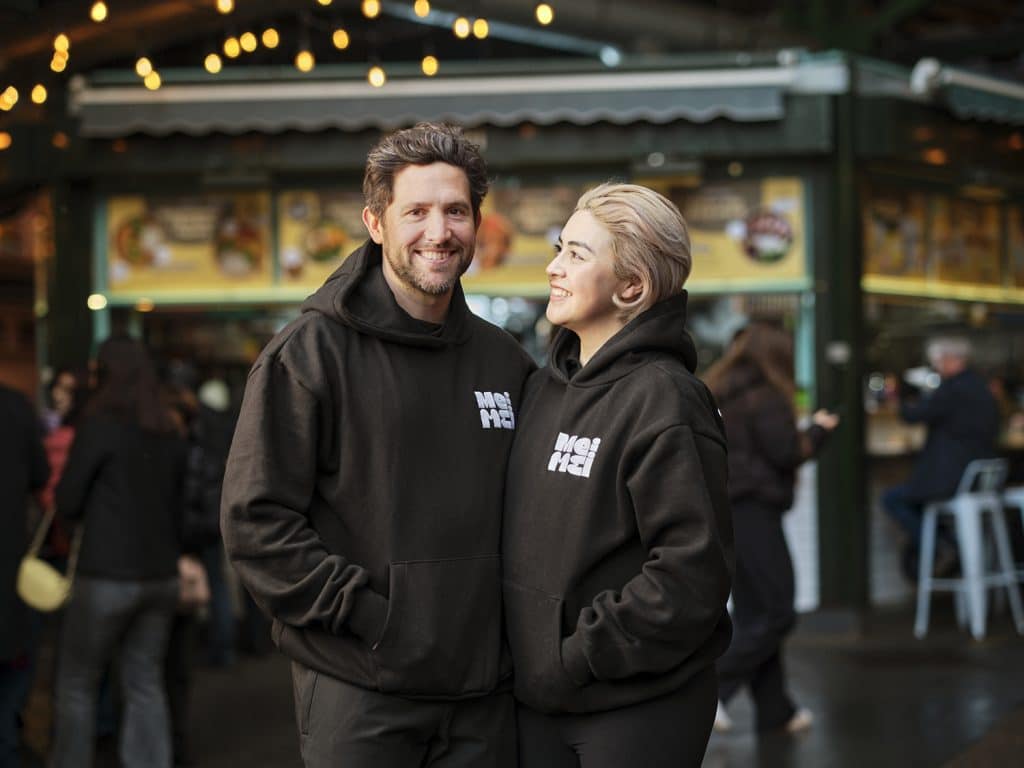
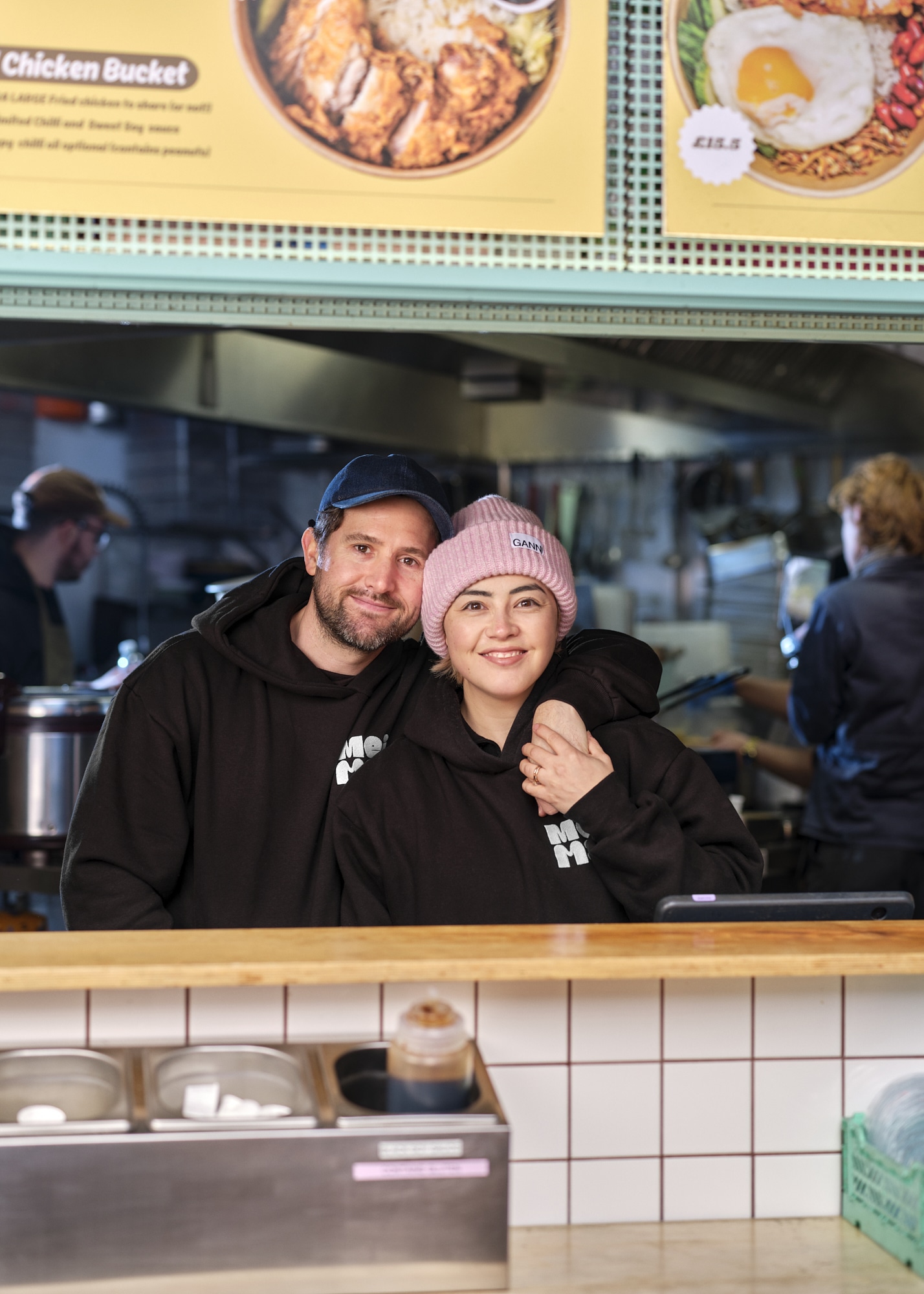
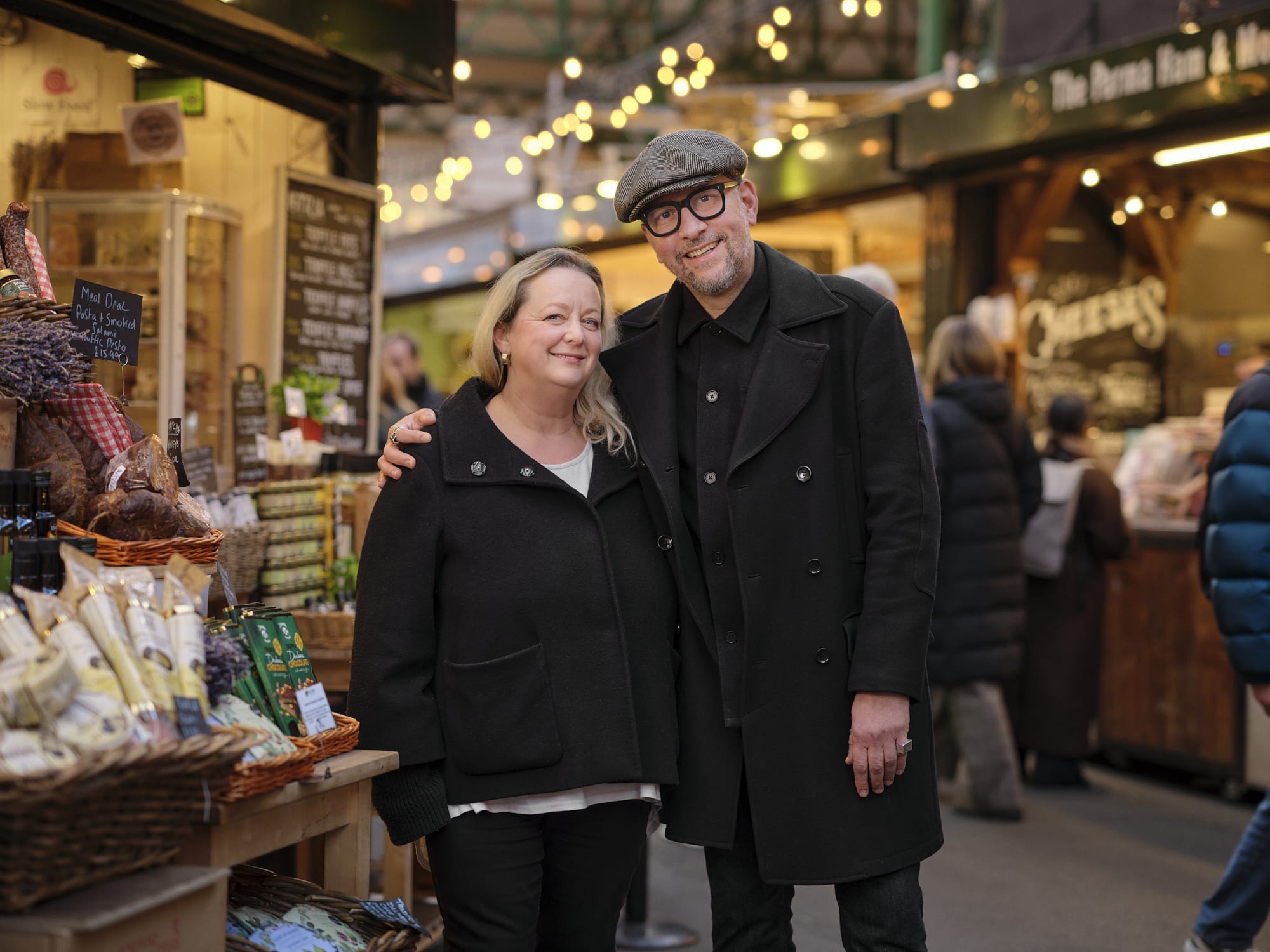
Here, we hear from Elizabeth Haigh, who founded Mei Mei with her husband Steele. Located in the Borough Market Kitchen, Mei Mei recreates the flavours of a Singaporean ‘kopitiam’ coffee shop, inspired by Elizabeth’s family roots.
How did the two of you first meet?
Elizabeth: At a restaurant PR event back in 2011. Steele was late (classic), and I turned round to see who was disturbing my friend’s demo. That’s when we locked eyes. It genuinely felt like love at first sight. His Aussie charm absolutely did its thing, and somehow I went from “who is this guy?” to “oh… it’s you” in about two seconds. The rest is history.
How central to your connection is a love of food?
Elizabeth: Food is basically the heartbeat of our relationship. It’s how we play, how we work and how we unwind. We wake up thinking about what we’re cooking, what we’re eating, and how we want to capture it, from photography to filming to the restaurant. We’re happiest exploring new flavours, chasing great produce, and trying dishes from anywhere and everywhere. Even on our days off, it always comes back to food.
What’s the best thing about working together?
Elizabeth: That we genuinely understand what the other person is carrying, because we’re building the same thing together. We can be deep in service, filming, emails, chaos… and still feel like a team. We play to each other’s strengths, call each other out (kindly), and celebrate the wins properly because we know what it took. Work can be intense, but doing it together makes it feel lighter, funnier and more meaningful.
What advice would you give a couple who are thinking about starting a business?
Elizabeth: Treat it like two relationships: the love relationship and the business relationship – and protect both. Be really clear on roles, decision-making, and how you’ll handle stress before you’re in the middle of it. Have a weekly check-in that isn’t about tasks but about how you’re both doing. Most importantly, keep a little pocket of time that belongs only to you two and turn your phone off!
Describe for us your dream romantic meal.
Elizabeth: Intimate, relaxed, delicious, no fuss, just perfect details. Probably back in Aus, where we got married. We’d start with oysters and a cold glass of something crisp, then share a few small plates that surprise us: smoky grilled meat or seafood, something spicy, something rich. We’d finish with a ridiculously good dessert and strong coffee. Ideally, it’s somewhere warm by the sea, golden hour, bare feet, and no one rushing us out. Just us, talking for hours.
Labours of love: Salina & Rahim
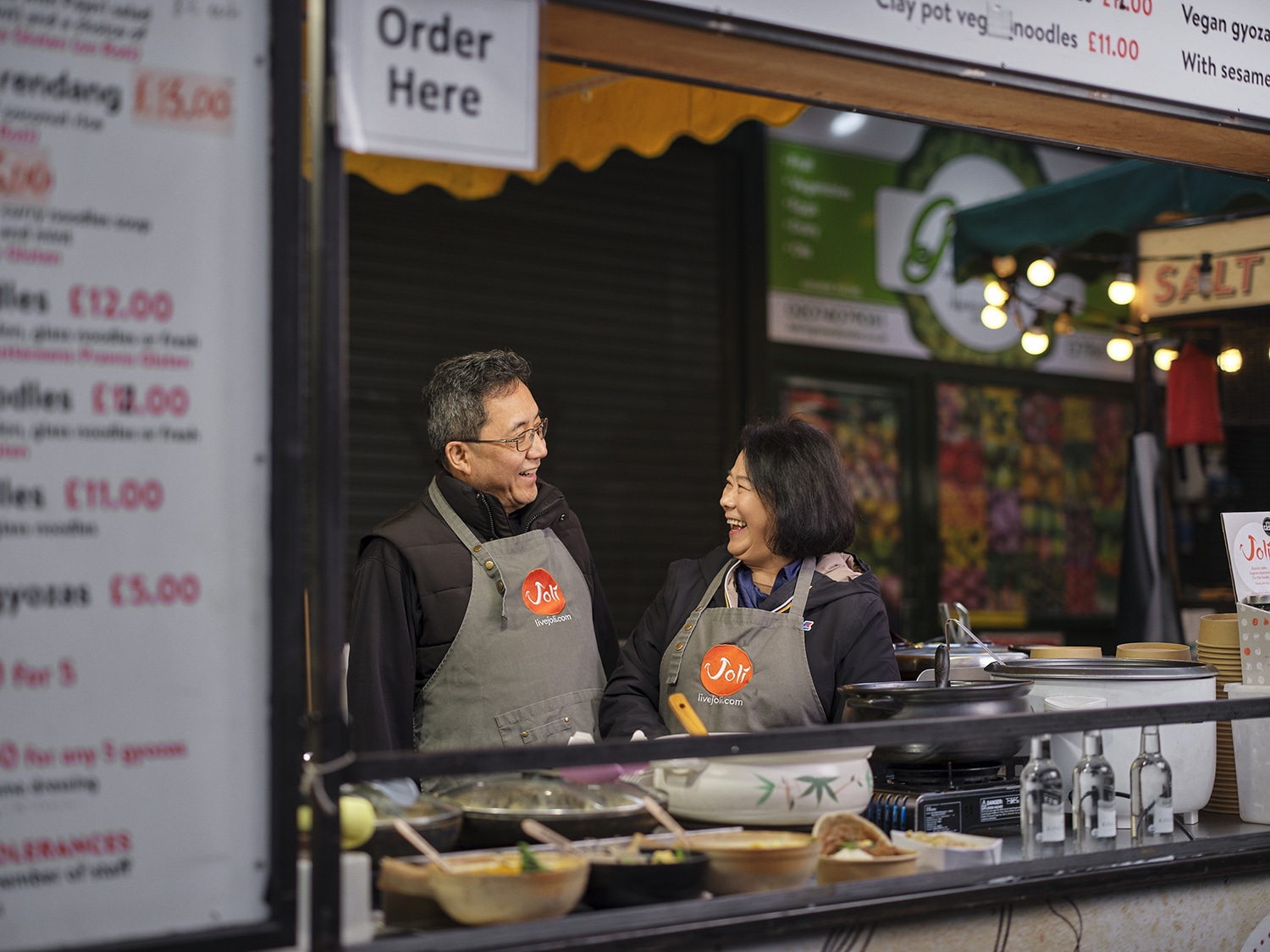
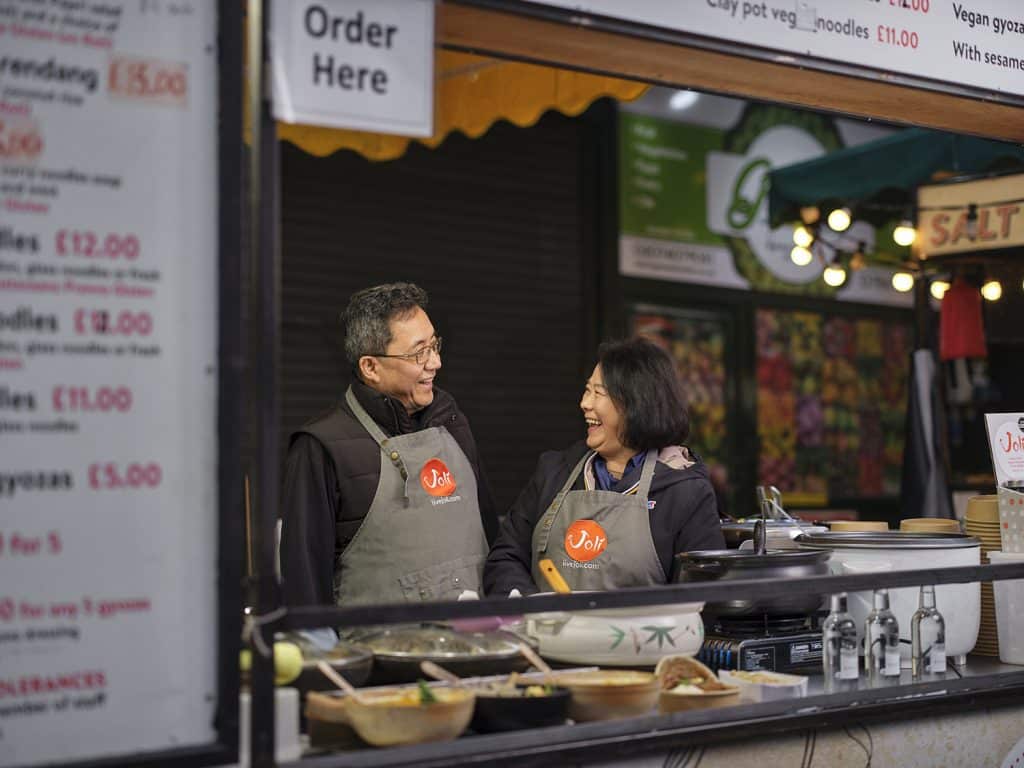
Salina and Rahim of Joli, partners in both work and life, on bonding over food, finding inspiration through differences, and their dream meal of Malay and Peranakan dishes
“COOKING HAS ALWAYS BEEN MY WAY OF SHOWING CARE, AND HIS APPRECIATION MAKES IT A SHARED ACT OF LOVE”
Portraits: Orlando Gili
Unsurprisingly, given the small scale of Borough Market’s businesses, a significant proportion of our stands and stalls are run by couples whose relationships extend through life as well as work: husbands, wives and partners, in various combinations. Ahead of Valentine’s Day, some of these traders have shared with us their love stories and life lessons.
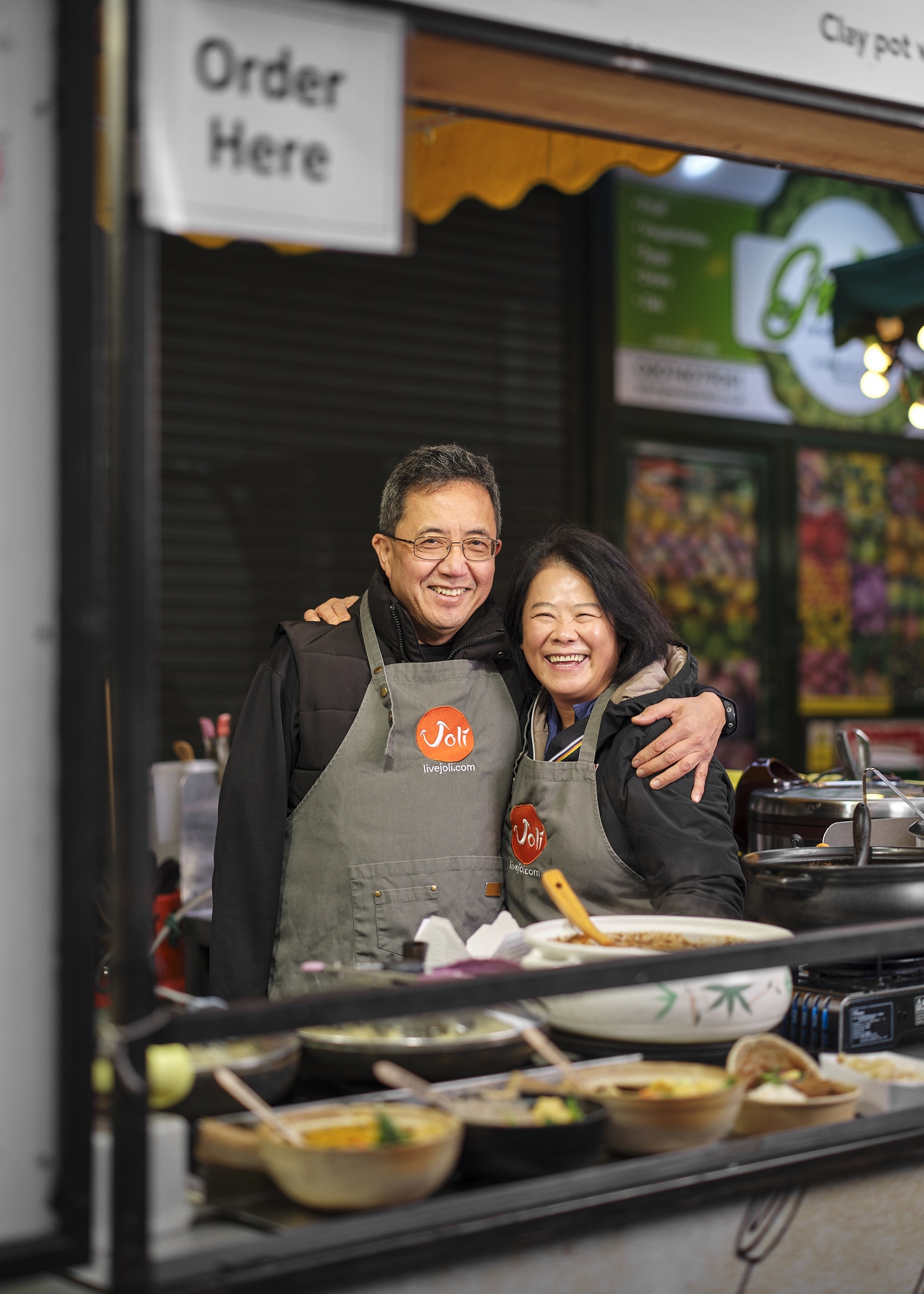
Here, we hear from Salina Campbell, who together with her husband Rahim, runs Joli, a street food stand in the Borough Market Kitchen specialising in traditional Malaysian clay pot cooking.
How did the two of you first meet?
Salina: Some connections feel instant and undeniable. Interestingly, I met my mother-in-law before I met my husband. She often said I should meet her son, and we were eventually introduced at an Eid celebration. From the start, I was struck by his gentle voice, thoughtful intelligence and kind, composed nature. There was a quiet sincerity that put me instantly at ease.
How central to your connection is a love of food?
Salina: Food has a way of bringing hearts together. Our love of food is one of the strongest threads in our relationship. A shared meal is more than nourishment – it’s time, attention and intention. Cooking has always been my way of showing care, and his appreciation makes it a shared act of love. Our meals have become little anchors in our busy lives, when we pause, reconnect and savour each other’s company.
What’s the best thing about working together?
Salina: Partnership deepens when life and work intersect. We’ve learned to balance strategy with empathy, navigate differences thoughtfully, and make decisions that honour both the relationship and the work. Everyday tasks become opportunities for growth, both personally and professionally.
What advice would you give a couple who are thinking about starting a business?
Salina: The relationship always comes first. Focus on building trust, communicating openly and respecting each other’s strengths. Differences aren’t obstacles; often, they’re where fresh ideas emerge from. Conflicts will happen but approaching them with patience and understanding turns challenges into opportunities. When your personal bond is strong, your shared ambitions have the best chance to flourish.
Describe for us your dream romantic meal.
Salina: Romance is often found in the simplest moments. My dream romantic meal is heartfelt and home-cooked: a spread of our favourite Malay and Peranakan dishes, shared by the beach as the sun sets. It’s not about fancy settings; it’s about presence, laughter and conversation. Those quiet, thoughtful moments, shared with love and care, are the truest kind of romance.
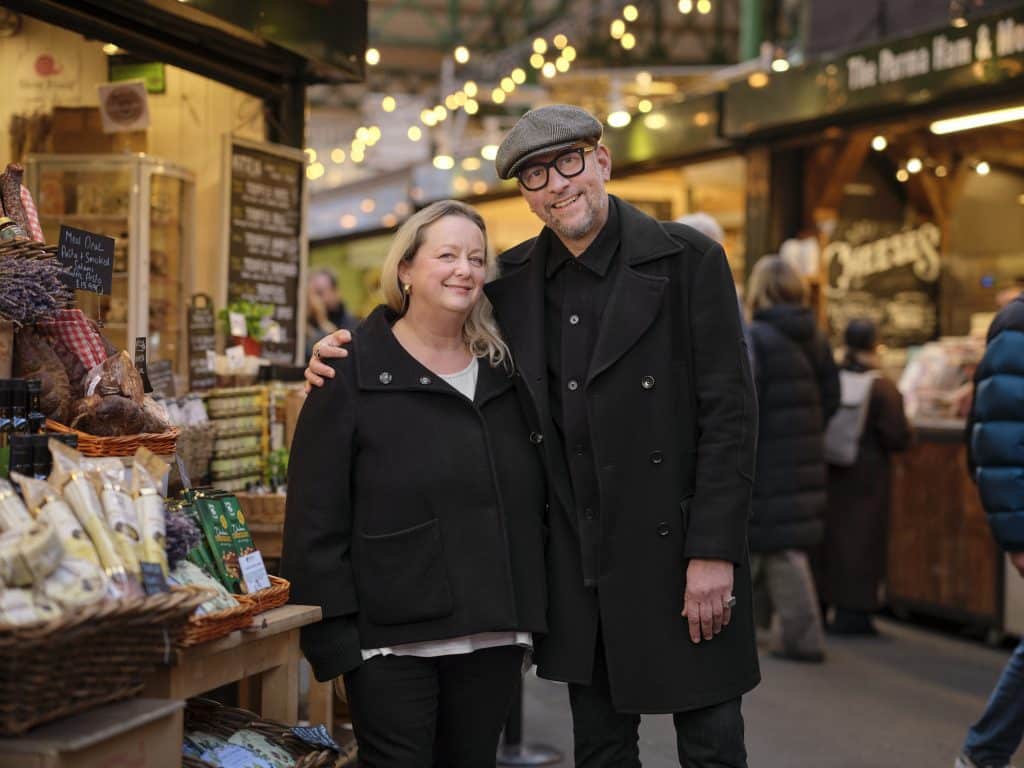
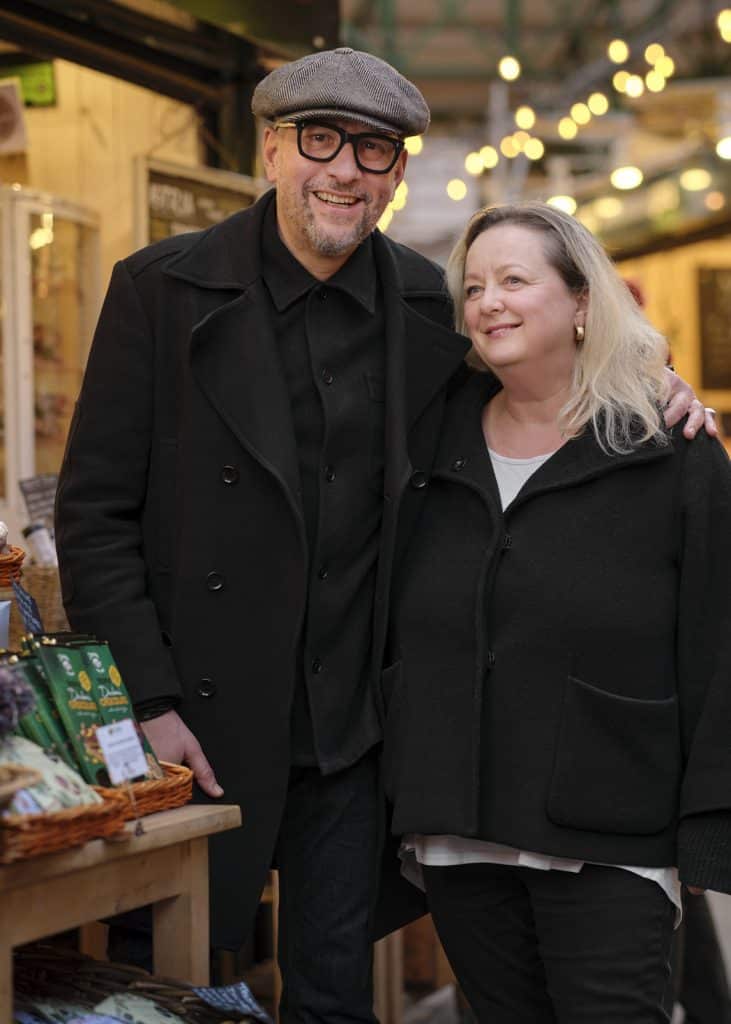
Labours of love: Ana-María & Chris
Ana-María and Chris of Taste Croatia, partners in both work and life, on meeting in a nightclub, surviving challenges, and sharing a dream meal by the Adriatic Sea
“WE’VE HAD A VARIETY OF THINGS THROWN OUR WAY: COVID, BREXIT, EVEN CANCER. SOMEHOW, WE SURVIVED IT ALL TOGETHER”
Portraits: Orlando Gili
Unsurprisingly, given the small scale of Borough Market’s businesses, a significant proportion of our stands and stalls are run by couples whose relationships extend through life as well as work: husbands, wives and partners, in various combinations. Ahead of Valentine’s Day, some of these traders have shared with us their love stories and life lessons.
Here, we hear from husband-and-wife team Ana-María and Chris Stewart, the founders of Taste Croatia, a produce stand in Three Crown Square devoted to the food of Ana-María’s homeland.
How did the two of you first meet?
Chris: We met in a nightclub in London. We both love dancing and still do. We then went on holiday to Croatia, where I saw Ana-María in her natural environment and fell more in love with her, as well as with Croatia and its food. It was there that she came up with the idea of a stall at Borough Market. Fifteen years later, here we are.
How central to your connection is a love of food?
Ana-María: We both love good food from a variety of cuisines and Chris in particular loves to cook. Croatia and Borough Market have opened up the opportunity to share our passion for quality ingredients. Working around food is love.
What’s the best thing about working together?
Chris: It allows you to have a strong level of understanding, trust and emotional support. We can bounce ideas and come up with solutions. We can celebrate the successes and support each other through the downs.
What advice would you give a couple who are thinking about starting a business?
Ana-María: It is rewarding but also very challenging. We’ve had a variety of things thrown our way: Covid, Brexit, even cancer. Somehow, we survived it all together. You need to set clear roles and boundaries and utilise each other’s individual strengths and responsibilities. Try not to let work spill into personal life – when you have time off together, don’t discuss the business. Communication is key, listening too! Celebrate the small successes as well as big ones.
Describe for us your dream romantic meal.
Chris: It would be a traditional Croatian dish called ‘peka’. It’s a stew with either octopus, veal or lamb with lots of potatoes, wine, herbs, spices and garlic, slow cooked in a metal dish buried in hot coals for six hours. We would share it in Konoba Ranc Maha, a family-run restaurant on the beautiful island of Korcula. It’s run by a lovely couple and their two giant sons, who cook using ingredients from the island and the surrounding crystal-clear Adriatic Sea.
Labours of love: Marzena & Nigel
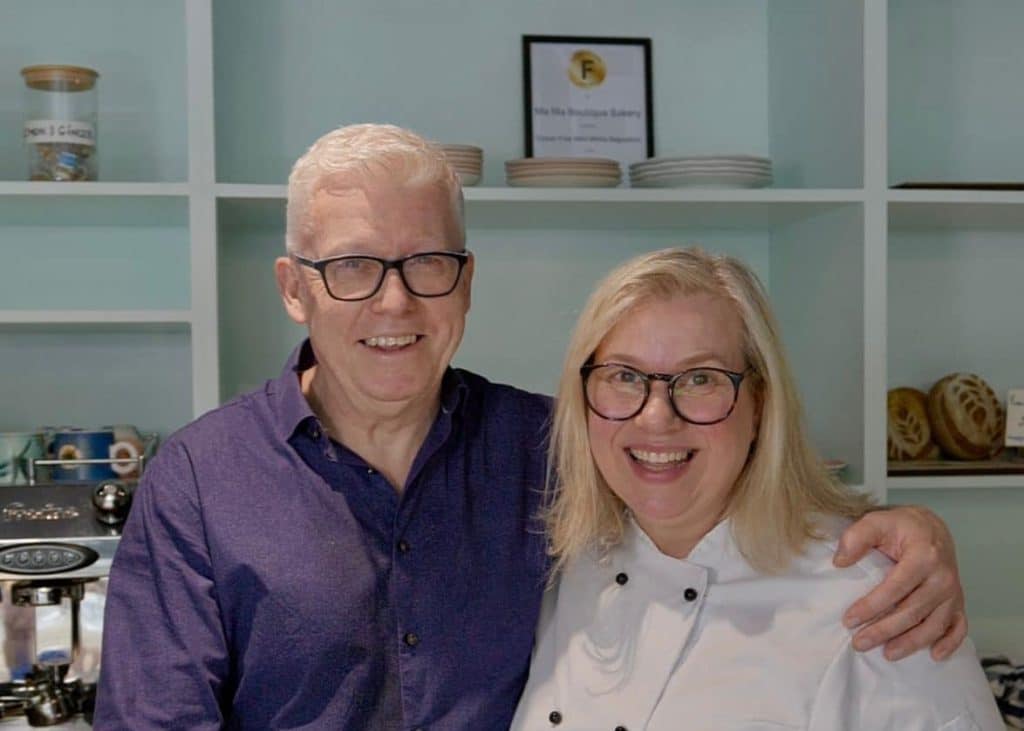
Marzena and Nigel of Ma Ma Boutique Bakery, partners in both work and life, on meeting at Borough, finding common language in food, and sharing the perfect tapas meal
“ROMANCE IS LESS ABOUT WHERE YOU ARE AND MORE ABOUT BEING PRESENT TOGETHER, WITH GOOD FOOD, MUSIC AND LOVE”
Unsurprisingly, given the small scale of Borough Market’s businesses, a significant proportion of our stands and stalls are run by couples whose relationships extend through life as well as work: husbands, wives and partners, in various combinations. Ahead of Valentine’s Day, some of these traders have shared with us their love stories and life lessons.
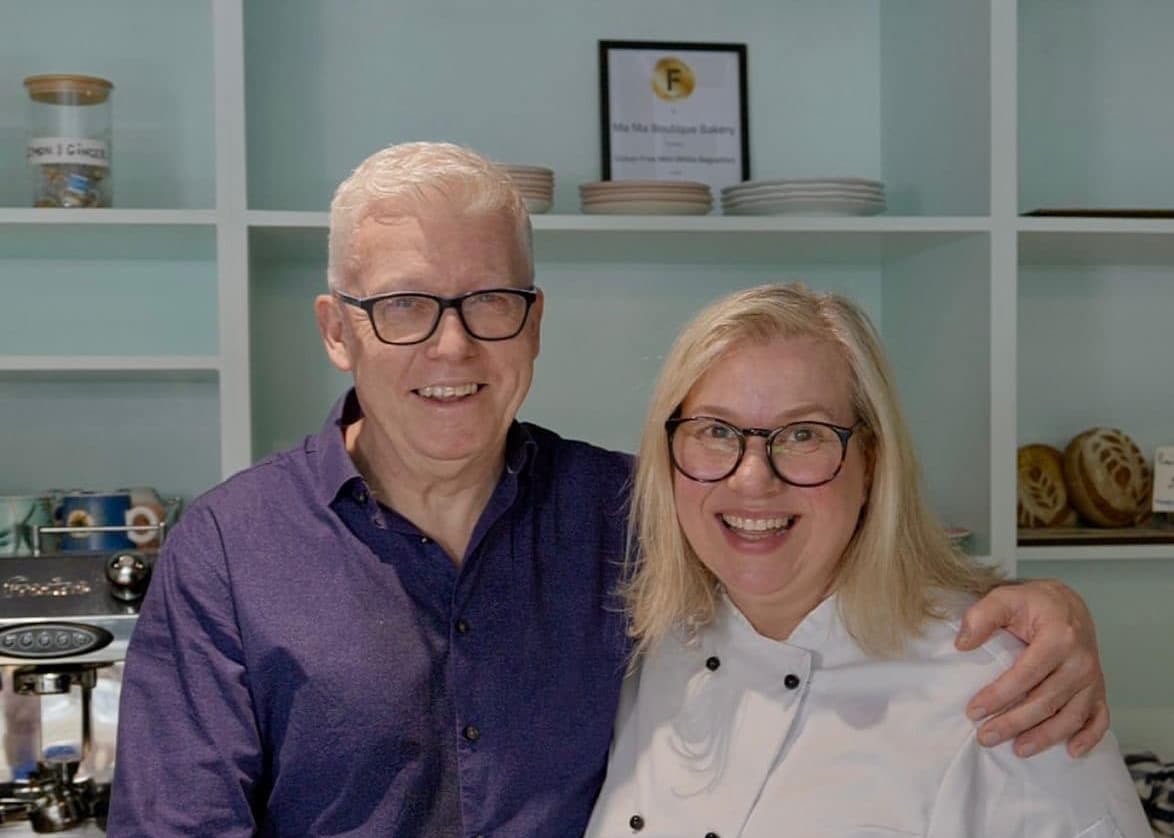
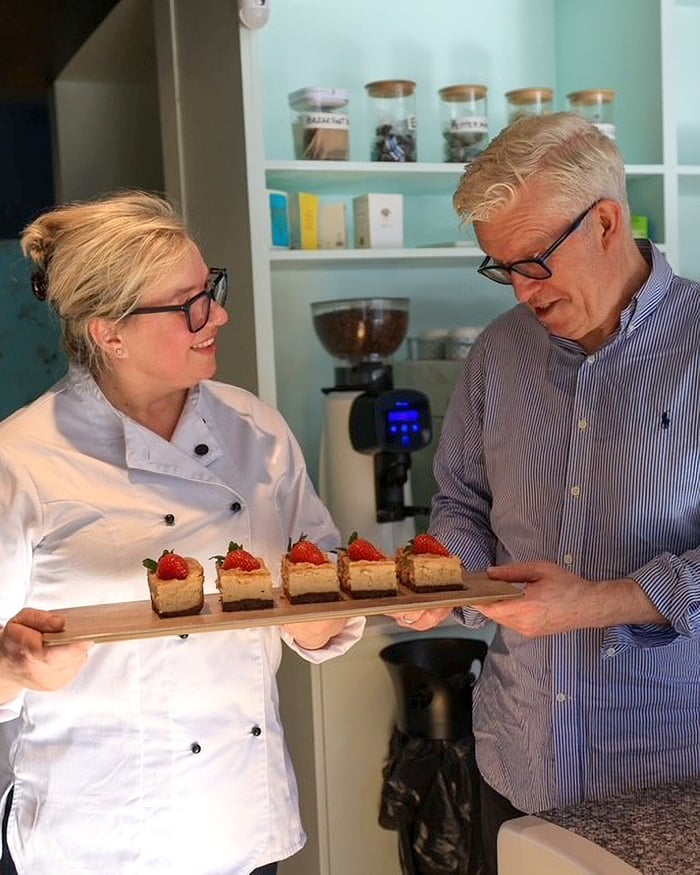
Here, we hear from Marzena Lubaszka and Nigel Ryan, the married founders of Ma Ma Boutique Bakery. Set up after a health problem placed Nigel on restricted diet, their business sells exceptional gluten-free breads and cakes baked in Chiswick by Marzena.
How did the two of you first meet?
Marzena: We first met at Borough Market. I was shopping for ingredients, focused and in a hurry, and Nigel was outside The Wheatsheaf pub with friends. He asked for my number, which I very confidently refused. But he didn’t give up, so I agreed to take his. That small, slightly cheeky exchange turned into something neither of us expected. What started as a fleeting moment in the Market slowly grew into love, partnership and a shared life.
How central to your connection is a love of food?
Nigel: Food is deeply woven into our relationship. For Marzena, food – and especially baking – is instinctive, emotional, rooted in family and heritage. For me, food became more meaningful later, through changes in health and lifestyle, and through watching Marzena create with such care and passion. Sharing meals, talking about flavours and eventually building a business brought us closer and gave us a common language. Food is how we connect, unwind and express love.
What’s the best thing about working together?
Marzena: The best thing is knowing that we’re building something side by side. I’m the baker, creating, developing recipes and working hands-on with the food, while Nigel brings balance, perspective and a wonderful way with people. It’s not always easy, but we understand each other deeply. We support each other on the hard days and celebrate the small wins together.
What advice would you give a couple who are thinking about starting a business?
Nigel: Be honest, communicate often and protect your relationship as much as your business. Know each other’s strengths, respect your differences, and don’t lose sight of why you started together in the first place. Running a business as a couple is challenging, but when it’s built on trust, shared values and genuine love, it can be incredibly rewarding.
Describe for us your dream romantic meal.
Marzena: One of our most memorable early dates was at Pizarro in Bermondsey. We didn’t have a table booked and the restaurant was busy, but they let us sit in the window seats – sharing beautiful Spanish food, talking for hours, completely absorbed in each other. We would love to return there one day when life slows down a little. But some of our most romantic moments are at home, sharing homemade food, cooked with love, without any rush. For us, romance is less about where you are and more about being present together, with good food, music and love.
Far from the madding crowd
Josh Barrie on how shopping for produce at Borough Market is still an enriching experience for Londoners, as long as you follow a few simple rules
“IF YOU’RE OPERATING CANNILY, THE MARKET CAN STILL BE A ROMANTIC, NOSTALGIC, ENCHANTING PLACE TO SHOP”
Words: Josh Barrie / Images: Sim Canetty-Clarke, Kris Piotrowski
My first experience of Borough Market came as a toddler in the early 1990s, visiting my uncle who lived next door to what would later become Bridget Jones’s flat. Accounts among family members differ, but many recall there still being sawdust on the floor of the Globe Tavern and me promptly falling face-first into it. Romantic, much?
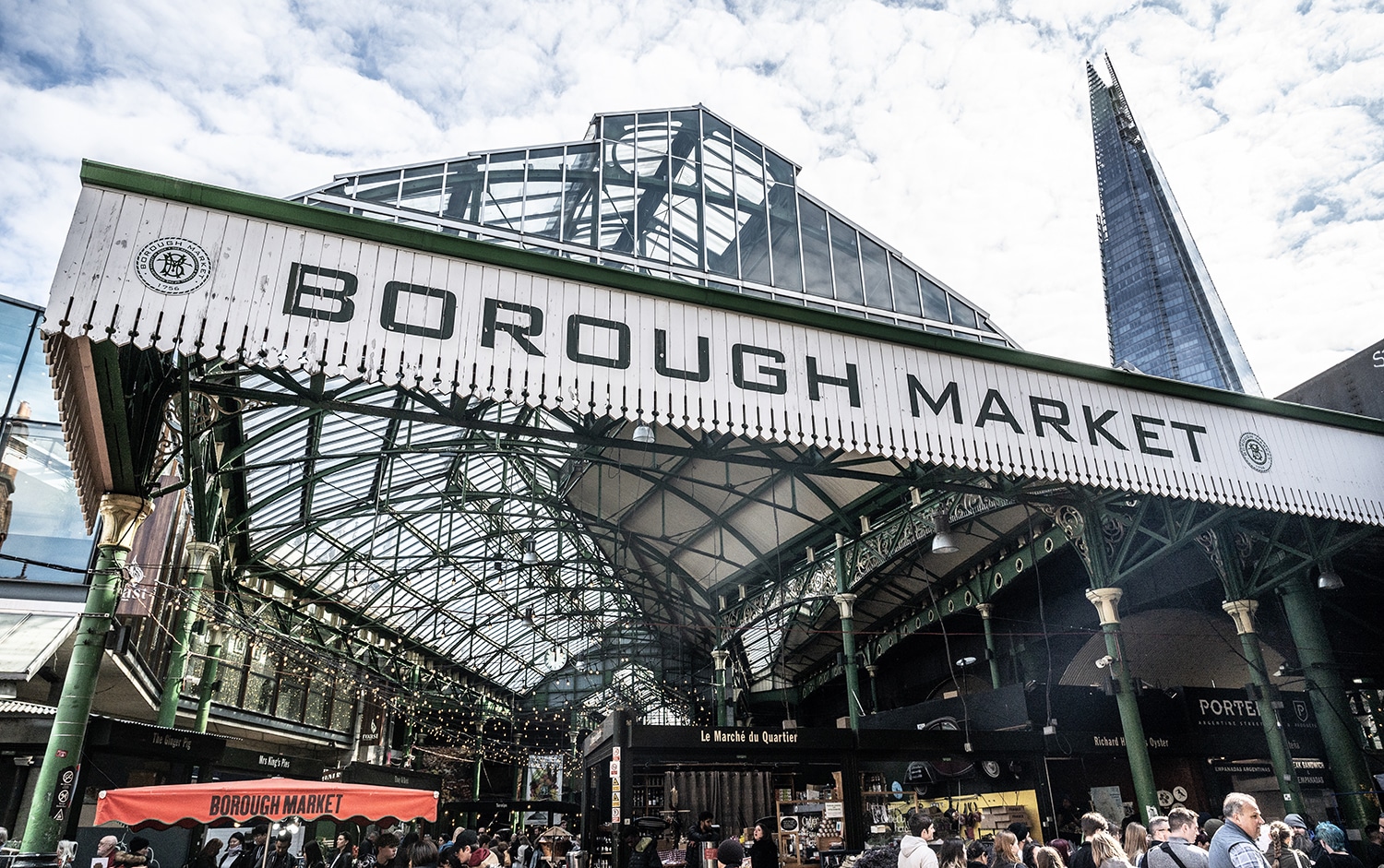
Long gone is the sawdust at this locals’ pub, so too its trader-friendly, early-morning opening time. Happily, the 6am weekday licence at the Market Porter, round the corner on Stoney Street, remains but Borough Market is less gritty and raw today – a more polished place that now welcomes over 15 million visitors each year.
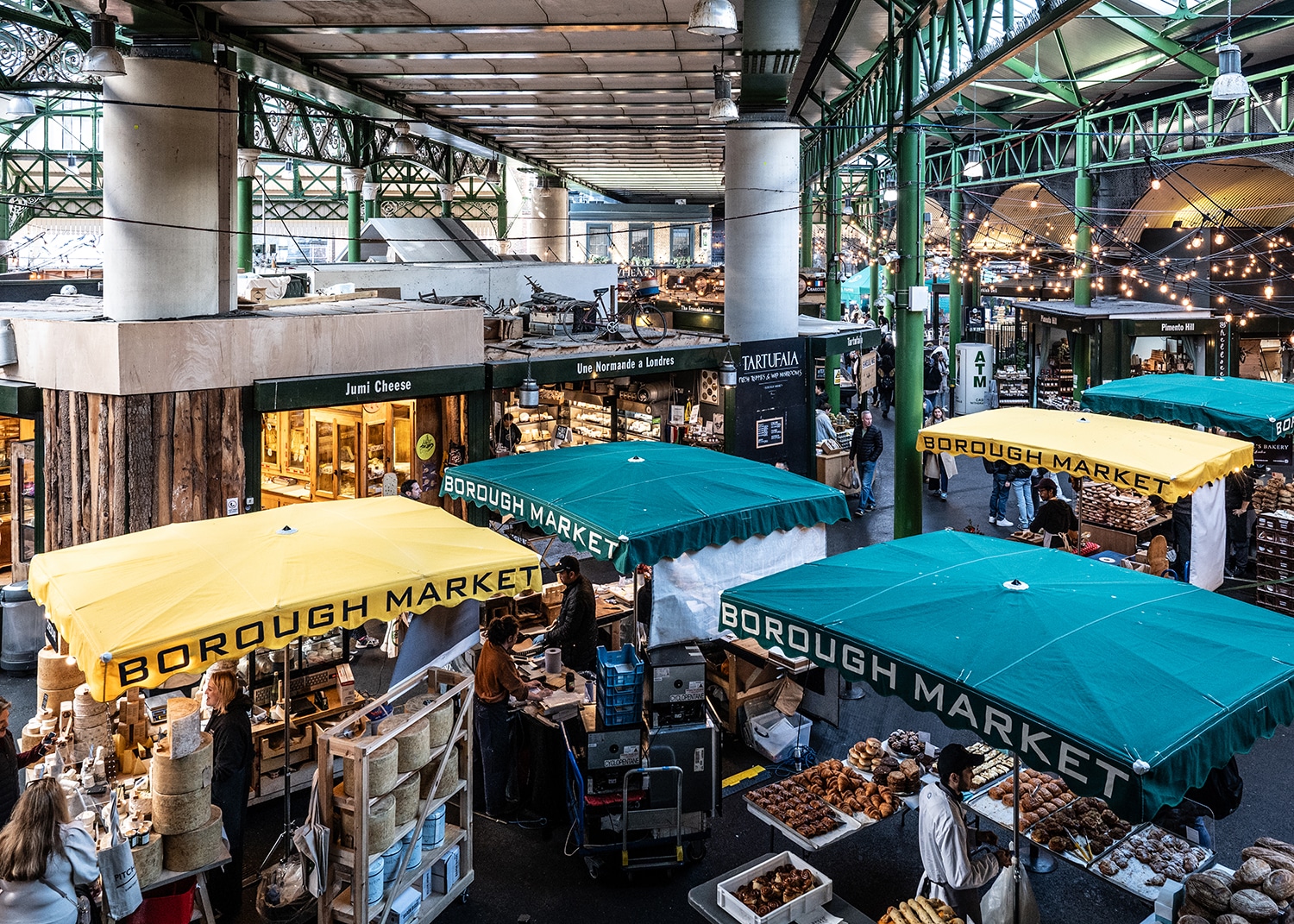
Its transformation over recent decades has been staggering. Less than 30 years ago, it was a fairly standard fruit and veg wholesale market – albeit a historic one – and its journey to becoming a tour de force of British food and drink has been mesmerising to watch. Borough is now simultaneously an old pocket of London and one of the most posted-about in the city. It’s a multi-million economic powerhouse built on heritage carrots and sausage rolls.
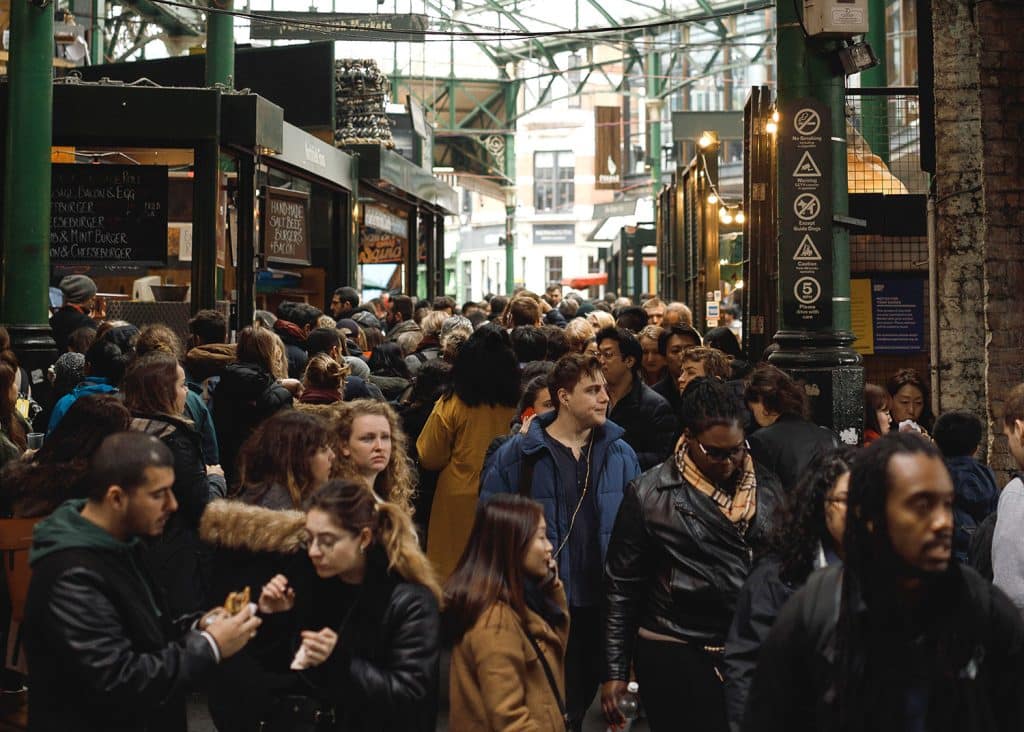
Nevertheless, the market can still be romantic, nostalgic and enchanting, its myriad food stalls and stands – topping 100 today – painting a picture of an ever-changing culinary scene. It’s just that, to appreciate those aspects, London’s food shoppers need to avoid the floods of tourists and influencers. And that means operating more efficiently and cannily.
First off, it’s best to tackle the market early, before midday, and on a weekday rather than a weekend. This might sound obvious, but amid the freneticism and chaos of day-to-day life it’s easy to forget. The ungainly barrage of a weekend lunchtime is not the time for a tranquil hour of produce shopping. How often must my new Air Max be trodden on? How long do I need to wait to buy a block of 18-month-old winter comte?
Tacos Padre founder Nick Fitzgerald, who set up his street food stand here in 2019, agrees that timing is key: “It’s busy, but it’s real, full of characters and interesting people. This is a real community. I guess the best times are outside 12-3pm during the week, when you can move around quite easily. And the whole point is to come and talk to traders and learn about their food. It’s important that side of things isn’t lost.”
Despite the challenges of trading at such a busy market – “It’s a rollercoaster,” he says – Nick remains committed: “I just signed another five-year lease. With other food markets gone in London, or turned into big corporate machines, it still feels pretty special to be in one of the best markets in the world.”
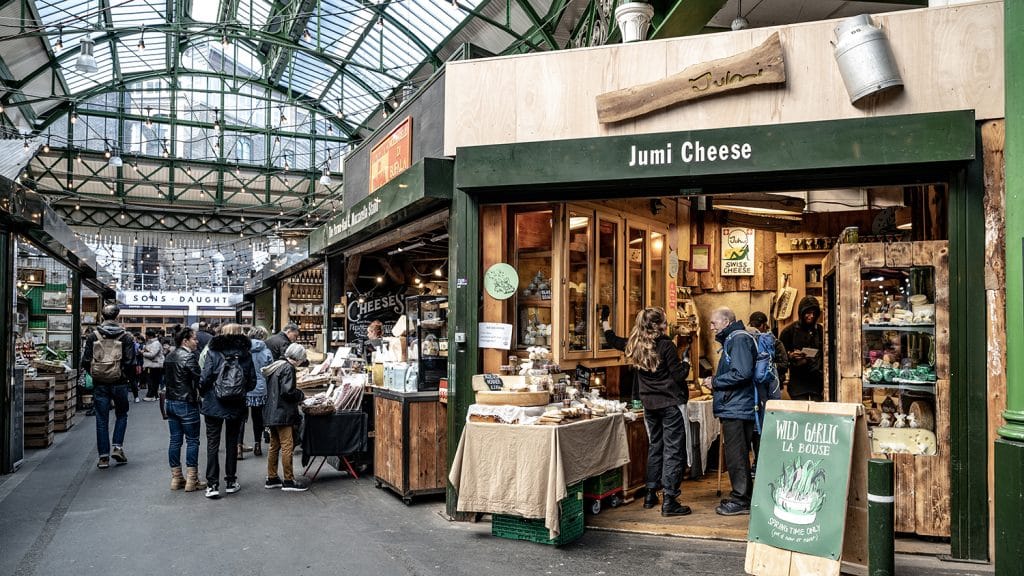
No wonder, then, that people will pitch up from as far away as New Orleans to immerse themselves in a vibrant food culture too rarely seen in Britain and the US today. Coles Loomis, the manager at Jumi Cheese, moved to the UK on a student visa but found a place in the simple pleasures of unpasteurised dairy. “I’m a New Orleans girl from the Deep South who loves food,” she says. “And I just love cheese, especially French and Italian varieties. I came here temporarily but ended up staying. I love the history, the community, the diversity.”
London, she says, can be a lonely place. “But here, people look out for each other. So even though the market is super-famous now, and more commercialised, the purpose is still there. There are people here from all walks of life. If you need to find your sea legs in a new city, get into food.”
Like Nick, Coles acknowledges that heightened tourism can be a poisoned chalice. For all the benefits of popularity, for the spotlight it shines on quality produce and local businesses, these can be lost in the melee. She advises visitors to come with a plan: something as simple as a shopping list, say, if you’re visiting with a meal in mind. Spontaneity in food is beautiful, but it would be remiss to turn up and forget the cabbage. It’s all about pacing, understanding and forethought.
But maybe more vital than anything is remembering that Borough Market isn’t a supermarket and buying food there shouldn’t really be transactional. Visiting the market during softer periods isn’t just about self-preservation, it’s about getting to know traders and striking a rapport. Watching old footage of Italian nonnas walking slowly among a food market in some rural Tuscan town isn’t contrived – they are actually talking to the sellers about tomatoes. Genuinely. Passionately, even. You can do that at Borough too, you know?
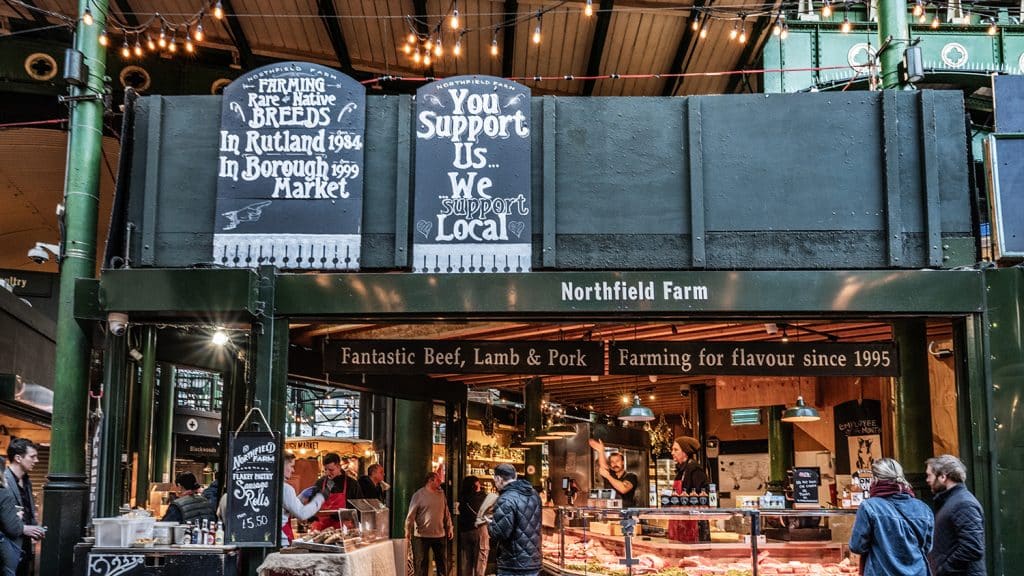
With Northfield Farm’s Dominic McCourt, for example, who’s been a presence at the market since he was a baby. “I was down here in a rucksack on my mum’s front,” he says. “She and my dad started trading in the mid-90s, back when it was still wholesale.”
Northfield Farm specialises in indigenous lamb, beef and pork. As well as selling them meat, Dom wants people to come to his stand to learn about where our food comes from, discover lesser-known cuts and improve their skillsets. “Our food system has been under threat since post-World War II, when there was a drive towards quantity over quality,” he says. “I strive to get people buying White Park and Dexter beef and Gloucester Old Sport pork. I don’t want the sale of my ingredients to be just a transaction. I want to talk to people about food and cooking. That was lost in Britain for a long time.”
Perceptions around food might slowly be changing in Britain. But there’s a long way to go, he continues. Barbecue culture – something close to Dom’s heart – provides a striking example. Where countries such as Thailand, Spain and Greece build connections by way of barbecues, fostering an understanding of provenance, in Britain we tend to throw cheap burgers on tinfoil trays, scorching the ground.
“This is not something that can be fixed overnight,” Dom adds. “So, yes, my biggest tip is to talk to traders. It takes time, just like good food.”