Borough Market platters: asparagus & smoked salmon
Ed Smith shares his tips on food to feed friends, family and self with minimal effort, using little but the best of Borough’s carefully grown and procured produce. This time: asparagus and smoked salmon
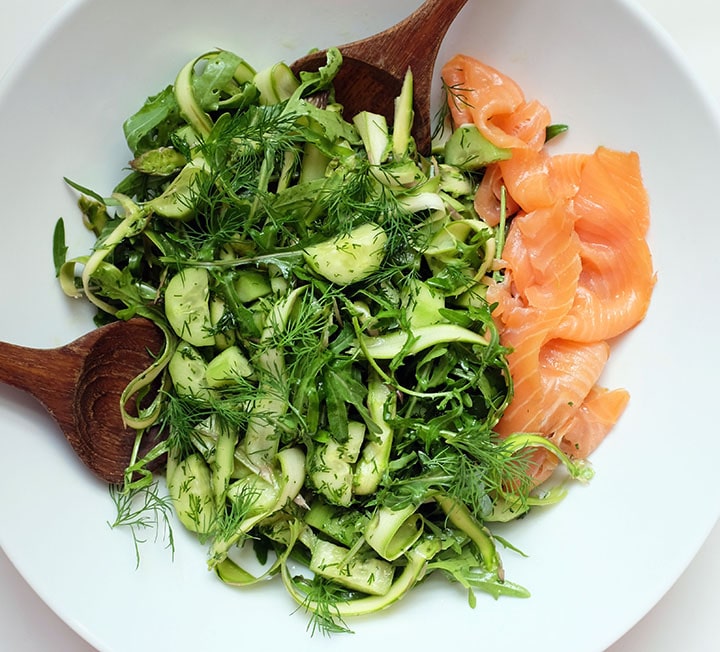
“THE ASPARAGUS AND GREENS ARE THE STARS, BUT THE ADDITION OF FISH TURNS THE DISH FROM A SIDE SALAD TO A LIGHT LUNCH”
Image: Ed Smith
Many of us head to the Market with a list and a purpose. Maybe we’ve friends or family coming over and are up for cooking something grand at the weekend – a rib of beef, a shoulder of lamb, a monkfish tail or cheese souffle. Or perhaps there’s a specialist ingredient we need to grab: Calabrian nduja, Spanish olive oil, Kentish feta cheese. I have to say, though, that I quite like spontaneous, low-key shops (and indeed lower-effort cooks once home).
A few years ago, I wrote a series for this website in which I had the task of grabbing the equivalent of a weekday packed lunch from the Market. It wasn’t a tough gig and was exactly the kind of ‘low-key’ Market experience I’m talking about. Ten minutes of shopping, a rip of a baguette here, a slice of pork pie, a spoonful of rillettes or chutney there. Beats a shop-bought sandwich any day. For this series, I’m fortunate to be doing something similar. Except now it’s to feed more than just me: I want to show how easy it is to turn a handful of Market produce into a plentiful platter.
Each platter will centre on one ingredient that catches my eye when I start walking round, coffee in hand. It might be a recently arrived, hyper-seasonal fruit or vegetable; an artisan product that’s been crafted for our easy enjoyment; maybe even just something ‘staple’ that I know is really good (and once I see it can’t think of much else). From there, it’s a case of: what other ingredients can I gather and combine so that the ultimate assembly will be more than the sum of its parts?
The dish will involve minimal effort once home – a little slicing or peeling, a blanch or a simmer at most (but often not). I’ve a £15 budget, and the produce will always come from more than one stall. You’ll be able to follow the ideas to the letter, or just use something from it as your own starting point next time you visit.
British asparagus had just arrived at the Market when I visited to gather ingredients for this first post. As a result, I couldn’t start the platter planning with anything else.
My favourite way to prepare asparagus is to show it a large pan of boiling water for barely three minutes, so it’s tender but not yet floppy, then roll it in melting butter and a little salt and black pepper and eat it with my fingers. However, you can’t fill a platter with the five or six spears that make up a bunch, so I thought on this occasion of spreading the spears further by using my least rusty speed peeler to shave them into a salad.
I picked up the ‘extra select’ graded asparagus from Elsey & Bent, which are chunky enough to be peeled. From there it was a relatively quick decision to also grab some baby cucumbers – which are at the intersection of the cucumber Venn diagram of ‘crunch’, ‘juiciness’, and ‘flavour’ – a big bunch of dill and a lemon. A bag of rocket would pad out the assembly and also bring nasal-bracing pepperiness, something that layers well with the freshness of the asparagus and sharp citrus.
The dill made me think of the Severn and Wye smoked salmon at Shellseekers Fish & Game, which would provide a necessary dash of pink and a contrasting flavour and texture. The asparagus and greens still star, but the addition of this fish turns the dish from a side salad to a light lunch that’ll feed at least two – possibly more if you add some fresh sourdough and maybe some other cold cuts or platters, picked up at the same time. In terms of assembly, you can pretty much do what you want, though I suggest peeling and then chunking the cucumbers and letting them sit in a little olive oil, half the lemon juice, sugar, salt, white pepper and chopped dill while you prepare the rest of the salad. Let the shaved asparagus (and any chunky bits that can’t be shaved) sit in the remaining lemon juice and more olive oil, and mix the rocket through that at the last minute. Transfer to a platter, scatter over the marinated cucumbers, then more dill fronds over the top.

In praise of: 18C organic extra virgin olive oil
Mark Riddaway sings the praises of an extra-special olive oil from Oliveology
“I USE IT ON ROOTS AND BRASSICAS IN THE SAME WAY THAT AS A CHILD I POURED GRANULATED SUGAR ON MY WEETABIX”
I once worked with a girl who had read that drinking olive oil could prompt miraculous weight loss, while also protecting from disease. That, she insisted, is why Cretan fishermen and Italian farmers are slender and chiselled and live to be 110. Something to do with squalene or antioxidants or some such guff. She also believed that drinking cider vinegar would have similar results, although why she insisted on downing them individually, rather than mixing them together to make a nice vinaigrette, escapes me. Maybe that would have messed with the power of the squalene.
While it’s easy to sneer at stupid diets, the health benefits of really good olive oil should not be completely dismissed. For me, though, its powers have nothing to do with miracle molecules and everything to do with its ability to make whatever it touches taste of holidays.
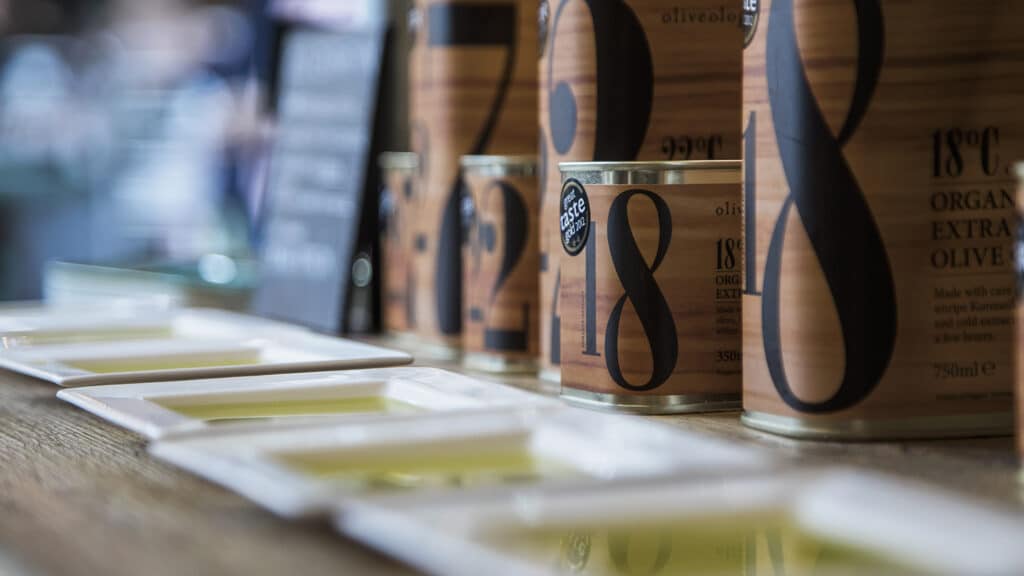
With a tin of cold-pressed Greek olive oil from Oliveology in my cupboard, I can happily live on the kind of southern European food that I know I should eat, but might otherwise struggle to be excited by. Pour this elixir over a big pile of vegetables, and suddenly even the worthiest of meals tastes like a week by the Aegean.
Made early in the season from small, immature, intense little olives on a Spartan estate (by which I mean ‘in Sparta’, not ‘stern and austere’), it explodes with flavour. I use it on roots and brassicas in the same way that as a child I used granulated sugar on my Weetabix, poured on with wild-eyed abandon to bring magic to the mundane.
Just out of nostalgia for my old colleague’s funny ways, I did try drinking a little shot. It made me cough and my eyes water – and yet had no noticeable impact on my weight. Even an oil as apparently divine as this cannot work actual miracles.

Zhero hour
To mark the 500th collection of surplus food from Borough Market by the Plan Zheroes charity, Ellie Costigan hears from some of the people involved in this long and highly significant partnership
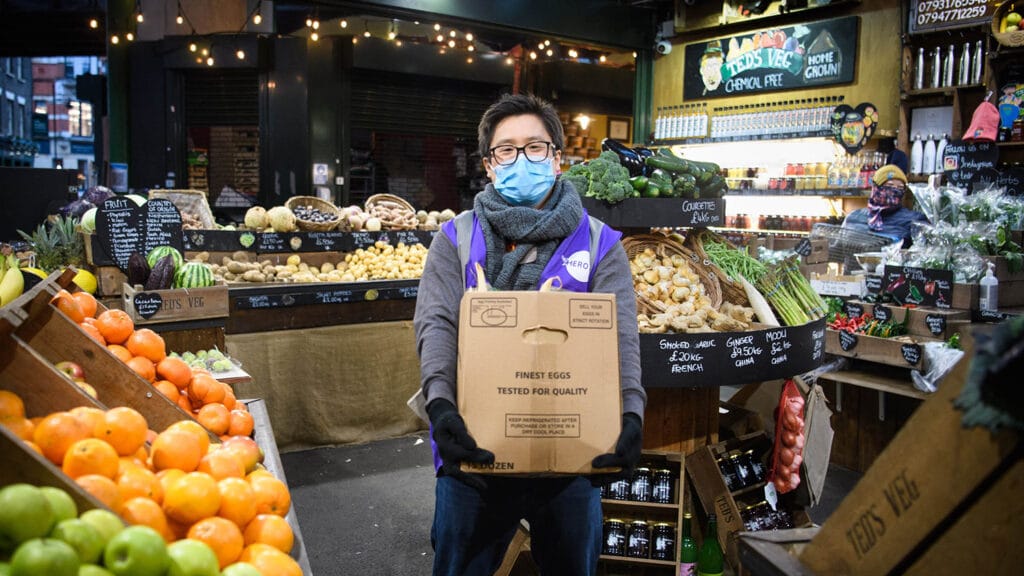
“TRADERS ARE OFTEN LEFT WITH A SURPLUS OF FOOD THAT IS GOOD ENOUGH TO EAT, BUT NOT QUITE GOOD ENOUGH TO SELL”
It was almost seven years ago that Plan Zheroes volunteers, clad in their familiar purple t-shirts, arrived at Borough Market to make their very first collection of surplus food from the Market’s traders. The charity, which acts as a middleman between businesses with surplus and organisations that require food donations, has been coming to the Market ever since.
This spring saw their 500th collection, taking the total amount of food collected to more than 80 tonnes – the equivalent to almost 200,000 meals. “We’re really grateful for the support that we’ve had from the Market over the years,” says Plan Zheroes co-founder Chris Wilkie. “We’ve built relationships with a lot of the traders. They know us now and are always keen to help. Thanks to the initiative, the charities are receiving top quality food that many of their recipients otherwise would not be able to afford.” Unfortunately, Plan Zheroes was not impervious to the impact of Covid, having to pause collections for a period last year. “It’s been such a difficult time for charities, they’re all really struggling, but things are improving,” he continues, “and in the meantime, food has been getting to people who need it.”
One such beneficiary is Lucy Brown House: a sheltered housing complex based around the corner from Borough Market. “Our residents range in age from 60 to 90-odd,” says sheltered housing officer Richard Geary. “When we first set up the link with Borough, residents would go across to the Market on a Saturday, get the surplus and bring it back to the communal lounge where people could help themselves,” he explains. “Nowadays the guys at Plan Zheroes bring it over to us at the end of the day: most often it’s fruit and veg, as well as quite a bit of bread from Bread Ahead, who’ve been fantastic. Some of our residents are on universal credit and really struggle, often using food banks, so it’s great to be able to give them that extra fruit and veg. Most aren’t, but they often still have limited income and ordinarily wouldn’t buy fruit for themselves – they see it as a luxury – so they love it when I bring things like fresh strawberries or apples from the Market.”
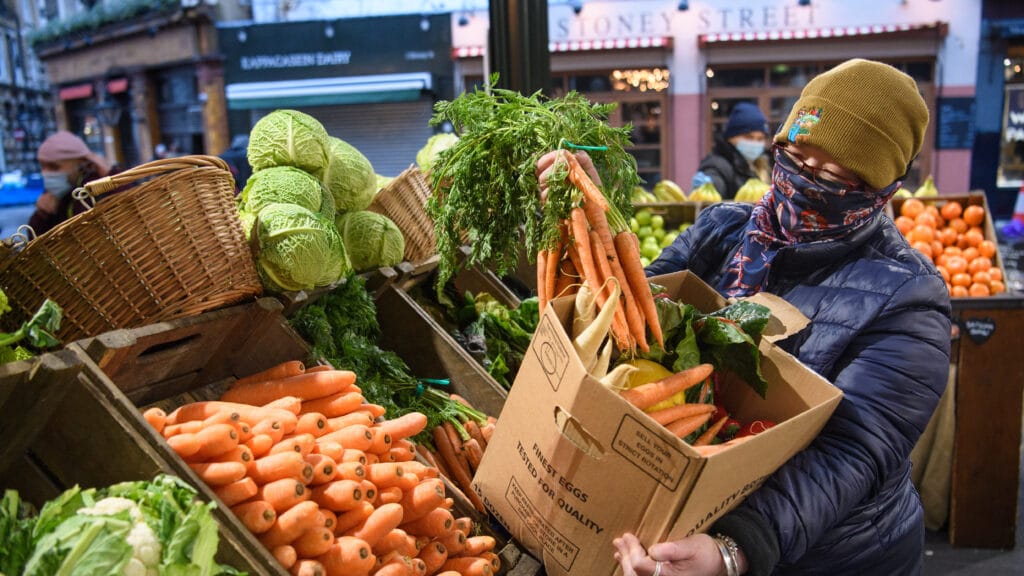
Prior to the pandemic, the Market also played host to Wok for 1,000, organised by Plan Zheroes in collaboration with School of Wok: an annual event which sees people come together to cook enough meals to feed 1,000 people using surplus food. Like many other events, sadly it did not take place in 2020. However, School of Wok head of operations Shannon McAuliffe was not prepared to give up entirely. “Shannon is incredibly kind-hearted, so seeing the impact of the pandemic on many, he was not about to sit around and do nothing,” says Jeremy Pang (pictured top), founder of the cookery school and a Plan Zheroes patron. “I had to furlough most of my staff, so with help from our operations team he used that time to launch a project called Feed.The.Nation to continue raising money for Plan Zheroes, offering virtual cookery classes in exchange for donations. He used the school space and our ingredients, free of charge, to do what he could in his spare time.”Jeremy returned to Borough Market to help with the 500th collection. “It was uplifting. Everything was still so good and fresh – some of it might be blemished, but otherwise it’s worth good money,” he continues.
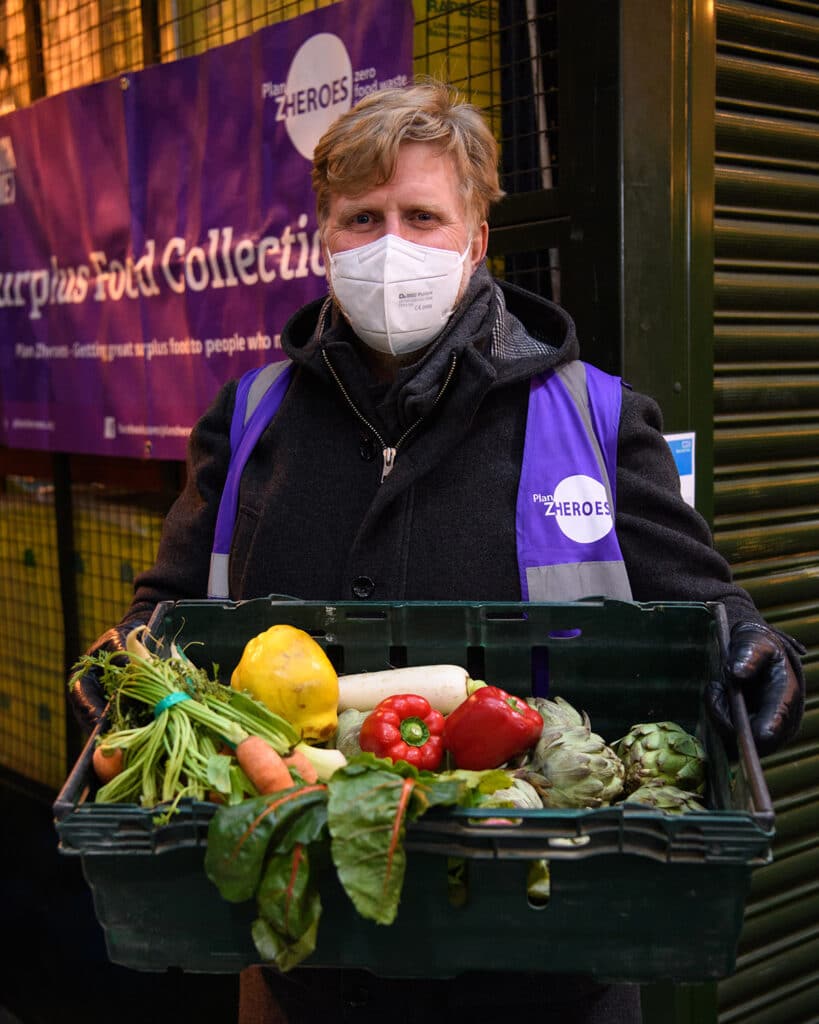
Borough Market managing director Darren Henaghan helps with the Plan Zheroes 500th collection
The ultimate goal is, of course, for food surplus to be prevented as far as possible (not to mention for nobody to be reliant upon food aid). The basic tenets of food waste management – prevent, re-use, recycle – are exemplified by the Market. Indeed, the Market’s holistic approach to waste management – whereby nothing goes to landfill; packaging is recycled, while inedible food waste is sent to an anaerobic digestion plant – was this year recognised by being named Best Circular Economy Initiative at the National Recycling Awards.
The initiative begins and ends with the traders, who are encouraged to plan effectively to avoid waste. But “it’s impossible to get quantities exactly right,” the Market’s managing director Darren Henaghan admits. “Our footfall numbers vary daily, with factors as simple as the weather or as complex as Covid having an impact on people visiting us.” The result, says Kath Dawson of Ted’s Veg, is that traders are often left with a surplus of food that is “good enough to eat, but not quite good enough to sell – and I can only eat so much myself! That’s why I pushed for us to get involved with Plan Zheroes. We and other traders would so often end up throwing perfectly good food away, then there’d be hungry people going through the bins for food. It’s just not right.”
Such is the traders’ commitment that in the absence of regular collections during Covid, Kath’s team were delivering surplus produce to local charities themselves. “There are more people than ever who need help, so I got in touch with St George the Martyr. They’re two minutes down the road, so we’ve been dropping pallets of produce to them, which they either sell on at a reduced cost or use to cook hot meals for people who need them,” says Kath. “Ordinarily if there’s too much leftover, we’re forced to put it in the bin – I would much rather it feed people.”
And that, in a nutshell, is the essence of the Plan Zheroes collaboration: less food in the bin, more food bringing sustenance and pleasure to people who need it.
Discover more

In praise of: 18C organic extra virgin olive oil
Mark Riddaway sings the praises of an extra-special olive oil from Oliveology
“POTS THAT DRIBBLE AND SPILL HAVE BEEN MADE FOR LOOKS ALONE, WITHOUT CONSIDERATION AS TO HOW THEY SHOULD WORK”
Interview & illustration: Ed Smith
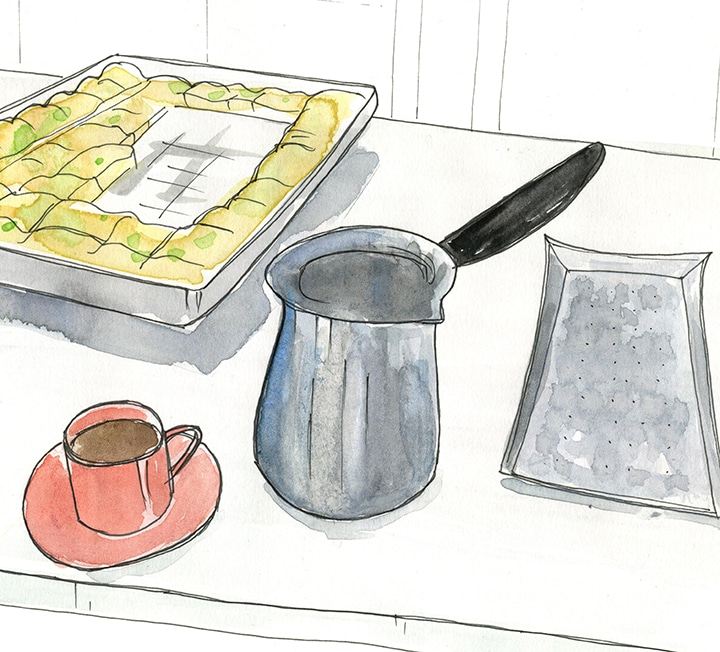
At Tea2You, we sell fine teas from the Indian sub-continent, so we use teapots all day every day. Before I started at Borough Market, I spent three years studying ceramics at Sunderland University, and before that I was a ceramicist in India – so it’s fair to say I have a lot of knowledge about teapots and an opinion as to what makes a good one.
A good teapot has a very stable base and remains stable and balanced when you pick it up by the handle, which needs to be an appropriate size. The spout is obviously crucial. For it to pour properly, the top of the spout should be parallel with the lip of the pot, so if you took the lid off and rested something between the lip and the spout, it would sit flat. The spout needs to be angled or fluted in a way that helps the tea to pour easily, and the hole at the tip of the spout needs to mirror the shape and angle of the hole at its base. All these things help the liquid to flow well. There’s nothing worse than a teapot that doesn’t pour properly. Usually, the ones that dribble and spill have been made for looks alone, without real consideration as to how they should work.
I prefer a two-cup pot. For me, a four-cup teapot never brews quite as well. For some teas, we will use a strainer, but with very fine teas – my first flush Darjeeling, for example – you shouldn’t use a strainer. It confiscates the flavour. Really all you need to do is let the tea leaves settle down.
If it’s just me, I make tea in a cup: boiled water, dash of cold water and let the leaves drop. But when there’s more than one person, I do like using a teapot.
In praise of: 18C organic extra virgin olive oil
Mark Riddaway sings the praises of an extra-special olive oil from Oliveology
“THERE’S SO MUCH POVERTY AND SO MUCH SURPLUS FOOD. IT’S CRAZY THAT THIS CONNECTION WASN’T MADE SOONER”
Images: Orlando Gili
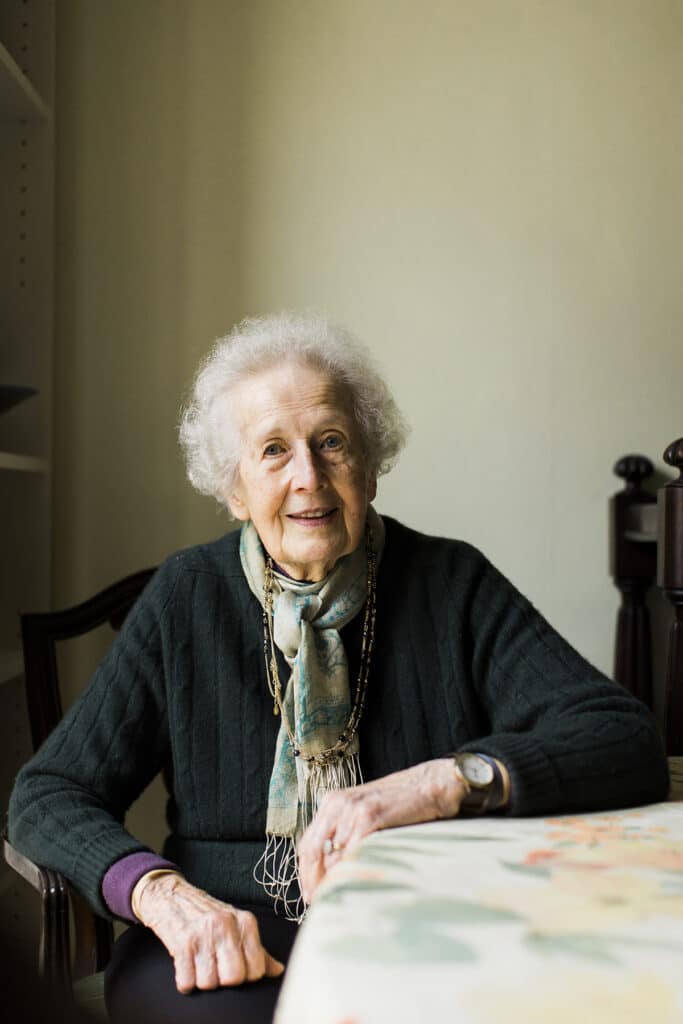
For the past decade, Borough Market’s traders have been donating surplus produce to the Plan Zheroes charity, which helps distribute excess food through local networks to those people most in need of feeding. It was with great sadness that we learnt recently of the death of Lotti Henley, the charity’s inspirational co-founder, at the age of 95. To mark her passing, we thought we would revisit her interview with Market Life from 2017, which gives a little flavour of the warmth, drive and charisma of a quite remarkable woman.
Where do you think your instinct for social entrepreneurship comes from?
My mother was German, my father was Austrian, and I grew up in Slovenia. We had a big family, who were always concerned with social action. In the village where we lived, my father had the only car, so if anybody fell ill, they came to him. During the war, one night a woman came to him and said, “My son has fallen from a ladder and needs to go to hospital.” My father knew precisely what had happened – he had been shot. He took him to hospital. The next day a German officer came round. He said: “What have you done? You have taken a partisan to hospital!” My father replied: “We are all human. I shall do what I have always done.” It was instilled in us that we are all given a certain role in life, and that ours is to look after other people. This is the attitude I have, and I got it from my parents.
How did you become interested in food waste?
It is a strange story. After the war I was in a refugee camp, waiting to be repatriated. The Russians who ran the camp did not think we should survive – after all, we were supernumeraries, there was no need to spare these people, certainly not to feed them. They did not give us more than soup once a day, the odd potato peel, peat and nothing else. I was literally starving, to such an extent that I took some papers and put them in my mouth to make my stomach think that I had food. That lasted for six to eight weeks and I have remembered this experience all my life. When I go to the post office I still take a sandwich with me. It’s security. Food is life.
How did Plan Zheroes come about?
I had the opportunity to speak in public, through an organisation called London Citizens, about the terrible injustice of the UK’s food waste crisis when there is so much poverty, and I thought: wow, this is it Lotti, go for it! I found two kindred spirits: Chris Wilkie, who is still with us, and Maria Ana Neves, who are both so intelligent and educated, who helped set up Plan Zheroes. I had no idea how to go about setting up a business, but I had ideas and enthusiasm. I had also retired, and I am not good at doing nothing! That was in 2009. It’s just amazing how this little idea has grown.
How does Plan Zheroes work?
We help put businesses with surplus food in touch with charities who work with those in need. It’s a completely free service. We want to build local networks, which in turn brings local cohesion. There was an amazing event at Borough Market, Wok For 1000. It was such a good example of how food can bring the community together. People were sitting together, talking, cooking. That’s the great thing about the project we run with the Market – there’s a real sense of community. The charities come to Borough every week, so they get to know each other and the traders who participate. It’s community building, which was part of my dream..
How did your relationship with Borough start?
The EU had given funding to Sustain, an organisation for businesses and organisations which promote better food and farming practices, to launch a project called Food Save. It was a programme organised by the mayor of London to get smaller businesses to reduce their food waste. Sustain put us in touch with Borough Market to discuss doing a project together. The Market has been distributing surplus produce from the traders to local charities ever since.
Do you think, generally speaking, that attitudes to food waste are changing?
Absolutely. When I started this there was such little awareness and understanding. There is more pressure on supermarkets now to be more ‘green’ – there have been some public campaigns and as a result, many supermarkets and food businesses have signed up to the Courtauld Commitment 2025, which is a voluntary commitment to work together to tackle food and drink waste, emissions and high water intensity. There has been a lot of support for it and we have been contacted by supermarkets, looking for a solution. So things are moving, but there’s still so much poverty, and so much surplus food. It seems crazy that the connection between the two wasn’t made sooner, and that it hasn’t yet been made on a wider scale. You’d think it would be normal! When we started, there was no connection. The donors were there, but the charities – I thought they would come running, but they didn’t. And they still haven’t.
Why do you think that is?
Lack of internet. Lack of awareness. There are people who want to help, but they’re not energetic, they’re not go-getting. I think the next step is to teach young people to cook. To teach disadvantaged people and those who run charities to cook. That’s the way forward. That’s the next step for Plan Zheroes – for everybody.
Do you think wider-scale change needs to come from the government, or grassroots?
I think grassroots actually, but it would be useful to have something in the law to say that all food surplus can be redistributed. In Denmark all food is available, there is no distinction – you can distribute food after a best-before date, for example, and there’s research to say it is helping.
There’s also the problem of resources. Who will sort out the surplus food at night after the shop shuts? Where will it be stored so that the charities can collect it the next morning? There are lots of practical obstacles to overcome.
WRAP, the Waste and Resource Action Programme, estimates that we’re only distributing about a quarter of the food that could be redistributed at the manufacturing and retail level, but if we were able to redistribute all that food, the charity sector couldn’t handle it. There needs to be governmental investment and grants – all the amazing small charities and groups who aren’t on the internet, school breakfast clubs, they all could benefit, but you need more resources.
Do you think the food industry is partially responsible for the fact so much food goes to waste?
The supermarkets are naughty, because they refuse to accept carrots that are misshapen, or anything that doesn’t look perfect. It’s not the customer, we don’t mind a bendy carrot! The farmers must suffer greatly. Again, from the very beginning, food is not appreciated. Farmers are not appreciated.
The best before date thing, too, causes problems. We are taught to be so careful. I have my grandchildren staying with me – there are seven of us, it’s good fun – and they look in the fridge and say things like, “Oh, gran! These eggs are out of date!” Eggs? You can keep them for ages! Just because the date has passed, doesn’t mean they’re off. They are taught to be so extra careful. Too careful, I think. You have to throw some stuff out, of course, but there are too many laws. Why can’t people just use their noses to see if it’s okay? We are too protected, in a way. If the Danish aren’t killing themselves by not having all those laws, I think we will be okay.
What about wastage at home – how can people help?
Buy less. Use local markets. Most people do a giant weekly shop. It was very interesting when my daughter moved to Switzerland, people there go to tiny shops and have tiny trollies. They shop every day – pop out to somewhere local, get what they need and get it fresh. If you have some left over, you use it up the next day. In our society there’s not much value placed on food. There are always promotions, and you feel stupid if it’s only a pound to buy one more packet and you don’t buy it. Industrial production has driven prices down, so people buy too much and don’t value their food, but then on the other hand you have downward pressure because people are struggling to afford it. There’s an imbalance. It’s difficult.
Is that something Plan Zheroes will be looking to help tackle in future?
It is something to tackle, but it is not our role. There will always be a surplus, as you can’t always predict demand; at night a supermarket will always have stuff on the shelves, because if there was nothing there in the morning, nobody would come in. We do advocate for businesses to prevent that waste from arising in the first place, but our role is to help them when it inevitably does.
Discover more

In praise of: 18C organic extra virgin olive oil
Mark Riddaway sings the praises of an extra-special olive oil from Oliveology
“IT CAN CREATE FOODS THAT ARE CRISP AND CRUNCHY, THIN AND FOLDABLE, LIGHT AND SILKEN, OR THICK AND FLUFFY”
Image: Regula Ysewijn
The general idea behind these columns has been to persuade you to seek out an uncelebrated ingredient, and then make it one of your staples, because it’s one of mine. This one is slightly different. The ingredient whose virtues I wish to extol is chickpea flour, and I won’t lie to you: while this is a product that I have used on a number of occasions, it’s a number so low that my toddler could probably count to it.
I’m not a frequent user, but I think I could become one. I can certainly see its appeal: it’s nutritious, can be utilised in a variety of ways, and is gently nutty, savoury and properly tasty. Rachel Roddy (a food writer I admire tremendously) stated recently: “I have come to feel about bags of chickpea flour as I once did about packets of cigarettes: one on the go, one spare at all times.” If there’s a culinary hit that Rachel is addicted to, I want a piece of it.
You can buy chickpea flour at From Field and Flower, and as with all the stall’s products, it has been carefully sourced and represents the best of its kind. This version is Italian (‘farina di ceci’), though as chickpea flour is typical to southern Europe, you might also find it labelled ‘harina de garbanzo’ (Spanish) or ‘farine de pois chiche’ (French). There’s ‘gram flour’ (Indian), too, which is technically an ever so slightly different chickpea, but also basically the same.
This soft, super-fine yet strangely tactile gold dust is gluten free, which means you won’t have much luck using chickpea flour if you’re after bouncy pasta or ethereally light loaves of bread. It is, however, remarkably diverse in its uses and can create foods with a multitude of very different characteristics: crisp and crunchy, thin and foldable, light and silken, thick and fluffy.
Flick through a cookbook that focuses on Indian cuisine and you’ll see that gram flour is often used as a dusty coating, or mixed with water to form a batter, which will turn crisp when fried: think gram flour-rolled vegetables, pakoras and bhajis. This is also the method used for tortillitas de camarones, an Andalusian fritter for which small shrimp and chopped onions are rolled in a loose batter and deep-fried into a moreish web, the very thought of which has me reaching for a glass of cold fino sherry.
Head to Horn OK Please in the Borough Market Kitchen for a lesson in making dosas – thin chickpea flour and water pancakes made using an ever so slightly viscous but still smooth batter, which is ladled onto a flat pan, spread into a large circle, dry fried until golden-brown and bubbling, flipped, filled with spiced potato, then folded. I’ve tried this with equal parts flour and water, a pinch of baking soda and salt, and filled them with bean sprouts, normal chickpeas, loads of fresh herbs and a cumin and lemon-licked yoghurt – and it was grand.
In fact, pancakes are very much a chickpea flour thing. There are thicker, oven-baked pancakes known as socca in France or farinata in Italy, where again a batter is made up, at 2:1 water to flour this time, then left to thicken for eight hours or overnight before being poured into a skillet or similar and baked until set. Slices of this work well as a base for cooked seasonal greens and salty soft cheeses, springtime ragus and early summer tomato salads.
To be honest, you can also cook the same batter in a pan like a normal pancake (just don’t call it a farinata). A more substantial result is achieved if you whisk or blend in another agent at the same time, like eggs (to make an omelette or frittata) or silken tofu. Maybe my favourite of the handful of chickpea flour experiments I’ve run so far was using the flour as the prompt to make okonomiyaki, a Japanese savoury pancake/omelette, filled with carrots, cabbage, ginger and spring onions and coated with an unhealthy drizzle of Kewpie mayonnaise – I heartily recommend looking up a recipe for that and having a go.
I leave you, however, with one further suggestion, and that is to make a platter of panisse – a snack that’s on-trend right now in London’s restaurants, and can also be used as a vessel for some of the Market’s other fine commodities: a snow shower of comte or parmesan, a scattering of za’atar or dukkah, or a dunking of something punchy like aioli, romesco sauce or a salsa verde.
Q&A: Patrick Holden
Patrick Holden, an organic dairy farmer and founder of the Sustainable Food Trust, on why our food system is in desperate need of reform
“CHANGE IS NEEDED TO AVOID IRREVERSIBLE CLIMATE CHANGE AND A BREAKDOWN OF CIVIL SOCIETY”
Interview: Ellie Costigan / Images: Orlando Gili, Steph French
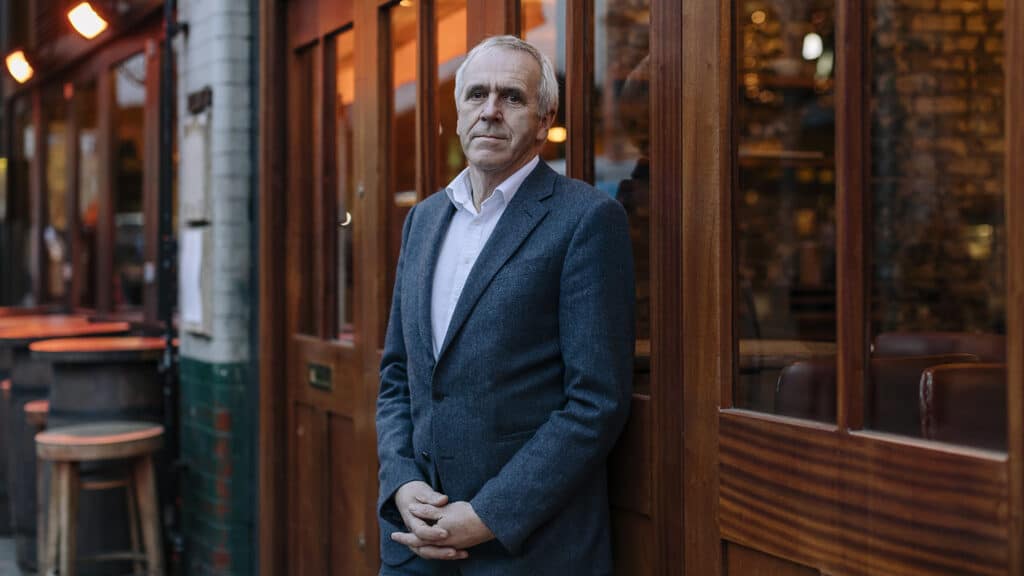
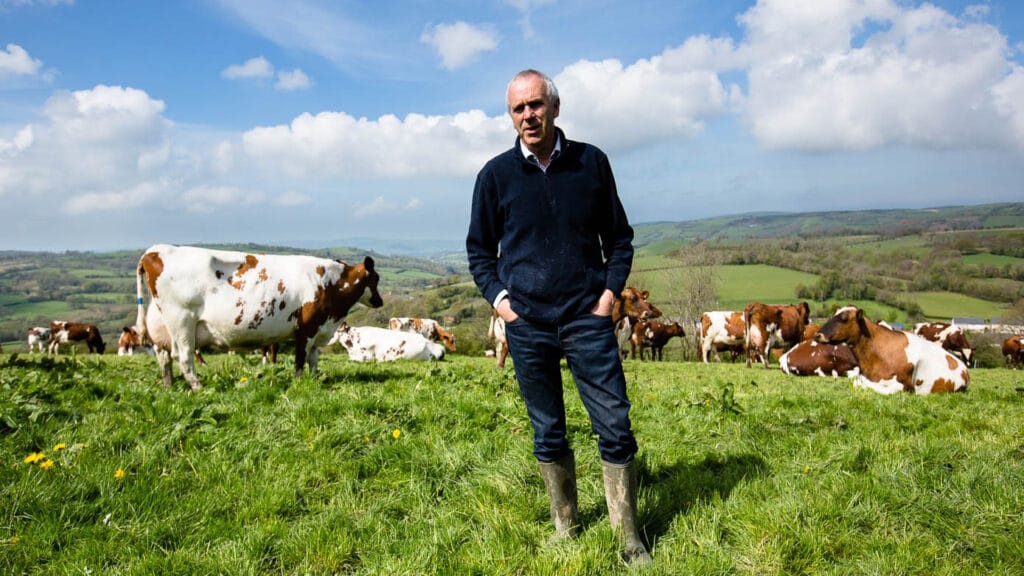
Patrick Holden is the founder of the Sustainable Food Trust, a charitable organisation that strives for a better food and farming system, for people and planet. A self-proclaimed hippy, when Patrick set up his west Wales community farm in 1973, he wrote the rules on organic dairy farming. Alongside his internationally influential advocacy work, Patrick continues to produce exceptional cheeses (one of which, the cheddar-like Hafod, can be found at Neal’s Yard Dairy) from the milk of his Ayrshire herd.
You’re known for promoting a more ‘sustainable’ food system. What do you mean by that?
It’s the food system we all need if we’re going to avoid irreversible climate change, biodiversity catastrophe, a breakdown of civil society, and all the other things we’re scared about these days. The pre-requisite for a stable and civil society is a secure and relatively local supply of food. We want to produce food in a way that protects and preserves our human capital. Also, the food we produce needs to be of high nutritional quality, otherwise we’ll continue to have the problems we’re experiencing in the National Health Service – it would currently be more accurately called the National Diseases Treatment Service, because it’s picking up the bill for deficient agriculture. To do that, we need a return to farming systems that build soil fertility through crop rotation. You need the cycle, because that’s the way to build soil. That’s the way all the soils of the world have been built, through this kind of practice – either managed by nature or managed by us.
What changed?
During the second world war, we made explosives using a process of fixing atmospheric nitrogen, called the Haber-Bosch process. Once the war was over, we didn’t need explosives anymore – but we could use the same process to make nitrogen fertiliser, which became widely available. Farmers realised if they put it on the fields, they could avoid the need for crop rotation – not realising that the traditional method was not just providing nitrogen, but also providing carbon, which is vital for soil quality and fertility. Our wonderful UK soils are carbon rich – or were carbon rich, before the agricultural revolution. Unfortunately, we’ve been mining the accumulated fertility of generations. Now we need to put it back.
Many people are advocating a move toward more plant-based diets. Is that the right way to go?
A lot of young people in particular are turning to vegetarianism or veganism and there’s a big campaign now to eat less meat, but better, and move to a plant-based diet. A lot of young people are responding to that, thinking that it’s the most responsible way to eat in a world of climate change. In fact, what we need to do, in my opinion, is differentiate between livestock that are part of the problem – feedlot beef, intensively reared chickens and pigs, intensive dairy – and support the livestock and products that come from systems that are part of the solution. Without a healthy, buoyant market for grass-fed beef and lamb, dairy, pastured chickens and pigs, the farmers that need to rebuild their soil can’t do that.
Right now, the market for beef is on the floor and farmers are going out of business. It should be remembered that 71 per cent of the United Kingdom’s farmed area is grass – so my message to the vegetarians and vegans is, try to align your future diets to what we could actually produce from this nation if we farmed in a sustainable way. If you recognise that, then you need to differentiate between livestock that you shouldn’t eat, and livestock that you should – that is, if you’re not ethically opposed – and feel good about it. Methane emissions do come from ruminant animals, beef or lamb, but the soil carbon gain has the potential to more than offset that.
The narrative surrounding the nutritional merits of meat has fluctuated over the past few decades. What’s driven that?
It’s fascinating. The trend away from fatty meat towards lean meat and away from butter and dairy fat towards margarine goes back to the 1980s, when the government published a report which basically said that animal fats and sugar are bad for you. A journalist called Geoffrey Cannon got hold of this report and wrote a big headline story in The Sunday Times. The food industry was upset about this, especially the sugar industry, which embarrassed the government, so they commissioned another report from the Committee on Medical Aspects of Food and Nutrition Policy. It was published a year later, and it focussed purely on the fact that animal fats are bad for you. It turned out that many of the people on the board had interests in the sugar industry. It was a brilliant plot to deflect away from the damage that sugar is doing to public health and put it all on meat. The rest is history. The whole of the modern British diet was shaped by a report that was dominated by vested interests. Now there’s evidence emerging that even saturated fats from animals aren’t necessarily bad for us. The whole thing has turned.
What do you think is the main obstacle to transitioning to a more sustainable food system?
That’s the question: how does change happen? I think it happens through a combination of external circumstances. A problem emerges, it gets to a critical point where people begin to realise something’s wrong, and that creates a degree of fear – what will happen if we don’t change? People in a leadership position think, yes, we do need to change, and then policy makers start to work out how we can. But they won’t do that unless there’s pressure from the public. I think right now the pre-conditions exist: there is growing awareness that agriculture is one of the biggest contributors to climate change, and unless we change our food systems, we won’t have a planet fit to live on – and that’s really the truth. I think we’re near a tipping point. I’ve been involved with advocacy for more sustainable food systems since the 1970s; it’s only now I feel that change is happening. A lot of young people, millennials, feel there’s a shift at hand. I think that’s really positive. But I think the shift needs to be grounded in a better understanding of what the issues are.
Do markets have a role in reconnecting consumers with farmers?
At a recent Oxford Real Farming Conference, we had a session on plastics. A guy called Phil Haughton, who runs Better Food in Bristol, put his hand up and said: “I can’t help feeling that getting plastics out of our food packaging is treating the symptom, not the cause. The cause is the move away from farmers’ markets and a direct relationship with our fresh food, toward wrapping it all in plastic and shipping it great distances.” I think he’s right to a large extent. The renaissance of the farmers’ market movement is a fabulous expression of that, and long may it continue to grow and prosper, because it’s needed. Not least, it gives farmers an opportunity to cut out a couple of links in the profit chain and sell at affordable prices, to people who they actually meet, which is a brilliant thing. Even certification is not needed if you know your farmer. The Americans had a scheme during the Obama administration, called Know Your Farmer, Know Your Food – a wonderful motto for markets. As the great food journalist Eric Schlosser said, the thing about the way most food is produced these days is, if you knew the story behind it, you wouldn’t want to eat it. That’s the truth. Which is scary. It’s such a powerful thing to think about. We need to know more about the story behind our food and when we do, we need to still want to eat it.
A big question that’s often raised is whether sustainable farming practices can be economically viable for both farmer and consumer. Do you see a time where these things will go hand in hand?
These things can work in harmony. Many thousands of farmers all over the world would prefer to do what they probably know in their hearts is the right thing. If we can shift the economic conditions, whereby farming in a more sustainable way and producing healthy food pays nearly as well, or even as well, as what they’re doing at the moment, they’ll shift. Who wouldn’t want to farm in harmony with nature? To preserve biodiversity, look after animals as best we possibly can, and promote public health? The only reason why farmers are not doing those things is they’re trapped by the economics and the policy environment into a race to the bottom on price. We are the people who eat their food, so if we want them to change, we have to change. We have to realign our diets. We need to be discerning about which livestock products we eat and once we’ve understood that, we need to eat them. We won’t keep the farmers who are wanting to return to mixed farming in business unless we eat their food.
We spend about 10 per cent of our disposable income on food – it used to be around 30 per cent back in the seventies. I know we have legitimate, big expenses, but actually we could afford to spend more on food. Besides, we’re paying in hidden ways for the so-called cheap food: we’re paying with our health, our water bills, we’re paying in climate change, and we’re passing on that damage to future generations. We must do this. We have to know more, and we have to use that knowledge to shop in the right way – Borough Market, farmers’ markets, finding ways of supporting producers directly, that is absolutely the way forward. We are causing irreparable damage to the planet: we need to use our food buying power to support producers who are not causing it. It’s an incredibly empowering thing to do as a citizen; to use your money to support a more sustainable food future.
Discover more
In praise of: 18C organic extra virgin olive oil
Mark Riddaway sings the praises of an extra-special olive oil from Oliveology
“SEA PURSLANE HAS LONG, ROUND LEAVES WHICH HAVE A VERY SUBTLE, IRON-Y FLAVOUR AND A HINT OF SALINITY
Sea purslane
An evergreen available at most of Borough Market’s greengrocers and hugely popular with chefs, sea purslane has pink, star-shaped flowers and long, round leaves which have a very subtle, iron-y flavour and a hint of salinity. Like most greens, the leaves can be eaten raw or cooked – particularly good when simply blanched to retain their crunch, then served with a knob of good butter.
English marsh samphire
Also known by the less attractive moniker ‘glasswort’ (derived from its use in soda-based glassmaking), the native strain of this familiar sea vegetable has a much shorter season than its rock-growing relative – and is incomparable in terms of flavour. While edible raw, it’s incredibly salty, so benefits from cooking – but lightly, so as to keep its crunch. Equally happy alongside fish or lamb.
Sea beets
Known as the ‘spinach of the sea’, sea beets are a close cousin of beetroot, chard and spinach, with a flavour strongly reminiscent of the latter. Noel Fitzjohn of Fitz Fine Foods forages for his sea beets around the shores of the Isle of Sheppey, Kent, or the estuary towards Worthing, West Sussex. Use its squeaky-textured leaves, which can be green or occasionally red, as you would cooked spinach.
Sea arrowgrass
One of the rarer varieties of sea vegetable to be found at the Market, this herbaceous plant grows on sandy wetlands, bogs and marshes of Norfolk, where it is plucked from the shores by Turnips’ trusted supplier, but only upon customer request. As well as being delicious simply sauteed with butter, it’s increasingly used by chefs as a natural way of infusing saltiness into broths.
Sea plantain
A flowering plant that has nothing to do with the Caribbean cooking bananas that share its name, its grass-like leaves make it hard to discern from the salty marshlands in which it thrives. Delicious raw or cooked, sea plantain has a delicate, mildly chive-like flavour: try stirring the leaves into risotto or sprinkling onto summer salads. Use the pretty yellow flowers as a garnish.
Discover more
In praise of: 18C organic extra virgin olive oil
Mark Riddaway sings the praises of an extra-special olive oil from Oliveology
“IF A COMPANY MAKES MONEY FROM A PRODUCT, I THINK THE PERSON WHO PRODUCES THE PRODUCT SHOULD BENEFIT”
Words: Clare Finney
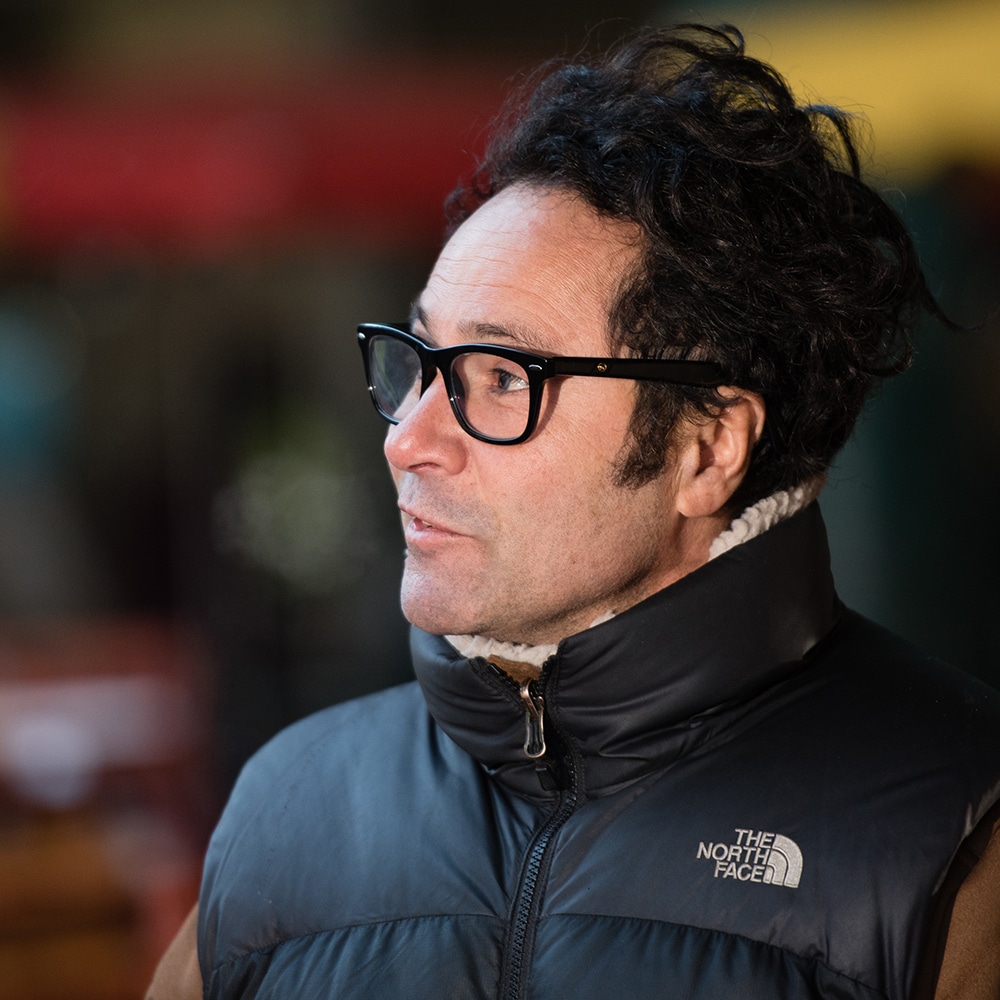
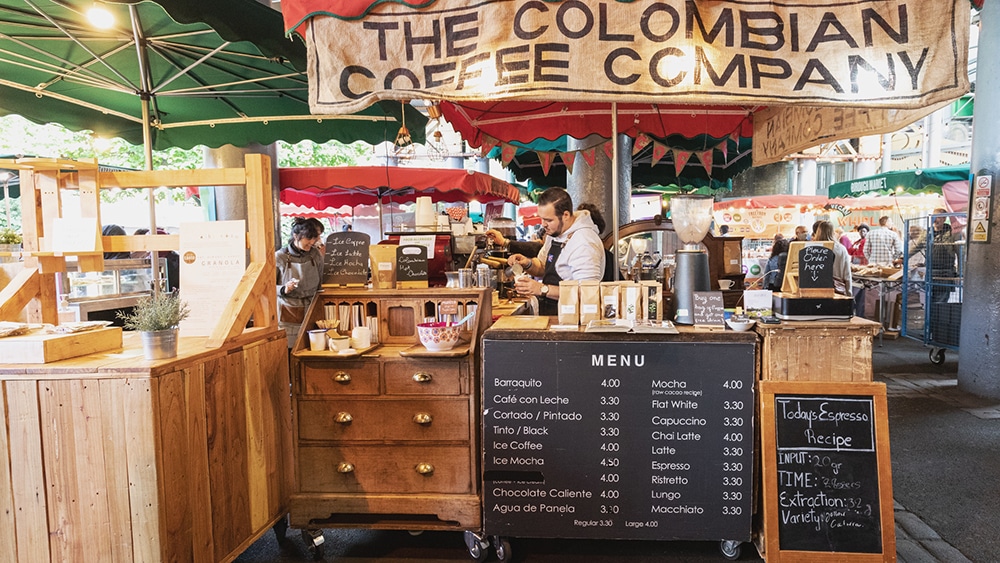
“One of the strongest memories I have of the poverty I saw growing up in Colombia is of houses where the floor was the same inside as it was outside: soil. Just soil,” Eduardo laughs, as he remembers how struck he was as a child. “I didn’t understand then, but now I realise that was poverty. People couldn’t afford wood or concrete to make a floor.” It’s proved a defining image for a man with a master’s degree in finance, an MBA in marketing and a sense of social justice so profoundly held he’s ploughed all his qualifications and experience into The Colombian Coffee Company: a social enterprise that aims to model a new way of trading coffee to help Colombian coffee growers out of poverty, and support peace and stability in areas previously affected by the country’s decades-long civil war.
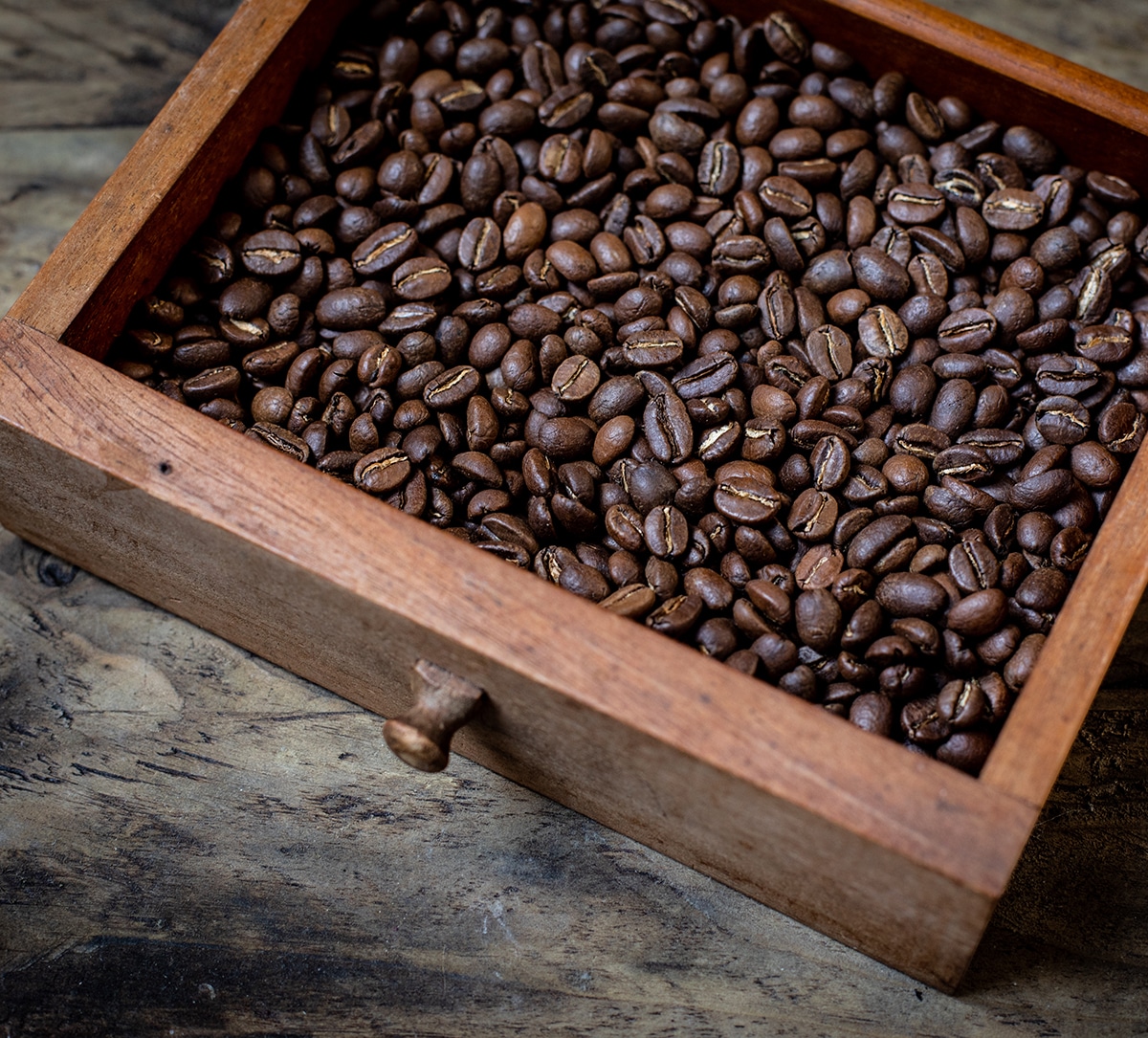
It’s a big ambition, but then Eduardo is no stranger to challenges. He grew up in a country devastated by war – and, when he meets us, has just sold espressos to a group of Italians. “The good thing about Borough Market is that it is about quality, and people ask questions. They are interested.” Italian customers asking questions about his lightly roasted single origin coffee opens up the opportunity for Eduardo to also talk to them about the wider complexities and challenges of the coffee trade, seen from the producer’s perspective. Many coffee growers remain poor, as the beans themselves only fetch a low price on the global market, and, in order to make ends meet, they must still pick them even when they are unripe or poor quality. “That dark, shiny look that beans often have is actually coffee which has been over-roasted, to cover up its imperfections.” Eduardo’s beans, meanwhile, are lightly roasted to a gentle brown. In the former scenario, “coffee farmers get less money and consumers get bad quality coffee,” Eduardo summarises. “It doesn’t make sense to me.” That’s why quality can be a route out of poverty.
Colombia’s vast mountain ranges and warm, wet climate make it perfectly suited to coffee cultivation. Indeed, the country is the largest producer of single origin coffee varieties in the world. “The demand for speciality coffee is growing,” he continues. But what should be a great opportunity for Colombia runs the risk of being lost in the huge global coffee market, which is dominated by multinational coffee brands, often selling poor quality or instant coffee. “Coffee is one the world’s most volatile commodities. It’s second only to oil – but the volatility of oil is pushed onto consumers.” When we arrive at a petrol station, we pay the price it gives us on the day. The volatility of coffee, however, is on the growers. “They receive the day’s prices, which are determined by the futures market. At the moment, the price farmers are being paid for their coffee is the same as 1983.”
That’s almost 40 years ago. Costs have increased, the country is decimated by civil conflict and warring factions have capitalised on farmers’ desperation by forcing them to grow coca and opium. “They generate more money than coffee,” says Eduardo. “They also generate terrible violence as the drugs trade is controlled by gangs.” The farmers are trapped, farming being the only life they know of, and the cycle continues. “But coffee can make a difference. So, as a smaller enterprise, I have taken a risk to trade coffee ethically, and to really try to find new ways of working. For me, the only way is ethics, and I think more and more customers care about that.”
Fairtrade schemes are great and do help, he says, “but they only offer a premium on top of the original price. The market price can still go down.” Also, although growing, the fairtrade market does not cover most coffee production in Colombia. Eduardo aims to go ‘beyond fair trade’; not just paying above market price – enough to cover production costs and improve their business and livelihoods – but also developing long-term relationships with the farmers. “I teach them English business language and the language of coffee tasting and valuation, so they can describe their coffee to potential buyers overseas. Because they have no idea!” he exclaims. “They are used to just taking the coffee down the mountain on market day and finding a quick sale. They don’t know how good their coffee is. How can they negotiate or get the best price for their coffee if they don’t know the quality of their own produce or how much it sells for overseas?”
Education is power and by talking to the farmers about fragrance, uniformity, balance, sweetness and aftertaste – the words used in the Speciality Coffee Association guide – Eduardo can enable them to sell to other gourmet coffee buyers. “Encouraging the farmers to talk about quality will increase the price of what they make, ultimately needing less farm space as they focus on quality rather than quantity.”
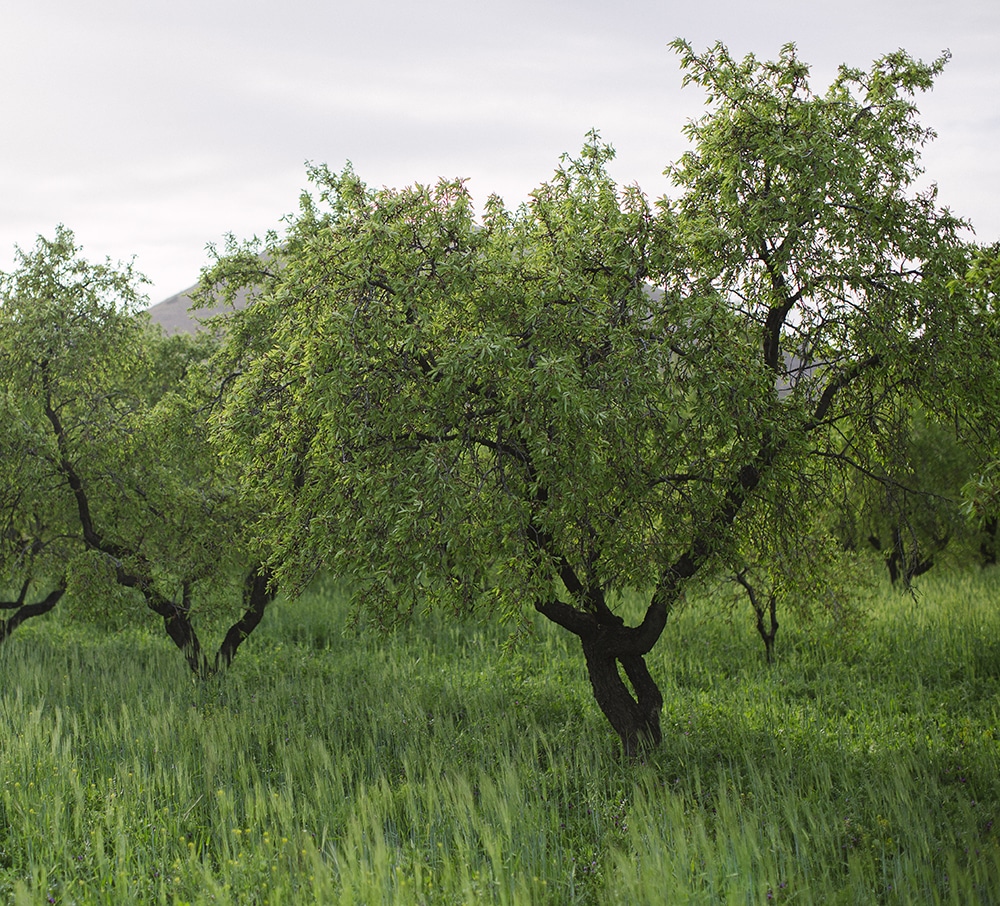
Nor does Eduardo stop there. “In a sustainable system, the farmers grow arabica coffee trees that need shade, so they also grow bananas, guanabanas, oranges, mandarins, avocados and so on. On Sundays, farmers go down to the nearest village to sell their produce. As they bring a variety of products, they are less exposed to the volatility of coffee market prices, thus they can participate more broadly in the economy – and they make small profits, so they can then buy other products.”
Anxious not to damage any of the other plants or trees, the farmers avoid the use of pesticides and other chemicals, “so the overall production becomes organic and the environment doesn’t degrade. The lush green environment helps to protect their coffee trees, which they care for almost one by one.” They clean the leaves. In Colombia they hand pick the cherries when they are red – almost purple, lending Eduardo’s coffee a distinctively sweet taste.
For Eduardo, a big part of what he does is just encouraging people to think about the human effort that has gone into making their daily cup of coffee, and the wider systemic challenges of the coffee trade. “Sometimes, at summer festivals, I will run a coffee auction, or a flexible price system for coffees over a couple of hours – where the price goes up depending on supply and demand. It’s just a fun way of showing how markets work and how global coffee prices are set.” Eduardo believes in participatory capitalism: “If a company makes money from a product, I think the person who produces the product should benefit. But that is not what is always happening at the moment. The people who are producing high quality coffee are living in poverty. That is why I have decided to do something to correct it.”
In praise of: 18C organic extra virgin olive oil
Mark Riddaway sings the praises of an extra-special olive oil from Oliveology
“IN CONTRAST TO THE ALMOST AGGRESSIVELY HERBACEOUS TOP, CORIANDER SEED HAS A COMPARATIVELY SUBTLE FLAVOUR”
Image: Ed Smith
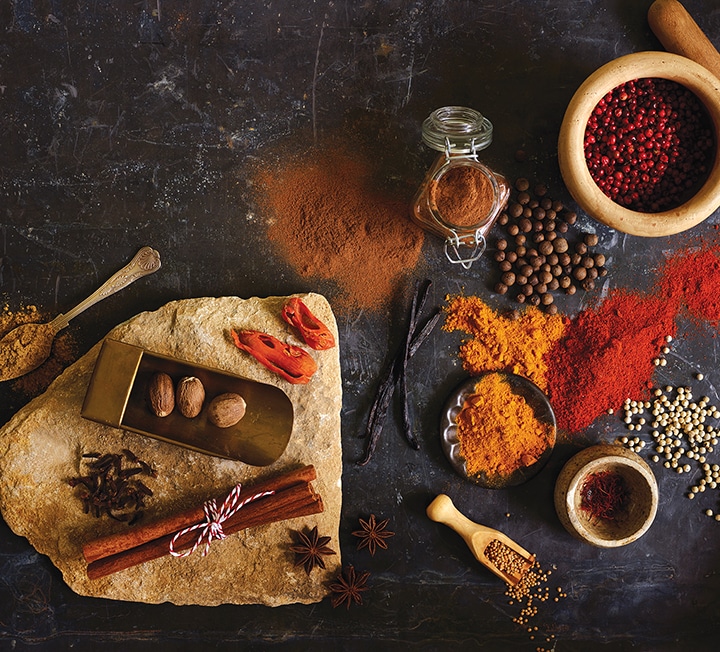
We turn now to the curry spices. Well, to coriander, cumin and cardamom: three spices that are synonymous with the cuisine of the Indian subcontinent… and yet only one of which is indigenous to that region. Intrigued? Read on.
Coriander
Though used (and grown) prodigiously in India, coriander was originally a Mediterranean plant. In fact, we should really consider it a global crop rather than an Indian one, as it is cultivated in (among other places) Russia, Mexico, Morocco and Australia, with the seeds and leaves used in traditional recipes from Cyprus and Greece, the Middle East, south-east Asia, Central America… heck, it’s even been common in British cooking since Roman times: look carefully and you’ll see it’s a key component to many recipes for preserved meats, chutneys, distilled spirits, beer and more.
For this series, we are, of course, talking about coriander seed, not the plant loved by many but hated by the few who are biologically predisposed to tasting detergent rather than perfumed citrus and grassy notes.
Those seeds are a fruit, which come to prominence when a coriander plant is left to flower and then die back. Though initially green, the seeds lighten and eventually turn brown when sun-dried. To finish the harvest process, the dried seeds are shaken from stems in their tens and hundreds.
In contrast to the almost aggressively herbaceous top, coriander seed has a comparatively subtle flavour. I find it warming, mellow and nutty with faintly orange-like citrus top notes.
To my mind, it’s imperative that you store coriander in seed not ground form, lightly toasting the requisite amount (to warm and release its aromatics) immediately before grinding in a mortar and pestle and using as required in your recipe. The flavour is much, much better than that found in ground coriander that’s sat in a pot for any length of time.
For something a little different, try Spice Mountain’s Indian-grown coriander seeds – labelled dhania – which are a tear-drop rather than spherical shape, and have a more pronounced floral and earthy flavour than the coriander more often seen on these shores.
Cumin
Cumin is the world’s second most used spice after black pepper. It’s an important, nay, essential characteristic of the foods of the Middle East, India, north Africa, Central and South America, Spain, Italy, Germany, Thailand and more.
Like coriander, cumin seeds are the fruits that hang around after the flowering plant begins to lose its bloom. They’re a flatter, longer seed than coriander (confusingly similar to caraway) and are normally brown in colour. I note, though, that there is a ‘black cumin’, which is perhaps a little sweeter than the brown (and is not to be confused with nigella seeds).
The flavour of cumin is distinctive, unmistakable, unique and ultimately quite hard to describe without saying “tastes like cumin”. I get musk, lemon zest and ‘spice’, but I’m not sure that’s particularly helpful. More definitively I can write that, as with coriander, you’re much better off buying and storing cumin seeds whole, toasting and grinding them when required (or often just toasting and leaving them whole).
Originally from Egypt, cumin is now cultivated in Iran, Turkey, India, China, Japan, Chile and Somalia.
Cardamom
And so to cardamom, the only one of our triptych of curry spices to be indigenous to India (and Sri Lanka). This tropical spice has two forms: ‘true’ green cardamom and ‘false’ black cardamom, the latter found more commonly in the Himalayas (Nepal, Bengal and Bhutan).
Green cardamom is the world’s third most expensive spice by weight (after saffron and vanilla), but it packs a heavy punch so you get rather a lot for your dollar. The flavour of green cardamom is intense, resinous, eucalyptus-like… and has spoilt many a pilau rice for eaters chowing down without looking. Nevertheless, fans will note that it has a unique quality that enhances both sweet and savoury dishes.
Cardamom is normally traded in whole pods. There is a wide variety of sizes (walk through a spice market in India and marvel at the different grades), the larger often being more powerful in aroma. But you can also buy cardamom seeds already removed from the pod and indeed, those same seeds ground to a powder (all are available at Spice Mountain). Though the ground form loses its flavour over time, it’s not the worst idea ever to have both whole and powder in your cupboard; Spice Mountain’s ground cardamom is remarkably good, and one of my most regularly dipped into pots.
Some Indian recipes require whole cardamom pods to be ground down; it’s necessary to use a good spice grinder for this, or have a particularly abrasive pestle and mortar technique.
Black cardamom has a similar if cooler aroma and flavour to its ‘true’ cousin. Most significantly, its flavour is smoky, because the blackness comes from the cardamom pod being dried over an open fire. As with green cardamom, depending on the recipe, you can use it whole, grind it whole (very finely), or grind the seeds only.
Culinary uses
Coriander is present in a huge number of cuisines. However, it usually sits quietly in the background, providing an earthy depth, while fresh herbs (its namesake) or other spices (cumin, cardamom, turmeric) take the plaudits. Which doesn’t mean it’s not vital, whether as an aromatic, whole in chutneys and brines, as a seasoning in a Mexican chilli or Indian curry paste. I think it’s particularly good when involved with rich beef stews (whether western, or something like a rendang or madras).
Cumin, on the other hand, hogs the limelight. As we know it is essential in Indian cooking, but some of its standout uses are elsewhere. Look for it sprinkled over Mexican-style grilled corn (butter, ground cumin, salt and lime zest and juice). Roasted roots like carrot and beetroot love it, and lamb and pork are big fans (think roast shoulder of lamb, or crisp pork belly seasoned with cumin and a squeeze of lemon juice). It’s even used as an aromatic to flavour liqueurs, like the German kummel.
How and where to use cardamom? The first things that come to mind are savoury dishes. For example, whole pods are tapped and dropped into rice dishes – both Indian and Persian – to impart aroma as the rice cooks. Ground cardamom is integral in many Indian spice mixes too. But perhaps things get more interesting when we move into sweeter treats. Apparently, 60 per cent of the world’s cardamom goes to Arab countries, where it plays an important part in the coffee ritual – that eucalyptus or menthol-like quality pairs beautifully with the bitterness of coffee beans. In fact, other cultures have tapped into the match too: across south-east Asia, cold, thick and sweet coffee syrup infused with cardamom and cinnamon is poured over bananas for breakfast and the Scandinavians have shown that there is no better flavour match than that of a strong coffee and an equally strongly spiced cardamom bun.
Market spice heroes
Tip of the hat to street food traders Gujarati Rasoi whose food makes use of all three of these spices, and also serves cumin-pimped rice as standard.
Perhaps more unexpectedly, I stumbled across the East London Liquor Company’s Batch No 2 gin, in which coriander seed is a dominant aromatic. It’s a beautiful, savoury gin and one worth taking home.
See Ed’s recipe for spiced yoghurt whole roast cauliflower.